
Do you remember the era of Nokia? It’s astonishing how, at its peak, the Finnish company launched numerous mobile phones, each one unique in its own right. From bizarre designs to functionalities that seemed unthinkable, Nokia’s mobile phone era was all about fun. But then… the iPhone arrived.
With the arrival of the first iPhone and its overwhelming success, the industry started to become more cautious, adopting a homogenized design that no one saw coming. Although there were advancements in thickness, camera quality, and flirtations with foldable screens, mobile phones began to resemble one another too much. Then came the iPhone X with its infamous notch.
This sparked a strange phenomenon: while many rushed to copy that ‘notch’, some brands dared to innovate further, striving to achieve the unattainable ‘full-screen’ mobile phone. There were various attempts, some more successful than others, but it marked a fun era where the industry allowed us to revel in quirky mobile designs.
The Prehistory of Full-Screen Phones
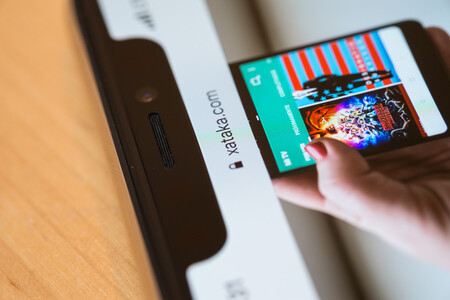
The infamous notch on the iPhone X
“In my days, before the iPhone, there was already a phone with a completely full screen.” If you thought that, you have a great memory and were well informed. But if you had OPPO N1 in mind, it wasn’t exactly the ‘full-screen’ that we discuss today.

When OPPO was almost unknown in the West, the N1 came along, boasting generous bezels along with something quite interesting on its upper edge: a rotating camera. This same camera could act as both the main and selfie lens. While it may have been a visual step forward, it still required manual positioning—a concept that would only be refined many years later.
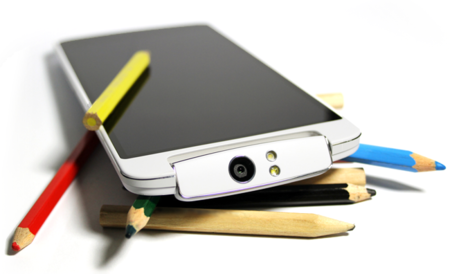
The OPPO N1
Launched in 2013, the N1 drew little attention outside niche circles. Perhaps a more noteworthy mobile was the Mi Mix from Xiaomi, which, by 2016, was beginning to make waves across Europe. This device had a significantly large chin but minimized the top and side bezels exceptionally.
Even with notches and bezels, the front cameras were placed differently, making the design both functional and distinct. Xiaomi ingeniously housed the front camera not at the top, but at the bottom. However, Xiaomi wouldn’t officially enter Spain until late the following year.
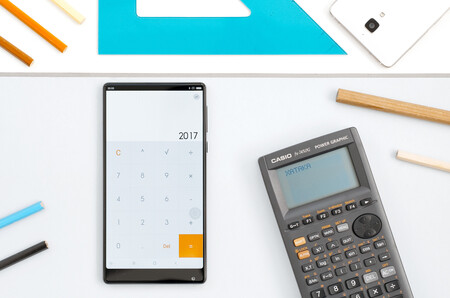
Xiaomi Mi Mix with a large chin and bottom camera
However, just a year later, in September 2017, Apple unveiled the iPhone X, sending shockwaves through the industry.
Honor and the Beginning of the ‘Piercing’ Trend
We won’t follow a strict chronological order here, but it’s fascinating to note the miniaturization of the notch. Apple hid a plethora of systems within that notch, but Android manufacturers without facial recognition systems faced fewer complications. They merely fitted in cameras, and other essential sensors.

This is precisely the route that Honor took with its pioneering View 20 phone—creating a form factor that initially shocked but later became a trend. Samsung also jumped on the bandwagon and moved their camera to the corner, punching a hole in the screen to imply that they had achieved a full-screen phone.
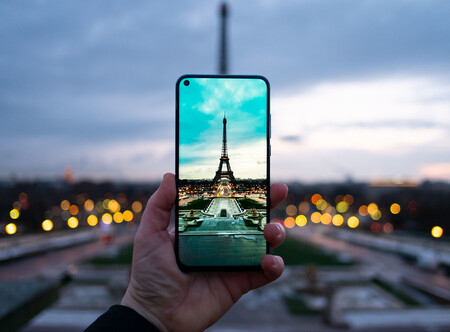
Honor View 20
Interestingly, many phones with holes allowed users to ‘hide’ them by turning off the pixels in the OLED screen where the holes were, thus undoing the intention of creating an ‘expanded’ screen and creating an asymmetrical front.
Our Thoughts at Xataka
“Whether there will be a second part, whether it will be good or bad, we can affirm that the first attempt with punched screens has gone quite well for HONOR.” This was our conclusion discussing the device, where we noted that the compact size didn’t interfere with daily use. We also mentioned that we didn’t see a clear advantage over notches, but they certainly had an edge over mechanical modules that were beginning to appear.
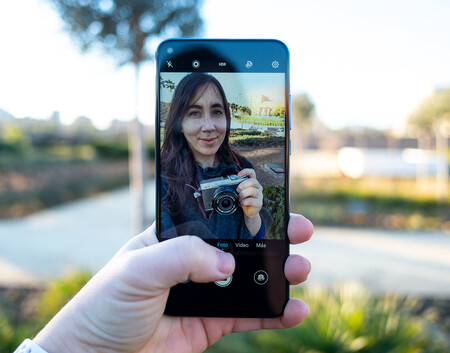
Honor View 20
We were also clear that hiding the hole would diminish the magic of that infinite screen illusion, showcasing another place where Android excelled: merging the toolbar with the hole.
OPPO Pushing Forward
2018 was a bustling year as every manufacturer tried to counter the iPhone X notch, but new players also entered the arena. One of them was OPPO, a brand hardly recognized in the West, who made its entrance with a bold statement: the OPPO Find X.
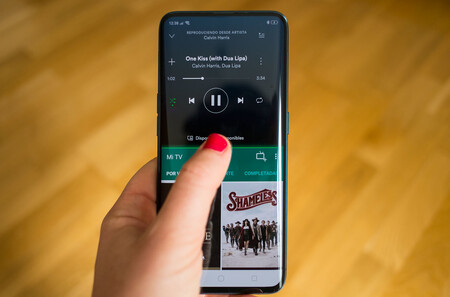
Oppo Find X
Now this was a true “full-screen” phone, thanks to a trick that wasn’t maximized—the sliding screen. With incredibly slim bezels, it had neither notch nor hole. To access the front camera, you had to slide the screen to reveal the hidden cameras.
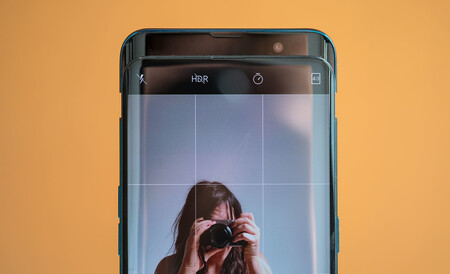
Oppo Find X with its sliding mechanism
When slided out, it automatically activated the camera. We saw this in just a few phones, but one memorable device was the Xiaomi Mi Mix 3, which effectively solved the main drawback of the Find X. In the Oppo, the rear cameras were also part of the sliding mechanism, which meant you needed to use that system for photos, risking wear on the components. The Mi Mix 3 simply concealed its front camera machinery.
What We Said at Xataka
We liked this phone for many reasons, yet we remained concerned about its mechanical system. We wrote that “the removable module is full of edges and corners that favor dust and other particulates, especially in areas with dense airborne particles.” Nonetheless, we acknowledged that this phone catered specifically to particular users.
Clearly, this wasn’t the most successful solution among manufacturers.
Vivo Peeking Out
Another little-known Chinese company introduced a similar system, but focused exclusively on the front camera while minimizing the size of the retractable system. The Vivo Apex in 2018 showcased a periscopic camera, later launching the Vivo Nex. Many manufacturers jumped aboard this concept.
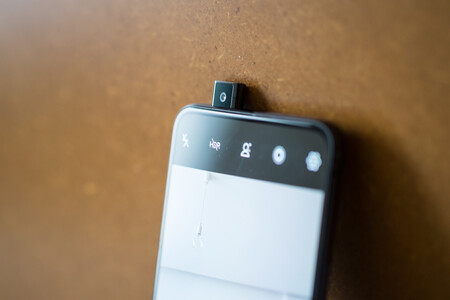
Vivo Nex
The POCO F2 Pro had a pop-up camera; the Honor 9X followed suit, as did the Realme X and Motorola One Hyper, even the high-end OnePlus 7 Pro adopted this style. However, a year and a half later, this trend began to fade in the high-end segment, as seen with the OnePlus 8 Pro reverting back to the hole design, and the mid-range quickly followed suit.
Then there was the LG Wing, featuring two screens, one of which could pivot and also housed a pop-up camera. Rest in peace.
What We Said at Xataka
The love affair with pop-up cameras hidden in the center or on a side was brief. Also, the quirky ‘shark-fin’ design from Oppo Reno was an intriguing concept. While the Vivo Nex showed how innovative manufacturing could be, it also left us with many reservations.
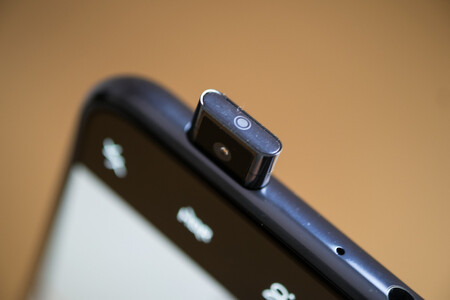
“The Vivo Nex arrived amid the surge of punched screens, and despite the modulized approach earlier showcased in the OPPO Find X, we didn’t feel like it was a turning point or the seed of a change. It likely served as an experiment from which to learn that a retractable module isn’t the most practical solution for achieving a full-screen design,” we commented back then.
Asus in a Flip
But mechanical modules had not yet had their last say. In 2015, Honor did something unique with the Honor 7i: they did not focus on a clear front, but wanted high-quality front-facing cameras. What did they do? Create a mechanism that allowed the back camera to convert into the front camera—a sort of hinge for the camera.
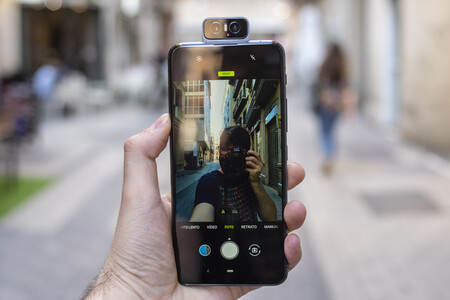
The Asus Flipfone 6
Asus seemed to have taken notes, as it later unveiled the Asus ZenFone 6 at an event in Spain. It took the idea further by doubling the cameras—meaning the rear cameras could also serve as front-facing cameras, giving users the ability to customize their angle, resulting in a remarkable experience.
Samsung also sprang into action, launching the Galaxy A80, which brought together a sliding module along with rotating cameras (adding more complexity). The beauty of these innovations was that the primary cameras, superior for both video and selfies, became the only ones available on the phone.
What We Said at Xataka
Was it perfect? We didn’t think so, but it was very intriguing. For the A80, we felt that while it wasn’t the best solution, it was another testament to how companies were innovating to eliminate the notch. Our conclusion was not, “oh, all phones should have a system like this”, but rather, “what a great feeling to have an almost infinite screen, but how impractical is the module,” we noted in the review of the Samsung.
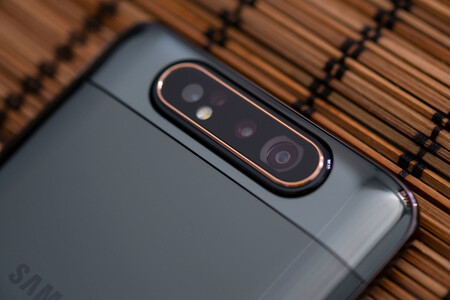
The Samsung A80’s camera
On the Asus side, we felt similarly. We weren’t craving to see this in all devices going forward, and although the camera performance was good in optimal conditions, it had some software issues affecting photo processing. Perhaps that’s why we were left with a somewhat bittersweet taste…
Nubia and Absolute Madness
The mechanical systems had run their course. Manufacturers explored every conceivable avenue, and the market had voiced its sentiment (so strongly that these modules led to their own demise). But some still wanted to experiment, leading companies to insist on removing traditional cameras and incorporating… two screens.
HiSense stunned us with a dual-screen phone—one traditional and another electronic ink. However, the most intriguing proposal came from Nubia. Originally a subsidiary of ZTE, Nubia reduced its ownership stake to less than 50% in 2017. Regardless of the specifics, Nubia presented the Nubia X in early 2019, featuring two screens (front and back), with the idea of using the rear for photos and the front for daily tasks.
Was it excessive? Definitely, but it didn’t stop there; it manifested later in the Nubia Z20, with a similar yet refined execution. This device had two screens, two fingerprint readers, and a triple camera for selfies. You could control the phone entirely from either display, so when one screen was activated, the other would turn off.
By the way, Vivo also attempted something similar with its Dual Play device.
What We Said at Xataka
It never reached beyond a novelty. At that time, we commented that it was “highly forced, particularly until the screen configuration was mastered”, and while the proposal was undoubtedly eye-catching, it wasn’t significant enough to change mobile paradigms. If a mechanism was already costly, imagine a screen camouflaged within the glass back.
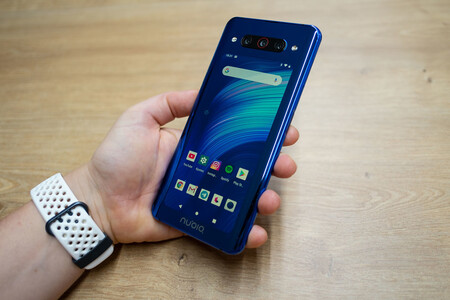
Rear of the Nubia Z20
That said, the phone is visually stunning and remains one of my favorite attempts from recent years for creating something unique and fun. ZTE had not yet spoken its last word.
ZTE Setting the Standard in Full-Screen Phones
After speculating with the concept of the “under-display camera” for several months, it was ZTE who launched the Axon 20. Clearly, the experiments were being directed towards the mid-range market, as it presents a lower risk for manufacturers. What they did was bury the front camera in a small square of the screen’s top center.
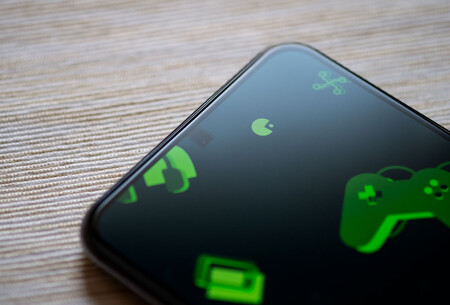
There it is
If you searched for the angle, you could indeed see its presence, but the way they attempted to camouflage it was rather ingenious. The screen had a high pixel density, yet this density was significantly lower where the camera was housed.
That permitted light entry and made the camera functional, albeit with a noticeable change in resolution in that area, blending much better into the overall experience. Far more seamless than a black hole, for sure. However, the camera’s quality was another story.

The pixel density change is evident
This resulted in a blurred photo effect, especially evident in portrait mode—as though the lens were smudged. In bright conditions, its performance fell even shorter.
What We Said at Xataka
Despite its flaws, my colleague Anna (who reviewed many of the phones discussed here) concluded that “the ZTE Axon 20 5G is one of the most innovative of the year”: I was rather skeptical about witnessing this concept becoming a reality, and ultimately, I felt it represented a good first step.
She noted that it would be fascinating to see if ZTE would continue to pursue this path. And oh boy, did they continue…
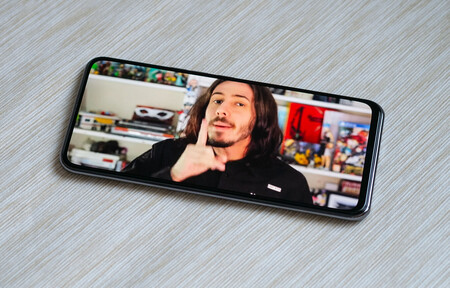
On day-to-day, it was imperceptible
Eight Years Later…
Life continues, as Julio Iglesias sang. Particularly for Apple. With the iPhone 15 Pro, Apple began moving away from the ‘classic’ notch towards an oval hole design (or the ‘Dynamic Island’) across all iPhone 16 models. While Apple has its own rhythm and may not always be the first to introduce a concept, its market influence undeniably sets trends.
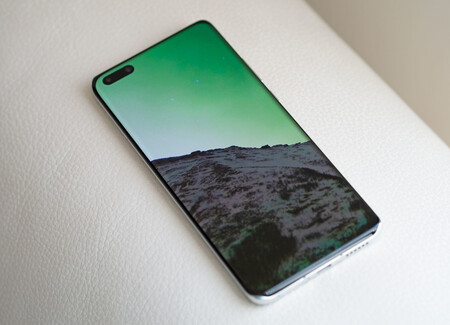
From simple holes and before the Dynamic Island, we moved to solutions like this Huawei P40 Pro.
Android, after exploring the many full-screen solutions discussed, has aligned itself with a primordial approach: the simple hole. Furthermore, all manufacturers seem to have agreed on the centered single-hole design. This has led to all phones looking remarkably similar when viewed from the front. Love it or hate it, the hole has emerged as a logical solution.
Incorporating sliding mechanisms or retractable cameras eliminates the possibility of acquiring IP68 certifications. Moreover, they add extra components prone to breakdown, and with the selfie craze for TikTok and Instagram videos, under-screen cameras haven’t yet hit the mark.
Hence, the hole remains the lesser evil, chosen after that strange and enjoyable experimental phase. However, as emphasized earlier, one company persists in launching unique devices: ZTE. Under the Nubia brand, they have continuously released newer generations with under-display cameras, carving this feature into their brand identity alongside dubious designs.
The Nubia Z70 Ultra is an impressive model, but it also symbolizes the ongoing struggle against perforated screens. Time will tell if this path leads to the ultimate evolution of full-screen devices. There’s still ground to cover, as the Nubia’s front camera continues to have a slight ‘haze’ effect, but with AI processing, miraculous results can be achieved. Sometimes, quite literally.
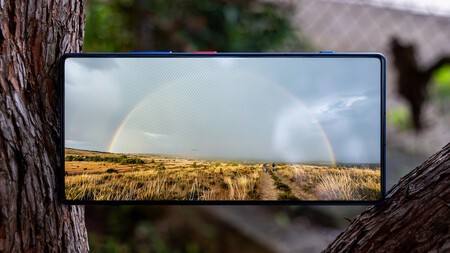
Nubia Z70 Ultra
In conclusion, manufacturers attempted numerous strategies to eliminate notches and holes, but ultimately returned to square one in their last attempt to create distinctive and enjoyable mobile devices. Now we have brands like Nothing, but beyond exciting designs on the back, their front-facing aesthetics are… just like everyone else’s.
We’ll have to keep waiting to see which major brand that can cement a durable change jumps into the deep end with under-display cameras, whether it be Samsung… or Apple.
Images | Xataka
For more insights, explore the best value-for-money smartphones of 2025; our in-depth analyses and videos are available here.