
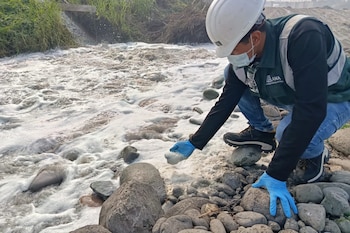
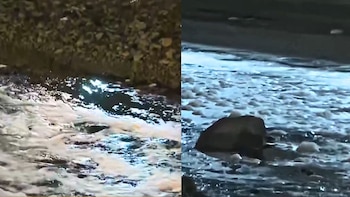
The presence of white foam in the Rímac River, detected last Monday, June 23, generated alarm among neighbors and passersby, particularly due to its proximity to the Sedapal Bocatoma, which is a crucial point in the water collection system for millions residing in Lima. Despite initial concerns, authorities have reassured residents by stating that this phenomenon does not pose a risk to the quality of water that reaches homes in Lima and Callao.
In addressing these concerns, Sedapal, the water supply company, ruled out any risks associated with the water purification system. Officials explained that the foam appeared outside the water collection facilities and specifically downstream of the gates; hence, it did not impact the overall treatment process.
Juan Moreno, head of Sedapal’s Comprehensive Plant Management team, elaborated in an interview with Channel N that there have been “no unusual variations in water quality” at the collection point. He emphasized that the company’s technical staff is constantly monitoring water quality to ensure compliance with national regulations.
Moreno reiterated that the waterfall remains consistent with daily expectations, stating, “There has been no unusual variation.” The entity stressed that the water has not been compromised due to the foam, and ongoing monitoring will remain rigorous.
Before the incident, the Environmental Evaluation and Control Agency (OEFA) deployed a technical team to examine the foam’s origin. Their preliminary report indicated that it originated downstream from the collection gates, further supporting claims of no risk to the water supply. Notably, the agency utilized drones to gather observations and images of the affected area.
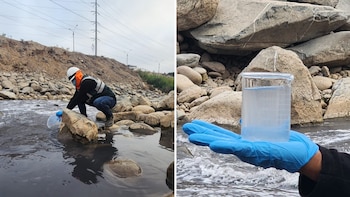
Additionally, the National Water Authority (ANA) has also engaged in the investigation by collecting water samples in the affected area. Following reports of foam in the Atarjea sector of the Rímac River, the agency’s professionals took samples to analyze fecal coliforms, total metals, detergents, and other crucial parameters. These samples are set to be sent to a certified laboratory, with results to be shared with institutions like OEFA and Sedapal for further analysis.
This incident isn’t singular. Earlier, in February 2025, the Rímac River exhibited a reddish coloration, raising alarms among citizens. Sedapal downplayed that event as well, asserting that the incident did not pose a threat to water quality. However, deeper investigations later revealed that wastewater discharges from the Candela collector of Sedapal had released toxic substances such as chrome, lead, manganese, and fecal coliforms into the river, compromising water quality in several districts. The Ombudsman then called for criminal investigations to address these environmental crimes.
Sedapal admitted to these spills but attributed them to a textiles company, promising corrective measures, including closing connections linked to the offending company. As the investigation continues, authorities are diligently working to ascertain the origin and composition of the white foam. Despite the unrest, Sedapal and other organizations have assured the public that potable water in Lima and Callao has not been affected.
It remains essential for competent authorities to persist in monitoring the Rímac River ecosystem. Any alteration in its quality could jeopardize not only the water supply but also pose risks to public health and the environmental equilibrium. As Juan Moreno of Sedapal mentioned, “we are dedicated to providing a continuous, safe, and high-quality service to more than 11 million Peruvians.” Consequently, ongoing monitoring and detailed investigations regarding the events in the Rímac River are critical to ensuring that the water consumed by Lima meets the highest quality standards.