
The Atlantic: An Underwater Nuclear Cemetery
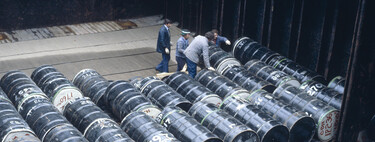
The Atlantic Ocean is known as one of the world’s largest nuclear cemeteries , with over 200,000 barrels filled with nuclear waste disposed of between 1946 and 1990 . As environmental concerns rise, a significant mission has commenced to locate and assess these barrels, focusing on their impact on marine ecosystems.
First Days of Exploration
The French oceanographic ship L’Atalante has initiated work to uncover these abandoned drums in the Atlantic waters. This ambitious project aims to locate some of these barrels and evaluate their potential impact on the surrounding marine life. The Nodssum-I mission , expected to last a month, has already made significant progress.
As reported by local press sources, the research team successfully identified the first 1,000 barrels and mapped their coordinates. Although the first images of these barrels remain undisclosed, researchers are eager to collect data on their condition and potential environmental repercussions.
The mission commenced roughly a week ago in international waters , located about 650 kilometers northwest of the Galician coast . Most of the barrels are submerged at depths ranging between 3,000 and 5,000 meters.
Examining the Contents of the Barrels
The team behind the project explains that these barrels typically contain nuclear waste classified as low to medium radioactivity . The contents range from sludge and contaminated metal components to cation exchange resins and even office equipment. To endure the extreme pressures of the ocean floor, the materials are believed to have been encapsulated in bitumen or cement , as stated by the American Society of Nuclear.
While the radioactivity of the submerged waste has decreased over the years, some long-lived isotopes may still pose a risk. Identifying these barrels and assessing their integrity are pivotal components of the mission; however, plans for their recovery are not currently being considered.
Assessing Environmental Impact
In addition to locating and documenting these barrels, one of the primary goals of the mission is to evaluate the environmental impact. The team will collect water samples , sediments , and even marine life to analyze the presence of radioactive isotopes.
This research will help to explore the interactions between marine ecosystems and these isotopes, facilitating a greater understanding of how these atoms may be transported via processes like erosion, sedimentation, and marine currents.
Advanced Technology at Work
To facilitate these investigations, the team aboard L’Atalante will utilize sophisticated tools, including a 4.5-meter autonomous submarine known as Uly X . This vehicle will enable researchers to closely photograph and analyze the submerged barrels in the Atlantic.
The Ongoing Nodssum Missions
The Nodssum-I mission is merely the initial phase of this greater project, which plans for two exploratory trips: Nodssum-I and Nodssum-II . Currently in its planning stages, Nodssum-II will focus on monitoring and will rely on even more advanced techniques, including remotely operated submarines like the Victor ROV and mini-subs such as Nautile .
The research embarked upon by these missions highlights an urgent need to confront the legacy of nuclear waste disposal in our oceans. As more researchers and organizations band together, the aim becomes clearer: understanding the risks associated with these submerged barrels, effecting change through scientific inquiry, and ultimately protecting our valuable marine ecosystems.
Image sources: French oceanographic fleet, Navire Océanographique L’Atalante.