

This Saturday, June 28, ATMs in Spain will see the introduction of three key characteristics aimed at improving accessibility for all users: headphone connections, higher contrast screens for easier reading, and an intuitive touch interface.
As published by 20 minutes, the implementation of the new Law 11/2023 will mark the beginning of a significant technological transformation in the ATM network. This change is particularly focused on facilitating access to banking services for older individuals and those with visual, auditory, or cognitive disabilities.
Starting this Saturday, the new ATMs will be equipped to allow users to connect their own headphones . This feature will enable individuals to receive instructions or confidential information through audio, thus promoting privacy while assisting individuals with visual impairments.
The introduction of voice instructions and guided navigation through audio will empower users to carry out transactions more safely and independently. Furthermore, the devices will include Braille keyboards and tactile buttons , enhancing user autonomy.
Another notable update is the comprehensive redesign of the screens. Now, with higher contrast levels, increased brightness, and adjustable display parameters, as well as larger font sizes, the new ATMs aim to facilitate reading for users with low vision.
These enhancements will benefit not only the elderly but also those unfamiliar with technology. Additionally, the redesign addresses the need to adapt technology for a broad spectrum of users, thus simplifying the management of basic transactions and balance inquiries.
The transformation of ATMs also entails the implementation of state-of-the-art touch screens and simplified menus. The interface is being updated to feature clearer, visually accessible options, making it easier for individuals with cognitive disabilities or those not well-versed in technology to perform transactions independently.
This comprehensive change includes the provision of more visual instructions, navigable paths via touch, and a menu reorganization , all aimed at making the processes more accessible for all users.
The regulations mandate that new devices must integrate these innovations immediately, although the adaptation of the nearly 47,000 old ATMs will be gradual. These outdated machines have until June 29, 2035, to comply with all the requirements.
Entities such as CaixaBank, Santander, Unicaja, Ibercaja, and Bankinter have already begun the technological upgrade process, driven by estimated costs ranging between 1,500 and 3,000 euros per machine .
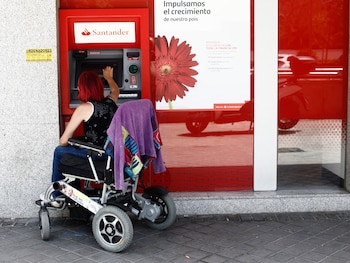
Furthermore, the legislation specifies criteria related to the height and tilt of the machines to facilitate their use by individuals in wheelchairs. Training banking staff has also emerged as a central element of the adaptation plan, with an emphasis on enhancing service for individuals with functional diversity.
The Spanish Committee for the Representatives of Persons with Disabilities (CERMI) has raised concerns regarding the execution of these enhancements, noting that many of the proposed features were already outlined in previous regulations. Nevertheless, Law 11/2023 positions Spain as a leader in banking accessibility within the European Union.
In conclusion, the ongoing transformation of ATMs in Spain reflects a commendable commitment to inclusivity and accessibility, promoting equal access to essential banking services for all individuals, regardless of their capabilities. Through these pressing improvements, Spain is paving the way for a more accessible future in financial transactions, setting an example for other nations to follow.
General News – 2