
Tesla’s Robotaxi Revolution: A Leap into Autonomous Driving
As Tesla embarks on its journey into the robotaxi market, the debut of these autonomous vehicles on the streets of Austin unfolds numerous implications for the automotive and technology sectors . This move highlights not only Tesla’s strategy towards autonomous driving but also its innovative use of artificial intelligence (AI) and extensive vehicle data—an approach that allows it to potentially outpace its competitors .
The implications of this transition are significant, prompting a myriad of discussions.
An unexpected braking moment: A Tesla Robotaxi cruising along at a steady speed suddenly hits the brakes, almost coming to a complete stop without clear cause. What triggers such hesitation?
Across the intersection, a police patrol is stationed. While this doesn’t obstruct the robotaxi’s path, the vehicle reacts by halting sharply. This peculiar behavior was captured in a video circulating on YouTube, shared by various accounts, including Antitesla on X.
The footage was uploaded by Edward Niedermeyer, a prominent automotive journalist known for his critiques of Tesla and author of a 2019 book examining the company’s inception and Elon Musk’s influence.
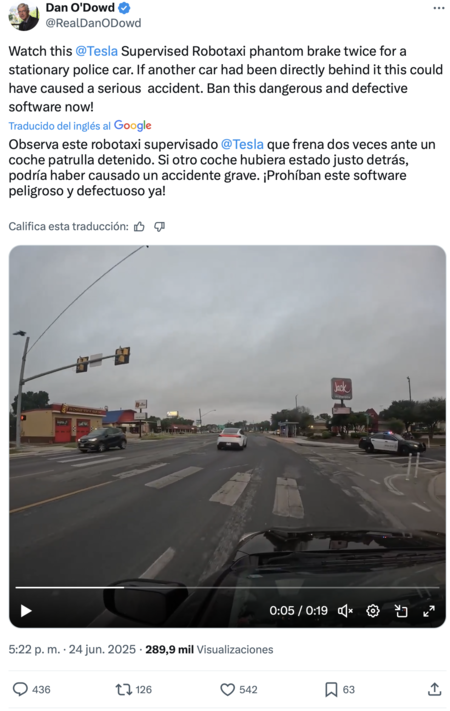
Click on the image to view the original tweet
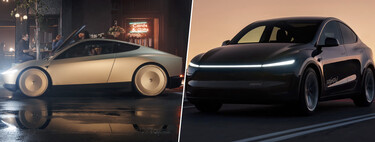
Fear of police: TechCrunch reported on the incident, suggesting that such erratic behavior may stem from the adaptive learning capabilities Tesla’s robotaxis acquire through their extensive interactions with human drivers. This phenomenon likely leads the AI to mirror human behavior , such as instinctively stopping before a police vehicle—an adaptation now understood as the “Miron effect”.
“Living millions of lives”: Elon Musk has long touted that the AI employed in their robotaxis derives its intelligence from the sprawling database of vehicles on the road. “It’s like living millions of lives simultaneously and witnessing unusual situations that a person wouldn’t typically experience,” Musk proclaimed during a presentation of the Tesla Cybercab.
This strategy alleviates the need for heavy investment in the development of full autonomous driving , as seen with competitors like Waymo and Cruise. Instead, Tesla leverages data generated by user experiences to inform its AI, enhancing decision-making that inherently mirrors more human-like qualities—including the ability to stop for a police car or navigate an intersection cautiously.
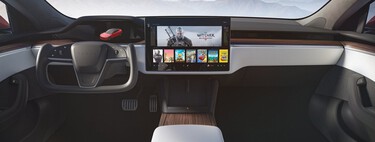
A differential value: Tesla believes this data-centric strategy is pivotal for carving out a distinct market advantage. Although the current fleet consists of just a handful of robotaxis, the data gathered isn’t merely experimental—it reflects real-world insights captured from actual drivers, substantially reducing costs and time investments associated with traditional development.
Moreover, the company aims to maintain lower operational costs by eliminating the need for expensive hardware like radars and lidar sensors, relying instead on their AI-enabled cameras. This strategic combination has the potential to produce cost-effective vehicles, which can outcompete others in the burgeoning robotaxi market .
However, there is an inherent risk in this approach, as the efficacy of lidar sensors in specific scenarios—such as poor visibility or complex roadside obstacles—has been demonstrated to surpass that of mere cameras. There are valid concerns surrounding the reliability of the current *vision-based* systems deployed by Tesla.
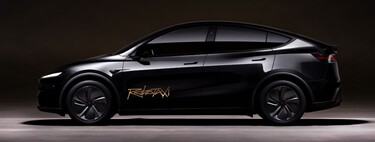
A shadow of caution: This discrepancy raises critical questions about safety. A notable test by Mark Rober illustrated that camera-only systems can misinterpret surroundings, mistaking a wall painted to resemble a road for an actual roadway—a confusion that lidar reliably detects.
While such scenarios are unlikely in real-world contexts, they reveal the limitations inherent in today’s AI-driven systems. For instance, a Tesla Robotaxi has been known to confuse a simple shadow for an oncoming object on the road—highlighting the potential hazards of relying solely on a camera-based framework for autonomous navigation .
In conclusion, as we witness the advent of Tesla’s robotaxis, it becomes glaringly evident that this transformative journey is rife with opportunities and challenges. Tesla’s unique data-driven approach positions it favorably in the competitive landscape of autonomous driving, but the question of safety remains paramount. As these technologies evolve, ongoing scrutiny and innovation will be crucial in ensuring that the promise of autonomy does not come at the cost of safety and reliability.