
The 1990s were arguably one of the golden eras of motorcycling . During this time, there were no electronic controls , environmental regulations, or safety concerns. What was once a wild frontier of innovation, motorcycle manufacturers treated it as a testing ground to launch some of the fastest vehicles in the world. The competition was so fierce that manufacturers had to set limits to reign in their relentless pursuit of speed.
Transformations in the Market. The motorcycle market has evolved dramatically since those days. Today, the dominant players are scooters and comfortable trail bikes , akin to SUVs on two wheels. In the 1990s, however, the icons were Japanese sportbikes from Honda, Yamaha, Suzuki, and Kawasaki, each pushing the limits of performance to dizzying speeds.
At the beginning of the 90s, Honda introduced the CBR900RR FireBlade, one of the world’s fastest production motorcycles. This game-changing model was soon surpassed by Kawasaki’s ZZR1100 and later the legendary Hayabusa. The race for supremacy became unchecked.
Hitting 300 km/h. Bikes like the Hayabusa easily exceeded speeds of 330 km/h. Fearing strict regulations from governments regarding such powerful vehicles, the industry decided to self-regulate through a gentlemen’s agreement.
The industry aimed to continue selling super sports bikes without intimidating regulatory agencies with motorcycles that were nearing 400 km/h rather than the 300 km/h limit.
A Secret Pact. The gentlemen’s agreement among the motorcycle manufacturers is well-known in the industry, yet there have never been official statements regarding it. Rumor has it that discussions were initiated by BMW with both Japanese and Italian manufacturers, curiously at a time when BMW had no motorcycles capable of competing for speed.
Come the early 2000s, manufacturers began adhering to this pact: the bikes released, such as the Kawasaki ZZR1200 and offerings from Honda, didn’t exceed 299 km/h. But the demand for speed in the sporty market led to the unraveling of this agreement.
Not for Long. Just seven years later, manufacturers like MV Agusta started breaching the agreement, with models like the F4 R exceeding the 300 km/h mark. BMW also broke ranks with its S1000RR, reigniting competition for the title of the fastest sportbike.
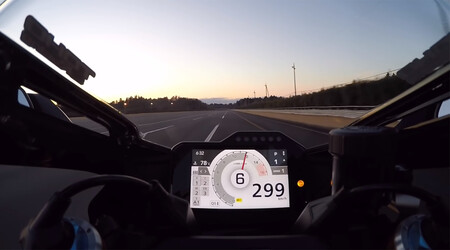
Honda CBR1000RR-R-SP, far exceeding 299 km/h, despite what the speedometer indicates.
Maintaining the Pact. Even though many street bikes now surpass 300 km/h, Japanese manufacturers still adhere to the agreement. Companies like Honda often do not mark speeds beyond 299 km/h on their speedometers, though their bikes may indeed be capable of hitting higher speeds. Yamaha follows a similar practice.
Modern iterations like the new Hayabusa or the Kawasaki H2, which could potentially reach speeds of 400 km/h, are still electronically limited to 299 km/h. Respect for tradition is strong among manufacturers, and exceptions like the Kawasaki H2R exist only for track use, reaching 400 km/h. Some enthusiasts go as far as modifying bikes to hit speeds surpassing 440 km/h, but such vehicles are not street-legal.
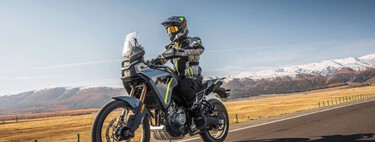
Beyond Motorcycles. The gentlemen’s agreement among the Japanese giants wasn’t unique. From the 1980s into the 2000s , automakers like Nissan , Honda , Subaru , and Toyota signed a pact limiting their cars to no more than 280 horsepower and a speed cap of 180 km/h. It’s particularly striking to see a Japanese car with nearly 300 horsepower, only to find its speedometer calibrated for a maximum of 180 km/h.
The agreement arose in response to escalating concerns regarding road safety within the country. While it may not have been formalized publicly, the implications are evident when scrutinizing vehicle after vehicle. Many sports cars still regret the restrictions of 250 km/h prevalent in current models.
Image | Austin Hervias
In Xataka | Chinese motorcycles are taking Spain by storm: who’s who in this brand puzzle.