
Discovery of Unusual Spherical Urns in the Amazon Rainforest
Sometimes, it is mere coincidence that leads us to unexpected discoveries . A fallen tree and the vigilant eyes of a local resident could spark the beginning of an intriguing archaeological finding.
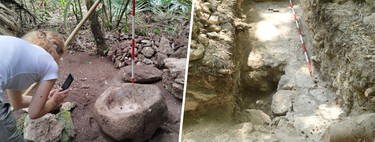
Spherical Urns. A group of archaeologists , assisted by local communities, recently discovered curious ceramic spheres buried in an alluvial plain deep in the Amazon rainforest. The team uncovered seven funerary urns , two of significant size, nestled between the roots of a fallen tree.
Inside these urns, archaeologists found fragments of human bones , along with remains of fish and turtles. This suggests funeral rites associated with food . These urns may provide crucial insights into the indigenous cultures that inhabited the Amazon basin in ancient times .
“They are large in size, with no visible ceramic lids, indicating the possible use of organic materials for sealing, which would have decomposed over time. They were buried at a depth of 40 cm, likely beneath ancient houses,” explained Geórgea Layla Holanda, a member of the excavation team in a press release.
Lago do Cochila. The discovery of these unique urns took place around Lago do Cochila, located in the municipality of Fonte Boa , in the state of Amazonas, Brazil. Previously part of a group of artificial islands constructed centuries (possibly millennia) prior by ancient inhabitants, the site lies in the alluvial plains of the basin.
Archaeological remains found at this site suggest that these elevated terrains would have enabled the construction of homes and the development of social activities even during flood seasons. The artificial islands likely comprised materials collected from other locations and transported to the plain. “It’s a very sophisticated and ingenious engineering technique that demonstrates site management and a significant population density in the past,” emphasized archaeologist Márcio Amaral.
A Crucial Partnership. The collaboration between archaeologists from the Amazon Cultural Heritage Management and Research Group at the Mamirauá Institute and local communities proved invaluable for the archaeological survey. The team noted that the detection of these artifacts would not have been possible without this cooperation: locals initially spotted the pottery among the roots of a fallen tree. While initially they didn’t comprehend the significance of their find, their photographs captured the attention of archaeologists who rapidly initiated the extraction and analysis of the objects.
High-Level Excavation. Excavating these urns posed a technical challenge . Being suspended by the horizontal position of the tree that buried them required an unconventional excavation approach. Local communities assisted the team in building an elevated structure that functioned as scaffolding, allowing safe access and handling of these valuable artifacts.
Journey to Tefé. Among the additional challenges faced by the team was the need for fluvial transportation . Depending on river conditions and transportation methods, traversing the 190 kilometers that separate the dig site from the Mamirauá Institute headquarters can take between 10 to 12 hours.
Further studies at the Mamirauá Institute are necessary to unveil more details about these urns. Initial analyses reveal a greenish hue characteristic of the clay used to create the urns, a clay that has been identified in other archaeological contexts. This rare type of ceramic adds to the mystery surrounding these unusual funerary urns.
As researchers continue their investigations into this remarkable find, we eagerly anticipate new revelations that may enhance our understanding of the ancient cultures that thrived in the Amazon region.
Image | Marcio Amaral / Georgea Holanda