
The Transformation of Santiago de Compostela: Balancing Tourism and Local Life
In 1994, a stroll through the heart of Santiago de Compostela would have likely revealed a bustling scene filled with tourists , pilgrims (some perhaps limping), students , and professors . Many aspects remain unchanged even today, but the backdrop has drastically shifted. Three decades ago, the historic district was home to countless shops catering to local residents: shoe stores, clothing shops, kiosks, bakeries, grocery stores, and bookstores. Today, the touristification of the city has drastically reduced these establishments to merely a third of their former numbers. In fact, there are now more stores aimed at travelers than at the local population of Santiago.
Consequently, the Santiago city council has declared “enough is enough”.
Santiago Grows More Tourist-Oriented
In 1999, hotels, hostels, and residences in Santiago welcomed approximately 488,800 visitors . By 2023, that number soared to over 926,100 . This tourist boom has been fueled by the growing popularity of the Camino de Santiago , increased traffic through its airport, and Spain’s rise as a premier international destination. The city’s unique character has left a mark on local residences and, more significantly, on commerce. This shift has been acknowledged by the city council, which has reported substantial declines in businesses catering to locals.
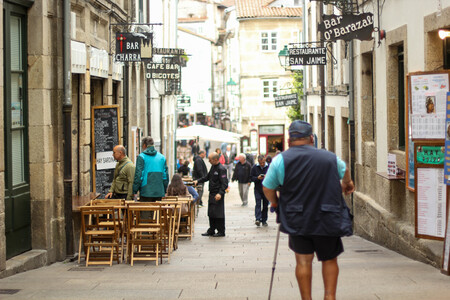
From 645 to 202 Businesses
The statistics are alarming. According to official data from the city council, in 1990, the historic area had 645 businesses focused on catering to residents. This broad category included everything from food and clothing to kiosks, pharmacies, jewelry stores, and hardware shops. Today, that figure has plummeted to 202 . The decline has been particularly steep among food-related businesses which have decreased from 125 to 35 , and clothing stores that have seen a fall from 121 to just 44 .
The Rise of Tourism-Oriented Businesses
Perhaps the most striking statistic is that the number of businesses targeting tourists has now surpassed those aimed at locals. Currently, the municipality counts 92 souvenir shops , 72 specializing in crafts, jewelry and design, and an additional 43 businesses offering typical products or delicacies. Overall, there are now 207 commercial establishments with a focus on tourism – outnumbering those catering to Santiago’s residents.
An analysis of ground-level businesses in the historic district shows that 45% are dedicated to commerce, 31% to leisure and dining, 8% to accommodation (the same percentage as for tertiary services), and 7% to offices. Interestingly, between 1996 and 2025, the population in the historic city increased by 26% , yet significant declines have been noted in several streets near or within monumental areas, alongside the paths traveled by pilgrims.
The City’s Strategic Moves
With these statistics in hand, the Santiago city council has decided to take action and regulate the touristification of its commerce. Recently, the city’s Urban Planning Councillor presented a modification to the Special Plan for Protection and Rehabilitation of the Historic City. This aims to “maintain and reinforce the residential use” of the old town while “promoting the preservation” of local businesses. The overarching goal is to ensure a balance between services aimed at residents and those targeting tourists.
This regulatory change has received approval from the local government but must undergo public consultation and obtain further approval from the city council before being enacted. If successful, it will complete a process that began nearly a year ago.
What Business Types are Affected?
The plan aims to put restrictions on three specific types of businesses within Santiago’s historic zone, all of which are clearly tourist-focused: souvenir shops, stores selling typical products, and automated establishments such as vending machines and unattended laundries.
Additionally, the plan includes a ban on gaming establishments, such as casinos or betting shops, throughout the monumental area. It continues to prohibit the opening of new accommodations of any type.
Revitalizing Local Commerce
Although this summary highlights the surface-level changes, the Santiago plan involves a more intricate approach. The city is also exploring ways to reintroduce funding to rehabilitate and conserve historic or significant local businesses, akin to efforts made in the late 1990s. Plans also prioritize local housing and community needs.
Santiago is not alone in facing the challenges of touristification . Recently, a report from the city of Málaga highlighted unprecedented levels of tourist saturation and cautioned that local, value-added businesses may be replaced by souvenir shops and tourist-oriented establishments.
In conclusion, while the rise in tourism provides economic opportunities for many cities, it also presents the challenge of maintaining local culture, commerce, and the quality of life for residents. Striking a balance between welcoming visitors and preserving the unique identity of places like Santiago de Compostela is crucial for sustainable growth.