

Labor absenteeism is rapidly emerging as a significant challenge for businesses and the economy at large. In fact, statistics regarding work-related absences surged in 2024, reaching record levels. Consequently, government authorities are intensifying efforts to clarify who qualifies for sick leave benefits. However, this effort occasionally leads to errors being made.
A case from León illustrates this problem. A worker had been on a medical leave for a year due to a shoulder injury. Just a few days after returning to work, she was denied a second sick leave for a new wrist injury. The Social Security authorities argued that she had exhausted her maximum benefit duration and that only the medical tribunal could approve a new sick leave. However, the High Court of Justice disagreed and ruled in favor of the worker.
Two distinct sick leaves. According to a ruling from the Social Chamber of the High Court of Justice of Castilla y León, Luisa applied for temporary medical incapacity due to tendinitis in her right shoulder in October 2021. This benefit was covered by her work-related insurance. The National Social Security Institute (INSS) officially discharged her from medical leave in February 2023.
However, just two weeks after returning to work, Luisa sought medical leave again, this time for carpal tunnel syndrome in her wrist. Since this request was made within 180 days of her previous medical discharge, the INSS denied it, classifying it as related to a “same or similar” condition as her prior injury.
Why the second sick leave was not recognized? Sick leaves are governed by the General Social Security Law. Article 170 of this law states that for cases shorter than 365 days, the decision-making rests with work accident mutuals or medical inspectors. To clarify, as per Social Security, the responsibility for managing sick leaves falls to medical mutuals or authorized bodies alongside the Public Health Service.
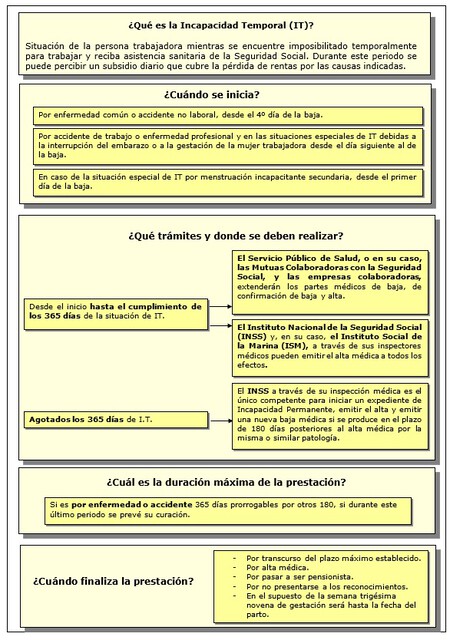
After the 365-day mark, however, the responsibility shifts to the INSS. Various medical tribunals then assess whether to extend the sick leave, issue a medical discharge, or initiate a process for permanent incapacity , with a deadline of up to 545 days to make a decision before the worker loses their right to benefits, as delineated in Article 173.1 of the law.
This prerogative is specified in Article 170.2, which the Social Security uses to justify recognizing Luisa’s sick leave and associated benefits. “Once the 365-day period is exhausted, the National Social Security Institute, through its competent bodies, must assess, classify, and review the employee’s permanent incapacity status,” as the law states.

The judges’ correction. The ruling from the TSJCyL confirms that, indeed, the employee had exhausted the initial 365 days outlined by law and applied for her second leave before the additional 180-word limit had elapsed.
However, the court validated the request for sick leave, asserting that the conditions prompting these requests stem from different underlying issues, despite both being related to her upper extremities. The court specified, “[…] if the conditions are not the same or similar, the inspection lacks jurisdiction,” thus validating Luisa’s second sick leave as arising from distinct medical issues: right shoulder tendinitis versus carpal tunnel syndrome.
The ruling’s appeal. Although the Social Court No. 2 of Ponferrada initially sided with the INSS, asserting generically that the second leave resulted from a “similar condition,” the TSJCyL overturned this decision, confirming that these were indeed separate medical conditions without any overlap in time.
The final judgment orders both the INSS and the mutual insurer to pay the relevant temporary incapacity benefits from the date of the second sick leave request “until a legally valid reason for the suspension of her rights arises.” This ruling emphasizes the importance of a nuanced understanding of individual health conditions when evaluating medical leave and highlights the vulnerabilities workers face when navigating the complexities of social security regulations.