

Escalation of the Israeli-Iranian Conflict: A Military Analysis
The recent Israeli offensive against Iran, known as Operation Crescent Moon, has escalated tensions in the Middle East to unprecedented levels. The key questions now revolve around how much Iran can endure, the capacity of Israel’s Iron Dome, and the ability of both nations to inflict real damage on one another. The answers to these questions will provide insight into the potential resolution of this conflict.
Open Warfare. The hostilities between Israel and Iran, fueled by ideological, geopolitical, and nuclear rivalries for decades, have now reached a critical threshold. Early last Friday, Israel launched an unprecedented air assault on military and nuclear facilities within Iran, resulting in various casualties, including the death of Revolutionary Guard commander Hossein Salami. In retaliation, Iran initiated a limited counterattack involving about a hundred drones and numerous missiles, though most were intercepted.
The immediate backdrop of this episode was a historic resolution by the International Atomic Energy Agency (IAEA), which officially accused Tehran of violating its nuclear non-proliferation commitments, increasing international pressure on Iran. While Tehran maintains that its nuclear program is exclusively peaceful, Israel has intensified its active deterrence policy using force, seeing a nuclear-capable Iran as unacceptable.
Military Budget and Power. According to the International Institute for Strategic Studies (IISS), Israel invests more than double the amount spent by Iran, with a defense budget of $19 billion compared to Iran’s $7.4 billion. This disparity enables Israel to maintain a far more advanced technological and operational capacity, even with its smaller territorial and demographic size.
While Iran boasts 600,000 active soldiers and a population close to 89 million, Israel operates a smaller professional force of 170,000 troops with a population ten times smaller. However, Israel’s strength lies not in numbers but in the quality of its resources and technological integration.
Iran’s Military Strength. Recent reports indicate that with 88 million inhabitants and a vast territory of 1.6 million km², Iran has a massive military force: approximately 600,000 regular soldiers and 200,000 belonging to the Revolutionary Guard. This includes key units such as Quds Force, missile command, and cyber warfare units.
However, the real value of this force is tempered by several factors: many units are poorly equipped, aircraft are outdated, and recent months have seen significant operational setbacks due to Israeli and U.S. operations, undermining both their proxy networks and command structure. The elimination of key figures like Hossein Salami further aggravates the situation.
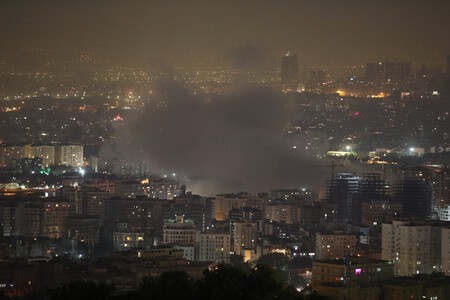
The Israeli military attacks parts of Tehran on June 13, 2025
Fragmented Capacity. Nevertheless, Iran possesses a crucial asset: its massive production capability for drones and missiles, exemplified by the Shahed models that have gained notoriety in Ukraine and beyond. While their nuclear program has not been declared weaponized, enrichment levels are approaching military thresholds, suggesting that a decision to produce several warheads could be made within months.
What is lacking? Possibly a reliable operational system for launch, although the timeline for its development is quickly shortening.
Israel: Vanguard and Tactics. In contrast, Israel maintains a smaller yet far more sophisticated military. With around 170,000 active personnel and approximately 400,000 reservists, it has a well-trained military core proven in recent conflicts.
Israel’s national defense industry is capable of producing a wide variety of weapon systems, including missiles, armored vehicles, autonomous drones, and cyber defense technology. The introduction of F-35s and other advanced fighters bolsters its air dominance, while its multi-layered defense systems (Iron Dome, David’s Sling, Arrow) enable it to intercept short, medium, and long-range missiles with unmatched effectiveness in the region.
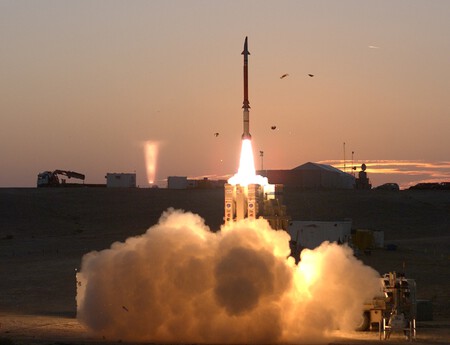
Test launch of the “Stunner” interceptor missile, a key component of the David’s Sling defense system
The Nuclear Issue. This aspect cannot be overlooked. Israel possesses a widely accepted but never confirmed nuclear weapon arsenal, making it the only nuclear power in the Middle East. Additionally, it has the political and military backing of the United States, which acts as a significant deterrent in Iran’s strategic calculations.
Recently, the United States has actively contributed to neutralizing Iranian threats in the region, deploying dozens of fighter jets, an aircraft carrier, and thousands of troops, thereby representing a latent tactical commitment.
The Iron Dome. A key strength of Israel is its sophisticated missile defense system, primarily consisting of the Iron Dome (short-range defense against rockets and drones) and Arrow systems designed to intercept ballistic missiles at high altitudes.
These technologies, developed with U.S. support, have proven effective by neutralizing nearly all projectiles launched by Iran in previous attacks. According to Uzi Rubin, founder of Israel’s Missile Defense Organization, no other missile defense system in the world matches its precision and specialization in intercepting multiple threats in real-time.
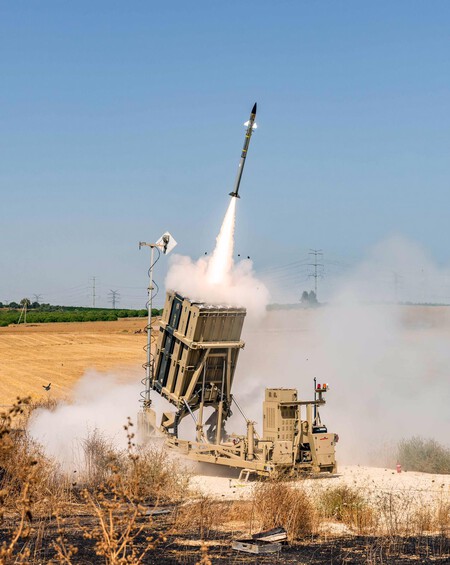
Iron Dome launches a Tamir interceptor during Operation Guardian of the Walls, May 2021
Israel: Attack and Defense. Israel has consistently demonstrated its ability to conduct precision operations over great distances, even within Iranian territory. Recent attacks not only destroyed critical infrastructure in Tehran but also eliminated high-ranking military officials and nuclear scientists.
The Israeli penetration capability stems from a combination of elite regular forces, long-range strategic intelligence, and stealth technology.
Iran: Attack and Defense. In contrast, Iran has attempted to respond through saturation attacks using ballistic missiles and drones, similar to its October 2024 strategy. However, these have seen limited returns due to Israel’s missile shield and U.S. support.
Consequently, Iran’s capacity to sustain a prolonged offensive is in question, both due to the effectiveness of Israeli defenses and the gradual degradation of its military infrastructure. Although Iran has an enormous arsenal (with claims of over 3,000 ballistic missiles), the precision and penetration capability of many remain dubious.
The American Factor. The U.S. is an essential player in this conflict. While the U.S. has distanced itself from the latest Israeli operation, labeling it unilateral, its involvement is still inevitable in the event of a regional escalation (with threats made against Iran). The U.S. maintains an extensive military presence in the region, deploying everything from fighter jets to diplomatic assets, coupled with a recent history of close cooperation with Israel. Any Iranian retaliation against U.S. interests could trigger a substantial response.
In this context, Iran has threatened attacks on U.S. bases as part of a broader strategy to force America’s withdrawal from the region. However, Israel has neutralized many of Tehran’s allied militias, such as Hamas and Hezbollah, reducing Iran’s external projection capabilities.

Asymmetric Powers. The comparison between the military capabilities of Iran and Israel reveals a fundamental strategic asymmetry and two diametrically opposed military doctrines: while Iran focuses on quantity, territorial depth, and proxy warfare, Israel relies on the quality of its arsenal, cutting-edge technology, and rapid response capabilities.
This gives us key insight into the future of the conflict. In a high-intensity blitz campaign, such as the one currently underway, the technological supremacy of Israel becomes evident. However, should the conflict transform into a prolonged confrontation, demographic and attrition factors could potentially tilt the balance.
In conclusion, the military dynamics between Israel and Iran are complex, influenced by various factors including budget, technology, and external alliances. As the conflict evolves, it will require not only military strategies but also diplomatic efforts to potentially pave the way for a more stable resolution in the Middle East.