
Legislation Targeting Fast Fashion Set for Vote
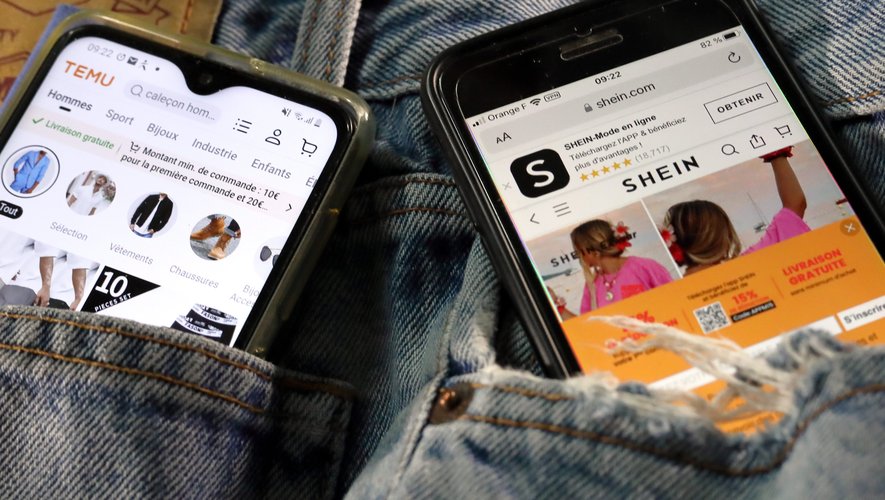
The proposed law “to curb the expansion of fast fashion” will be voted on in the Senate this Tuesday. This legislation specifically targets the ultra-ephemeral fashion embodied by Asian giants like Shein. Recently, the robust lobbying efforts of these companies to dilute the law have sparked intense debate and indignation. Consumers in the region, however, justify their choices to purchase clothing and other products from the sites targeted by the legislation. Their primary argument: price … but not exclusively.
As the Senate vote approaches, many consumers are watching with trepidation . These individuals, who have agreed to share their experiences, regularly order clothing from Chinese sites like Shein, Temu, or AliExpress, which are at the forefront of senators’ scrutiny. They are unapologetic about their choices.
The first argument remains price—unbeatable, in their view. Élodie, a thirty-something resident of Montpellier, explains: “If I order from Shein or AliExpress, it’s simply because that’s all I can afford.” Living on a disability allowance of €1,016, she adds, “With inflation, it’s difficult to buy clothes elsewhere.” Interestingly, Élodie sews her own clothes, admitting, “It takes time, it remains costly, and it’s not always possible. I’ve tried thrift stores, but they can also be expensive. Second-hand items don’t always fit my style or budget.” She confesses, “I know fast fashion has a heavy environmental and social impact, and the materials are often harmful to the body… but I am poor, not guilty. And Shein, despite its flaws, allows me to enjoy fashion and reclaim my style.”
Incredible Bargains: The Appeal of Fast Fashion
Sylvaine, a 55-year-old from Ariège, is also a fan of Shein and Temu. “I order between 5 and 10 items per month for a total of €35 to €100, and it allows me to create a stylish wardrobe at a lower cost,” she states. Her economic argument is also compelling. “I purchased a waterproof, warm coat for €17, which is listed at €29, while the same one sells for €75 in a major sports chain,” she defends. She appreciates the variety, the perceived quality—despite critics’ arguments—and the convenience of shopping at home. “More importantly,” she notes, “the more you buy, the more discounts you receive, from 10% to 30% on a single order.” This kind of incentive encourages consumption, something that many consumers are willingly participating in.
Another consumer, “Lolo,” adds her voice to the chorus. “I prefer buying directly from China rather than paying a French intermediary who takes a huge cut. They talk about ecology, but the products in all stores also come from there. They target Shein, but maybe they should have got to the French firms that relocated for profit.” She continues, “There was a time when the same pressure was applied to Amazon, and now it’s Shein and Temu being targeted. The focus on ecology feels somewhat disingenuous. I buy my clothes there because they’re high quality and cheaper, and I have no other choice living in a rural area.”
The Impact of Potential Legislation
For Laetitia, the upcoming law will only serve to deprive her of products she can’t afford to buy in France. She asserts that she finds prices on these platforms three to five times cheaper. “And don’t tell me I’m not eco-conscious,” she insists. “I limit my orders to one parcel a month. I know it’s not ideal, but businesses are also sourcing products from China to stock their stores.”
Another consumer, Sophie from Castries, is less inclined to shop at conventional stores. “Neither the patterns, colors, nor cuts appeal to me, and let’s not even talk about material. There’s no cotton left, just polyester that retains odours,” she states. Consequently, she has decided to learn sewing to create clothes that she loves and that will last.
So, is the real debate lying elsewhere? In an era where leaders call for reconciling with our sovereignty across various sectors, should the focus not be on reshaping the textile industry into a more virtuous model? This goal is certainly more ambitious, hence more complex, yet it may be the solution we need to address the root causes of fast fashion and its implications for society and the environment.