
| IN BRIEF |
|
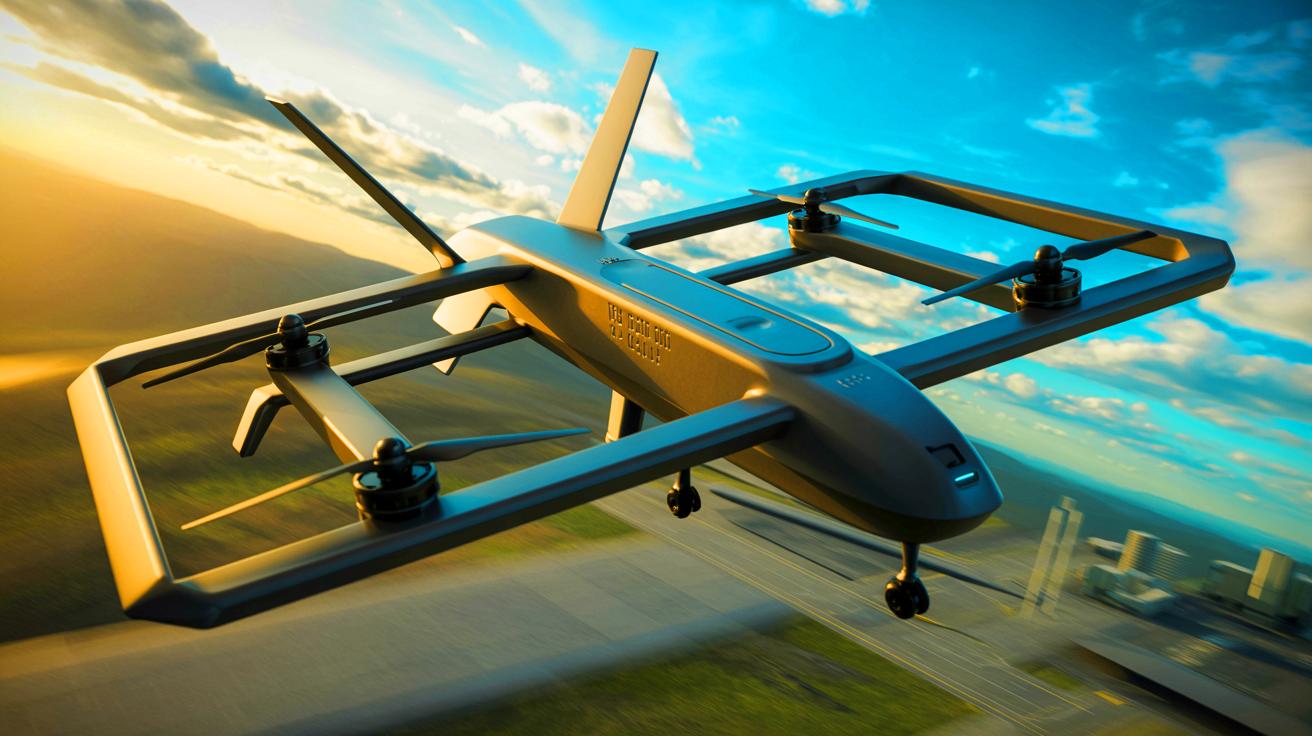
The development of new aerial technologies has often marked significant turning points in military domains. With the rise of Airvolve , a small Lithuanian company, a new type of hybrid-electric aircraft could represent the future of military missions. The primary objective of this aircraft, named Airlift , is to provide a more cost-effective and safe alternative to traditional helicopters. By offering a solution that could greatly reduce operational costs, Airvolve positions itself as a harbinger of innovation in the military aerospace landscape.
An Intelligent Helicopter for a New Era
The Airlift stands out due to its capacity to be not only more economical but also simpler and safer than conventional helicopters. Designed to transport up to 200 kg of payload within an internal volume of five cubic meters, it has a range of up to 100 km . This project is under development for countries like Ukraine , Greece , Poland , and Lithuania , targeting armed forces seeking more affordable and resilient platforms.
CEO Donatas Gendvilas emphasizes that recent conflicts and natural disasters have highlighted the vulnerability and high costs of helicopters. Events such as the evacuation of Ukrainian forces from Mariupol and the wildfires around the Mediterranean have shown that helicopters are often targeted and destroyed by cheap portable missiles. This situation leads military partners to consider helicopters as technologies of the past , paving the way for new innovations.
Ten Times Cheaper than Current Helicopters
One of Airvolve’s main goals is to develop a platform with operational costs that are ten times lower than those of current helicopters. The Airlift, with its capacity to transport 200 kg and a range of 100 km , integrates seamlessly within existing military infrastructures without needing specialized charging systems or extensive pilot training.
A major innovation lies in the aircraft’s rotor design. Unlike traditional vertical axis rotors, the Airlift employs a pair of horizontal axis rotors , described by Gendvilas as “helicopter blades that fold like a large umbrella.” This configuration, historically tested by Boeing in the 1930s, was abandoned due to material limitations. Airvolve believes that modern composites now render this design viable.
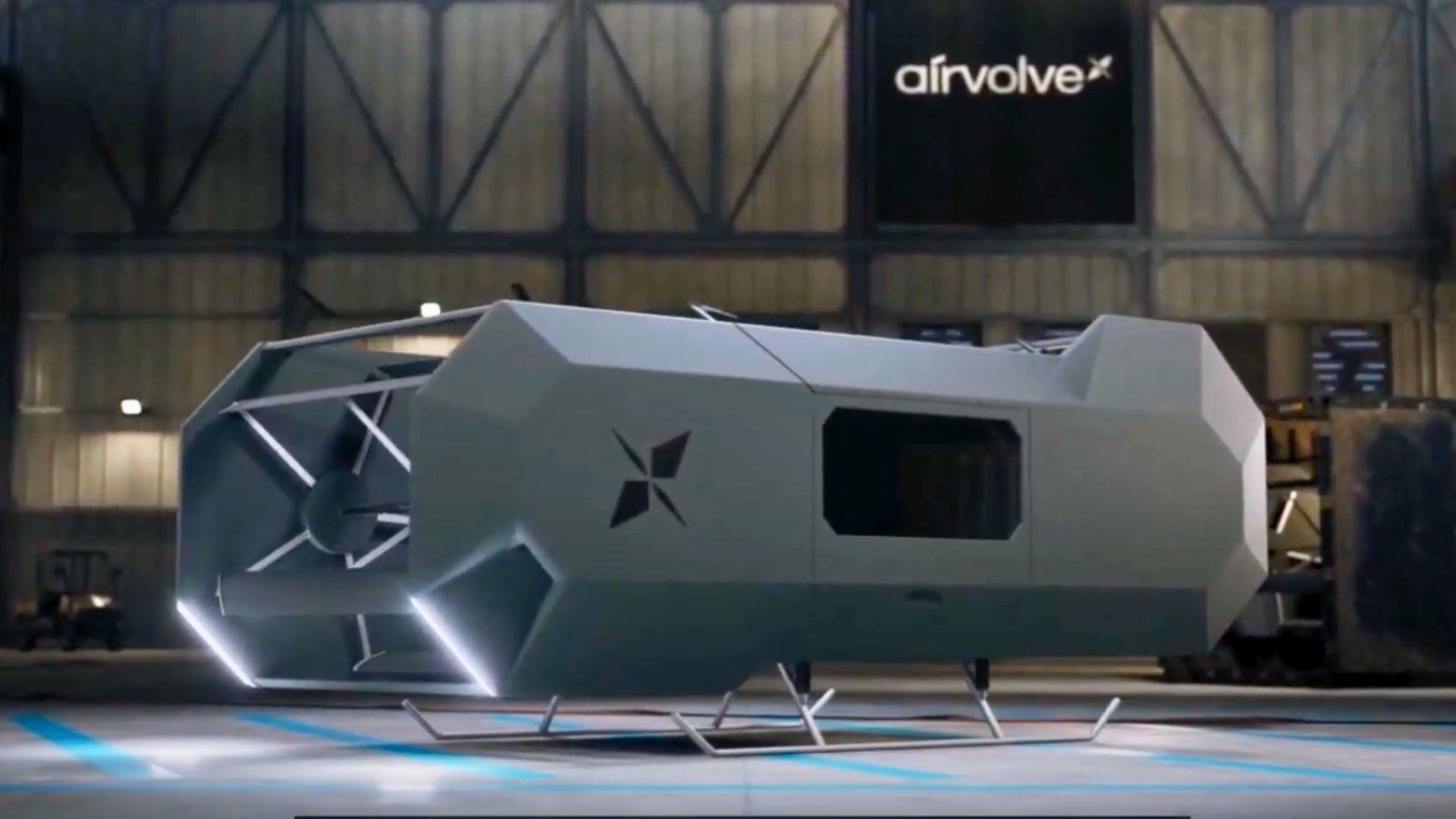
The propulsion system will be hybrid-electric, with electric motors driving the rotors, primarily powered by a small conventional aircraft engine. Heavy batteries will be avoided, with only smaller backup batteries used.
Optional Pilot Capability for Enhanced Flexibility
Comprising eight members, the Airvolve team has already secured approximately 2 million euros in EU research funding, allowing the construction of two small-scale models and achieving a technological readiness level of 5 . By 2025 , Airvolve raised an additional 825,000 euros during an initial investment round, with a more significant financing round planned for 2026 .
The aircraft will be capable of flying autonomously but can also be piloted by a human for basic navigation tasks. This feature offers flexibility for peacetime and wartime missions. The transportation of goods is a primary focus, as this is the most common requirement for military clients. In the future, the Airlift could support operations such as shuttle missions between land and sea, depending on partner demand.
Towards a New Horizon for Military Missions
With a clear mission and targeted design, Airvolve aims to provide a new type of tactical aircraft that is fast, efficient, and resilient. The company’s vision is to position itself as a key player in military operations, where timeliness and safety are paramount. As technologies evolve at a breakneck pace, how will armed forces worldwide adapt to this new era of aerial innovation?
The author utilized artificial intelligence to enhance this article.
Did you find this helpful? 4.5/5 (23)