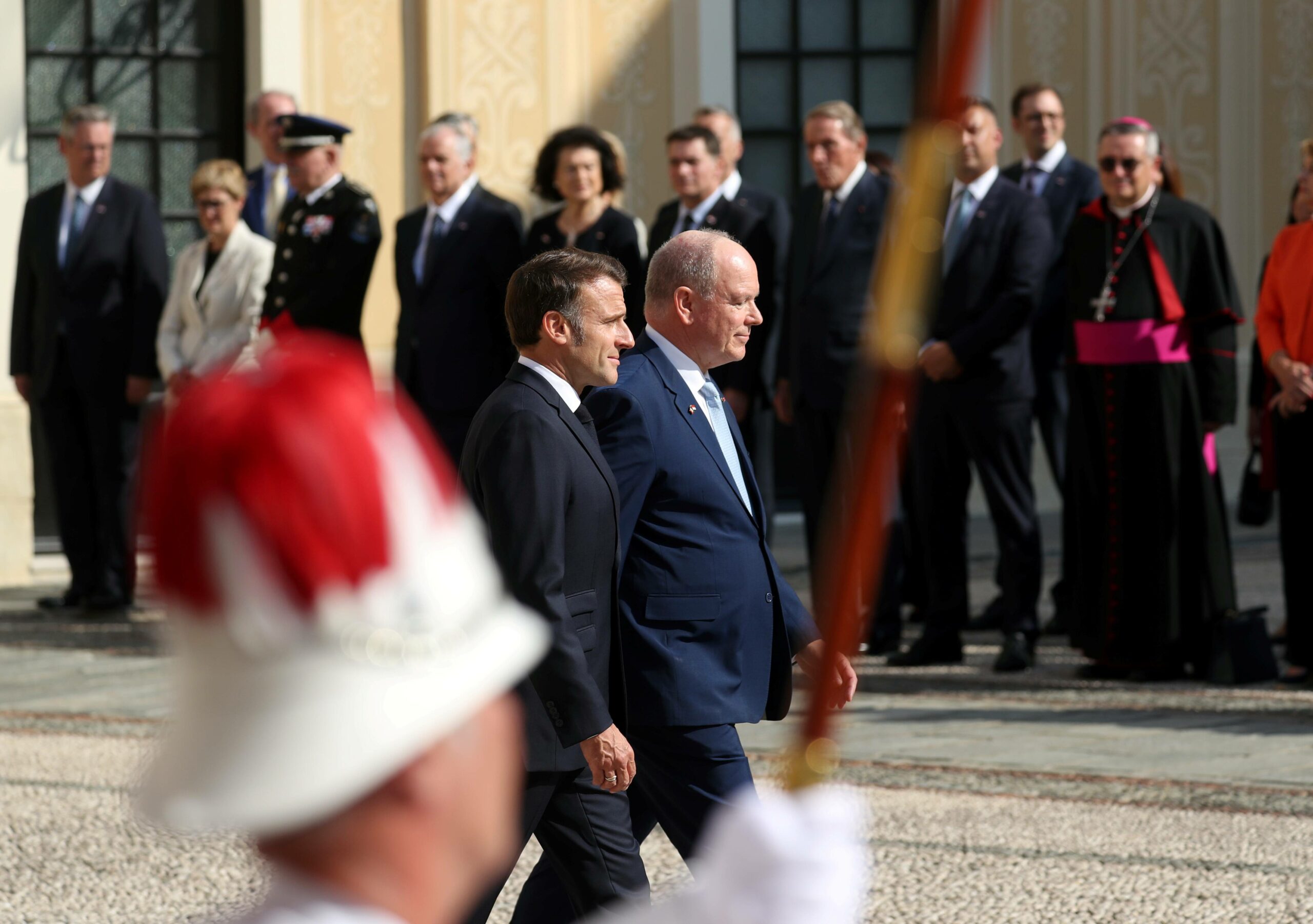
The success of the third United Nations Ocean Conference largely hinges on the attendance of key global leaders in Nice. The Élysée Palace waited until the conference’s opening day to announce the finalist attendees.
On Friday, President Emmanuel Macron revealed that there would be twice as many heads of state and government present compared to the previous conference held in 2022 in Lisbon. Ultimately, a total of 63 leaders convened in the azure capital.
Latin America and the African Continent
Among the prominent figures at this conference, Latin America is notably well-represented. Alongside the co-organizer, President Rodrigo Chaves Robles of Costa Rica , leaders such as Luiz Inácio Lula da Silva , the President of Brazil, Javier Gerardo Milei , his Argentine counterpart, and the presidents of Colombia , Paraguay , and Peru , notably Dina Ercilia Boluarte Zegarra , were all present in Nice.
From the African continent, noteworthy leaders include the presidents of Benin , Burundi , the Central African Republic , Congo , Guinea-Bissau , Mauritania , and Sierra Leone . Furthermore, representatives from other nations, such as Pham Minh Chinh , Prime Minister of Vietnam; Mohamed Younis Al-Menfi , President of the Presidential Council of Libya; Múte Bourup Egede , Prime Minister of Greenland; and Abdel Latif Jamal Rachid , President of Iraq, also attended.
The European Union in Solidarity
The European Union arrived en masse, led by Ursula von der Leyen , the President of the European Commission, alongside Antonio Costa , President of the European Council; Roberta Metsola , President of the European Parliament; and Kaja Kallas , High Representative of the EU for Foreign Affairs and Security Policy.
The delegation also highlights four vice-presidents , including a representative from China , and four deputy prime ministers, illustrating a strong unified presence.
Significant Absentees
Other nations are represented at a lower diplomatic level , with ministers or mere representatives in attendance. This notably includes the United States , Canada , and Australia , whose heads of state—most pertinently Donald Trump —have opted to abstain from this pivotal summit.
It’s equally important to note the absence of several of our closest European partners . Neither Giorgia Meloni , the Italian Prime Minister, nor Friedrich Merz , the new German Chancellor, made the trip. Also missing is Keir Starmer , the Prime Minister of the United Kingdom, further highlighting the uneven representation at this conference.
The Significance of Leadership Attendance
The attendance of these global leaders at the United Nations Ocean Conference is not merely a formality. It symbolizes a collective acknowledgment of the urgent challenges facing our oceans today, including climate change , pollution , and biodiversity loss . With ocean resources being a critical component of global security , economic stability, and ecological sustainability, the presence of prominent leaders signifies a commitment to foster international dialogue and collaboration.
Conversations hosted during this summit aim to progress toward actionable policies and measures critical for protecting marine ecosystems. The summit’s outcomes could play a pivotal role in shaping future environmental regulations, emphasizing sustainability , and enhancing cooperation among nations.
Conclusion
This third United Nations Ocean Conference stands as a testament to the growing recognition of the significance of our oceans and the urgent need for global leaders to collaborate on effective solutions. With substantial representation from Latin America and Africa, alongside a unified European delegation, the discussions could yield transformative policies that address the pressing risks our oceans face. However, the absence of key leaders from major countries raises questions about the commitment of those nations to ocean governance. As the conference progresses, it will be essential to monitor the discussions and outcomes to determine the lasting impact on international oceanic health and cooperation.