
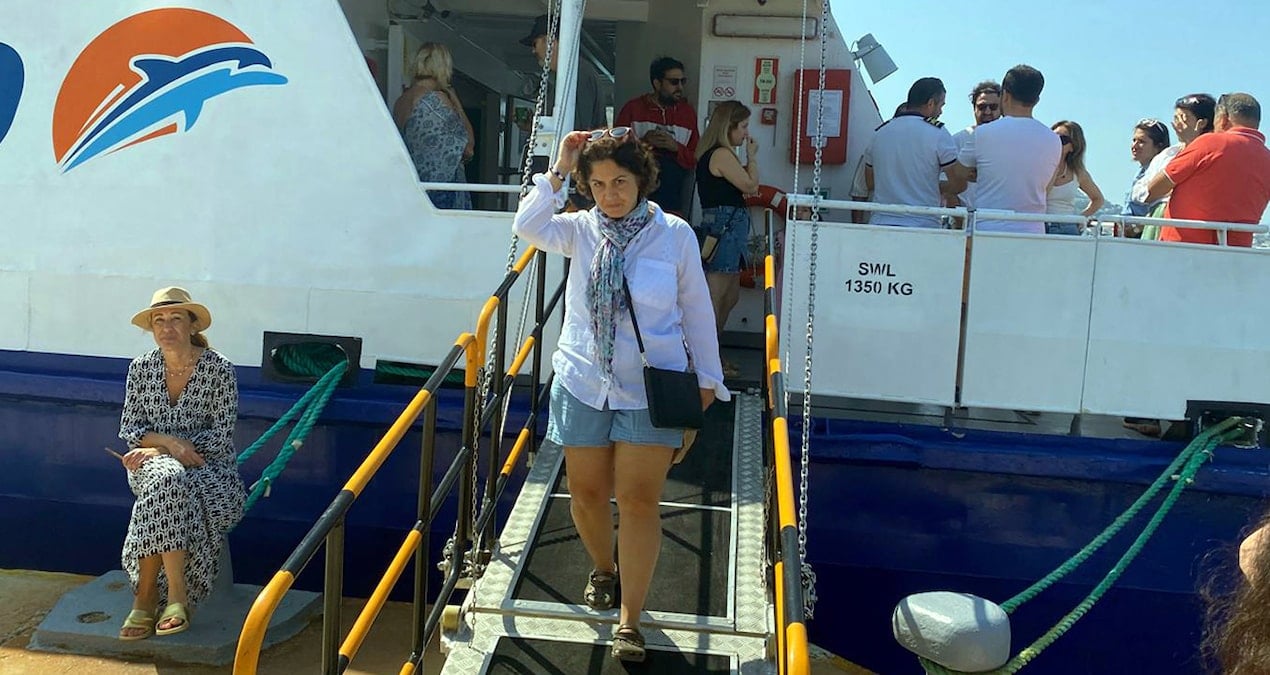
In the picturesque town of Turgutreis, located in the Bodrum district of Muğla, a significant disruption to ferry services occurred today. The planned Turgutreis-Leros ferry service, operated by the Muğla Metropolitan Municipality’s company MUTTAŞ in conjunction with IDO (Istanbul Sea Buses), was canceled due to claims of battery and engine failure .
PASSENGERS LEFT WAITING FOR TWO HOURS
Passengers began boarding the IDO Karadeniz ferry at 8:00 AM . They expected the ferry to depart at 9:00 AM , but after waiting for over an hour and receiving no updates, they grew concerned and sought information . Nearly one hundred travelers were subjected to a wait of around two hours before they were informed that the service had been canceled due to alleged issues with the ferry’s engine and battery.
Amidst this chaos, Turkish tourists expressed their mounting frustration. They warned ferry officials that their international exit fees and reservations at hotels and tours on Leros Island were at risk of becoming non-refundable. Tensions escalated as passengers engaged in heated arguments with ferry company representatives. Eventually, the officials assured the travelers that their Turgutreis-Leros ferry tickets could be used for a future journey, but many were still left feeling unsatisfied due to the financial loss from non-refundable fees for their hotel bookings.
Those who could not reach Leros found themselves returning to their hotels and homes in Bodrum, disappointed and without a way to salvage their day.
PASSENGERS STRANDED ON BOARD
Several passengers were traveling for a day trip to Leros, while others had longer stays planned for the upcoming week. One traveler mentioned, “We were planning to visit Leros for just a day.” Osman A., another disappointed passenger, added, “However, many travelers had planned to enjoy a week-long holiday there. For a long time, we received no updates from the ferry operators, and by the time the ferry’s cancellation was announced, the situation had grown increasingly chaotic.”
Despite assurances from ferry operators that their tickets had not expired and could be rebooked, the pain of losing the exit tax – which is non-refundable – weighed heavily on the travelers. Additionally, those with hotel reservations were left scrambling to figure out how to recuperate their costs.
The disruptions on the Turgutreis-Leros ferry are not isolated incidents. A similar case occurred recently with another IDO ferry named Marmara , which was stranded in Rodos due to missing paperwork. The Rodos Port Authority denied it permission to return to Fethiye, leaving both crew and passengers in a state of uncertainty.
IMPACT ON TOURISM AND TRAVEL
This unfortunate series of events has raised concerns regarding the overall reliability of ferry services in the region. Turkey’s Aegean coast is an immensely popular destination for both local and international tourists, many of whom rely on ferry services to explore the beautiful islands scattered throughout the Aegean Sea. Disruptions like these not only frustrate travelers but can also reflect poorly on the tourism sector, as they may tarnish the reputation of ferry operators and their services.
The swift and unpredictable nature of ferry operation challenges the travel plans of many, and this situation serves as a reminder for authorities to strive for improved communication and reliability. Passengers need timely updates about cancellations or delays to avoid being left stranded amid uncertainty .
WHAT FOLLOWING PASSENGERS SHOULD KNOW
Travelers planning to visit Leros or other nearby islands in the future should stay informed about ferry schedules and possible service interruptions. It’s always wise to have an alternative travel plan in place, especially during peak tourist seasons when demand for services may outpace availability. Additionally, purchasing travel insurance could help mitigate potential financial losses due to unforeseen cancellations.
In summary, ongoing issues like those faced by passengers today emphasize the importance of transparency and customer service from ferry operators. In this fast-paced travel environment, ensuring that passengers receive prompt updates and support can help to alleviate some of the stress associated with travel disruptions, fostering a more enjoyable experience for both locals and tourists alike.