
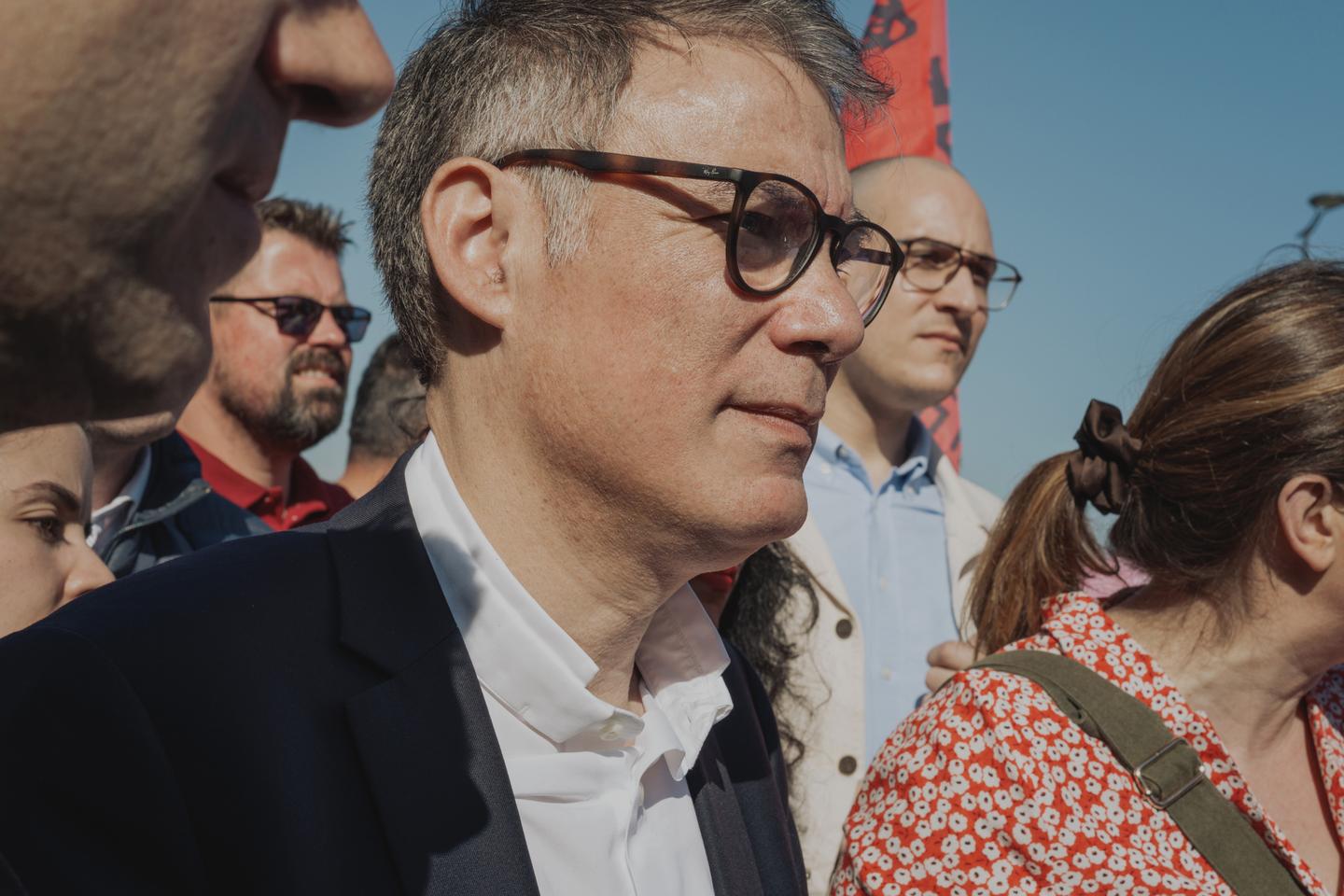
The 81st Congress of the Socialist Party: A Turning Point or a Repeat of the Past?
The atmosphere at the 81st Congress of the Socialist Party (PS) was charged with expectation, as leaders and members gathered to discuss the future of their political movement. A key focus was ensuring that the disastrous outcome of the 2023 congress in Marseille, which left the party divided and nearly imploded, would not repeat itself.
The Contest Between Faure and Mayer-Rossignol
In a tightly contested election, Olivier Faure rose to the occasion, claiming victory with 50.9% of the votes against 49.1% for his opponent, Nicolas Mayer-Rossignol . Early reports indicated that the margin was razor-thin, with about 500 votes separating the two. Faure’s camp celebrated the win just after midnight, emphasizing a sense of reassurance and stability for the party’s future.

However, as soon as Faure’s supporters declared victory, Mayer-Rossignol’s team contested the results, asserting that the difference was much smaller than reported. Hélène Geoffroy and David Assouline , allies of Mayer-Rossignol, held an impromptu press conference to counter the narrative of an overwhelming victory. “It’s not the reality. There are fewer than 200 votes separating us. We are within the margin of error, and no one can claim to have won,” they stated. This tension reflected deeper divisions within the party that could potentially hamstring its future electoral prospects.
The Broader Implications for the Socialist Party
Beyond the head-to-head battle between Faure and Mayer-Rossignol, there were larger implications for the Socialist Party as it navigates the complex political landscape in France. The party’s internal strife has raised questions about its viability in future elections, especially in the context of rising right-wing populism and the ongoing fragmentation of the French political scene.
In the lead-up to the congress, members expressed a collective desire for a renewed vision and a more unified approach to address pressing issues like climate change , social inequality , and employment . The outcome of this congress could very well shape the narrative around these critical discussions. As the party struggles for identity, the focus remains on attracting younger voters and those disillusioned by what they perceive as stagnation.
Potential Challenges Ahead
The divisions within the party revealed during the congress point to ongoing challenges. Despite Faure’s narrow victory, the disunity emphasized by Mayer-Rossignol’s camp underlines a significant dilemma: can the Socialist Party move forward collectively? The recent contest could sow seeds of discord that may not only hinder electoral success but could also limit the party’s ability to unify around a compelling platform.
Moreover, with the 2027 elections looming, the need for cohesive strategies becomes pressing. Leaders must move beyond internal politics and present a united front to engage voters who are increasingly looking for alternatives that reflect their demands.
The upcoming period will be critical for the Socialist Party as it tries to re-establish itself as a vital force in French politics. Whether or not Faure can foster a collaborative environment to unify party members under one vision remains to be seen. The stakes are high, and the party’s future may depend on its ability to navigate these challenges effectively.
The recent congress represents not just a moment of decision, but potentially a pivotal chapter in the Socialist Party’s history. The outcomes may echo through future electoral cycles, making it critical for party members to reflect honestly on their direction and unity moving forward.
General News – 2