
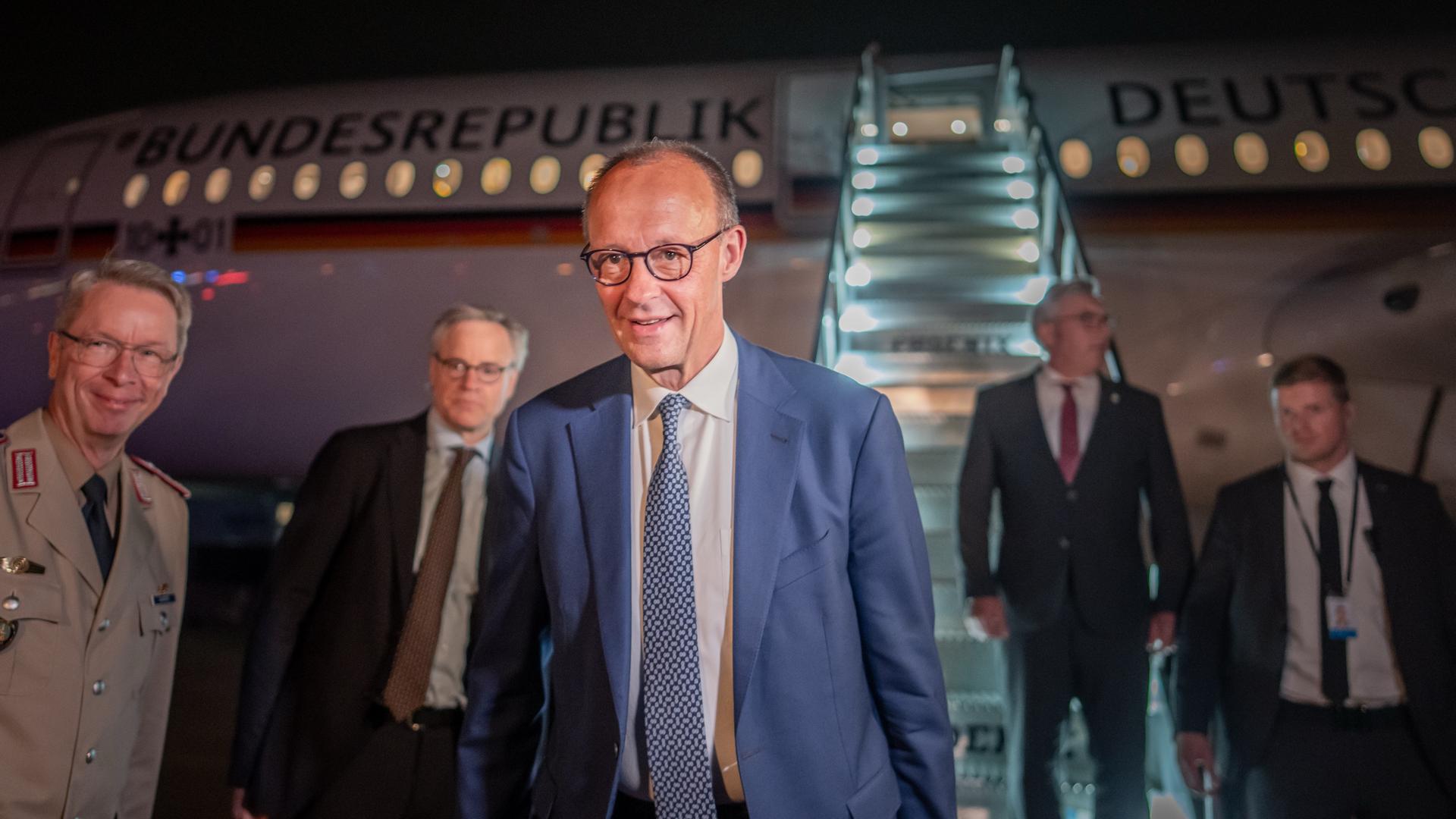
Germany’s New Diplomatic Strategies: Merz’s Visit to Washington
In an era marked by global uncertainty and shifting alliances, Germany’s role in the transatlantic partnership is more pivotal than ever. With economic tensions simmering between the United States and the European Union, and the ongoing conflict in Ukraine, Germany’s leadership under Chancellor Friedrich Merz seeks to solidify its standing on the international stage. Merz’s visit to Washington is not merely a routine diplomatic endeavor, but a meaningful effort to redefine German-American relations.
A Confident Stance in Diplomacy
Merz clarified before his trip that he aims to represent Europe’s positions with confidence rather than as a supplicant. His engagements will focus on critical issues such as the lead-up to the NATO summit scheduled for late June, the trade disputes with the U.S., and the urgent need for a resolution to the ongoing war in Ukraine. By adopting this assertive approach, Merz underscores a key message: Germany is a significant player in global affairs and stands ready to collaborate with its transatlantic partners.
The transatlantic relationship has long been marked by interdependence, with both the U.S. and Europe relying on each other for economic stability and political security. Yet, as economic realities evolve, misunderstandings and conflicts arise. Merz’s visit signifies a commitment to dialogue and a desire to work collaboratively to address these challenges.
Key Issues on the Agenda
NATO Summit Preparations: As NATO prepares for its upcoming summit, Merz and U.S. leaders will discuss Defense spending and strategic commitments. With increased threats from various global actors, ensuring unity and a coherent defense strategy is essential for both entities.
U.S.-EU Trade Disputes: The ongoing trade tensions remain a concern for both sides. Merz’s administration is keen on negotiating resolutions to these disputes, particularly tariffs affecting various sectors. The focus will be on fostering a more cooperative approach to transatlantic trade relationships.
- Ending the Ukraine Conflict: Perhaps the most pressing issue on the agenda is the war in Ukraine. Both parties recognize that a sustainable resolution requires concerted efforts. Merz’s experience and influence within the EU could help bridge gaps between Ukraine and its allies, encouraging a unified stance among Western nations.
Germany’s Emerging Role
Hakverdi, Germany’s new Transatlantic Coordinator, also weighs in on the implications of Merz’s visit. He expresses optimism that this trip could enhance Germany’s relationship with the U.S. Hakverdi emphasizes that Merz is not arriving empty-handed; he possesses the tools necessary for effective negotiation, even with figures like Donald Trump—a sentiment reflective of the complex political landscape in the U.S. today.
Hakverdi highlights that, due to Germany’s increased focus on defense policy, the nation has emerged as a leading force within Europe. This proactive stance is not lost on American officials; Germany’s commitment to collective security and defense spending positions it as an attractive partner in maintaining transatlantic stability.
Economic Interdependencies
Economic factors also loom large over diplomatic exchanges. Germany, as a crucial player in the European single market, stands to gain much from closer U.S. collaboration. The trade potential is substantial, with markets opening to shared investments and technological innovations. Hakverdi is confident that shared interests will catalyze progress, enabling both countries to work towards easing their trading disputes.
This spirit of cooperation mirrors the broader context of global economic dynamics, where robust alliances can provide leverage against emerging challenges. The endeavor to strengthen ties highlights the intertwined destinies of Germany and the United States, emphasizing the necessity of mutual investment in each other’s success.
Looking Ahead
As Merz embarks on this diplomatic mission, Germany not only aims to mend and enhance its ties with the U.S. but also to ensure it firmly establishes its role as a leader in Europe. The visit represents a pivotal moment in reshaping international relations, fostering greater collaboration, and tackling shared challenges.
In a world where geopolitical tensions are increasingly pronounced, effective diplomacy has never been more critical. Every meeting, discussion, and shared vision can contribute to a more stable and prosperous future for nations on both sides of the Atlantic.
Merz stellte bereits vor seiner Reise klar, dass er nicht als Bittsteller nach Washington reisen und die europäischen Positionen dort selbstbewusst vertreten werde. Im Mittelpunkt des Treffens werden die Vorbereitung des NATO-Gipfels Ende Juni, der Zollstreit zwischen den USA und der EU und die Bemühungen um ein Ende des Ukraine-Kriegs stehen. Der neue Transatlantik-Koordinator der Bundesregierung, Hakverdi, erhofft sich von dem Besuch eine Verbesserung der deutsch-amerikanischen Beziehungen. Der SPD-Politiker sagte im Deutschlandfunk, Merz habe bei seiner Reise genug im Gepäck, um gut mit Trump ins Gespräch zu kommen. Durch die geplanten Anstrengungen in der Verteidigungspolitik sei Deutschland zu einem Vorreiter in Europa geworden. Man übernehme nun Verantwortung, was auch in Washington wahrgenommen werde. Zudem sei Deutschland als Teil des europäischen Binnenmarkts ein attraktiver Handelspartner. Er sei deshalb überzeugt, dass es zu einer Überlappung von Interessen kommen werde, erklärte Hakverdi. Diese Nachricht wurde am 05.06.2025 im Programm Deutschlandfunk gesendet.