
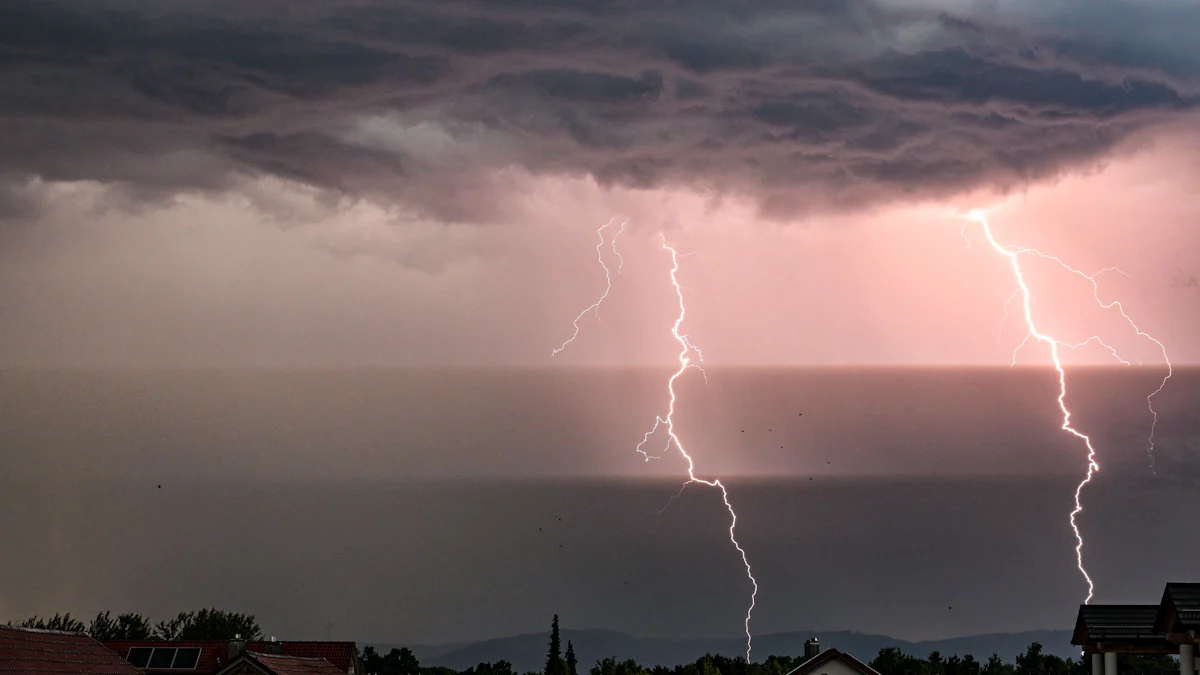
Severe Weather Strikes Southern Germany: A Night of Tornadoes, Hail, and Heavy Rain
On Friday evening, a significant weather event swept through southern Germany, prompting warnings and disrupting various events. The German Weather Service (DWD) had forecasted severe thunderstorms accompanied by hail, high winds, and intense rain. Reports indicated that in several areas, basements flooded, tree branches were torn down, and trees themselves were uprooted.
One of the high-profile incidents affected football fans and the national team during their match against Portugal in Munich. The Nations League semifinal, which was scheduled to begin on time, faced delays due to the weather. The match eventually kicked off at 21:10, ten minutes later than planned. Just prior to the game, hailstorm conditions forced the goalkeepers to leave the field during their warm-up as they sought refuge from ice-sized hailstones. Meanwhile, fans in the stands scrambled to find cover from the pouring rain, with many grabbing raincoats and ponchos, while others opted to retreat to drier areas within the stadium.
The storm’s impact was felt widely, even prompting the cancellation of a campus festival in Regensburg, which usually attracts around 12,000 visitors . According to a police spokesperson, the event at the University of Regensburg and the Eastern Bavarian Technical University was called off for safety reasons, just hours after it had begun.
As the evening progressed, reports from various police departments indicated that while there were some issues—like flooded basements and downed trees—no significant injuries or damages were reported. A spokesperson from the Lower Bavarian Police in Straubing noted that there were merely a few wet basements and minor tree damage, and at least one tree reportedly fell due to the severe weather. In another incident, a hailstorm damaged a garden in Regensburg, with officials stating the weather seemed to have passed.
In the regions of Middle Franconia and Swabia, which were also under storm warnings, local authorities reported minimal disruptions. A police spokesperson in Nuremberg noted, "It’s just raining here," describing the situation as "not much to worry about." Similarly, officials from Swabia described their experience as "unspectacular."
Southern Germany: Heavy Thunderstorm Activity
The thunderstorms primarily originated in Baden-Württemberg, as indicated by meteorologists from the German Weather Service. Around Ulm, a brief but intense storm front poured over the area before moving towards Bavaria. Reports from the region of Upper Swabia and the East Alb indicated that severe thunderstorms brought with them hurricane-like winds reaching speeds of up to 105 kilometers per hour, along with hail up to three centimeters in diameter. In worst-case scenarios, rainfall measured up to 40 liters per square meter in just an hour.
Notably, there were serious incidents reported as a result of these storms. In a town called Bad Liebenzell, a lightning strike ignited a house fire, and a firefighter was injured while battling the flames. Local authorities were quick to respond and assist the community in managing the fallout from the calamity.
Interestingly, even prior to this storm, there had been isolated weather events throughout Bavaria. In Wallgau, located in the Garmisch-Partenkirchen district, residents reported hail accumulation to the extent that they had to use shovels to clear streets and yards. However, a representative from the integrated control center said that the region had encountered typical weather-related incidents, including flooded streets and downed trees.
As the severity of climate events continues to escalate across various regions, the response from local authorities highlights the importance of effective communication and preparation. With ongoing climate changes resulting in unpredictable weather patterns, communities must remain vigilant and prepared for the unexpected.
There’s no denying that such violent weather wreaks havoc on daily activities, sporting events, and community gatherings. Moving forward, residents in affected areas are advised to stay informed through official weather updates and to follow safety protocols to minimize risks associated with sudden storms. Understanding and respecting the power of nature is vital in ensuring the safety of communities, particularly as we face increasingly severe weather conditions.