
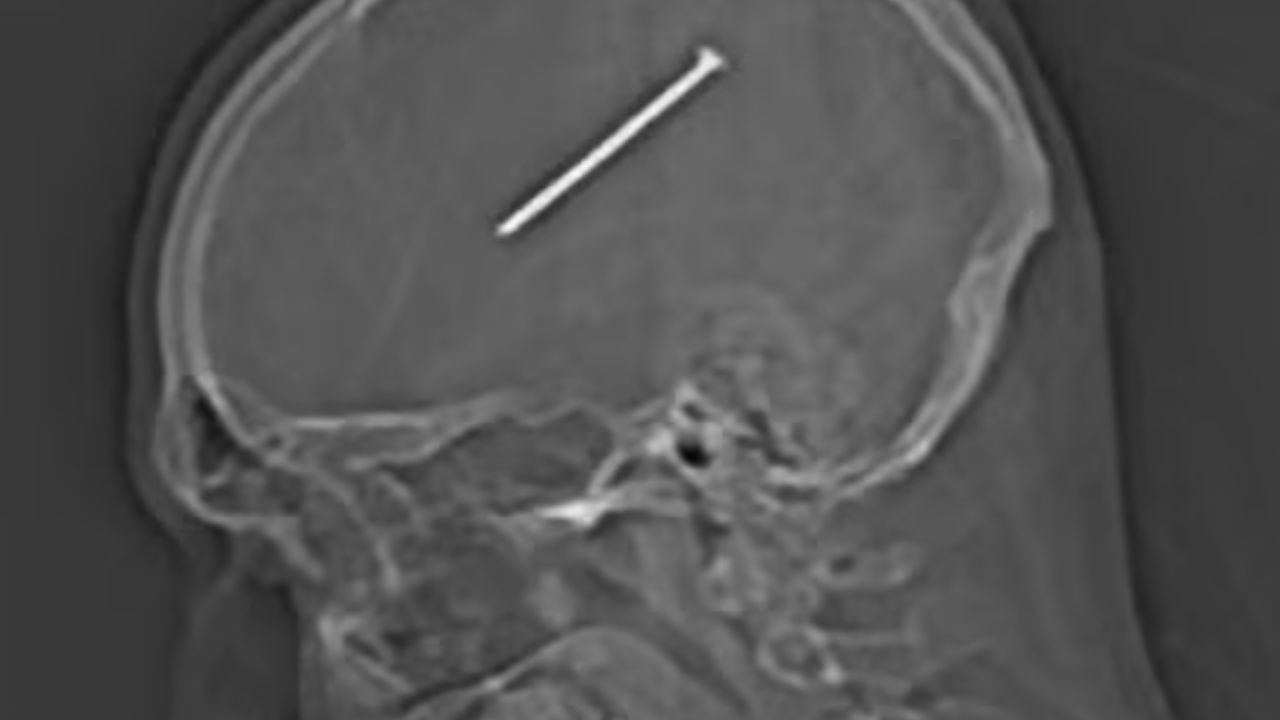
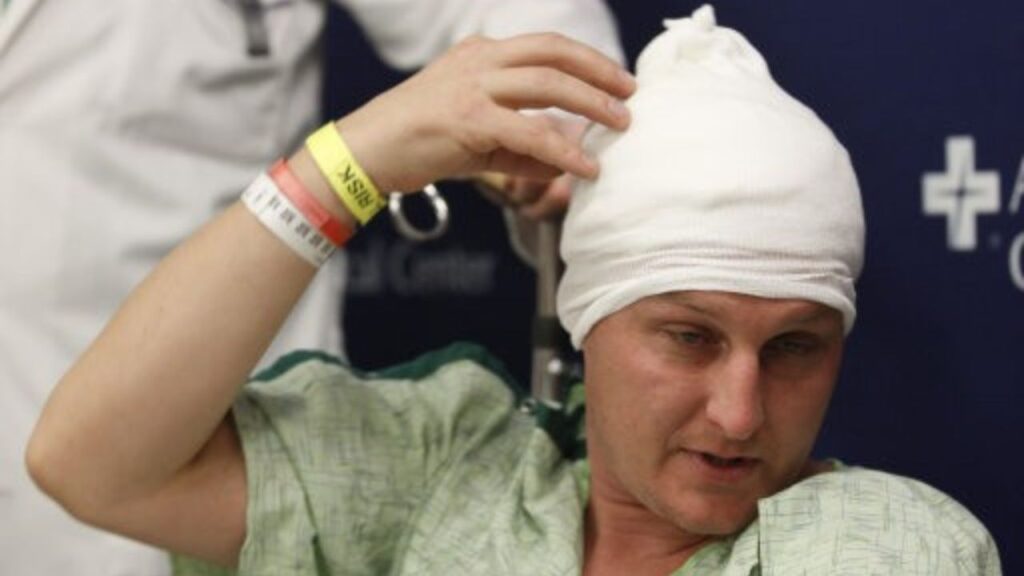
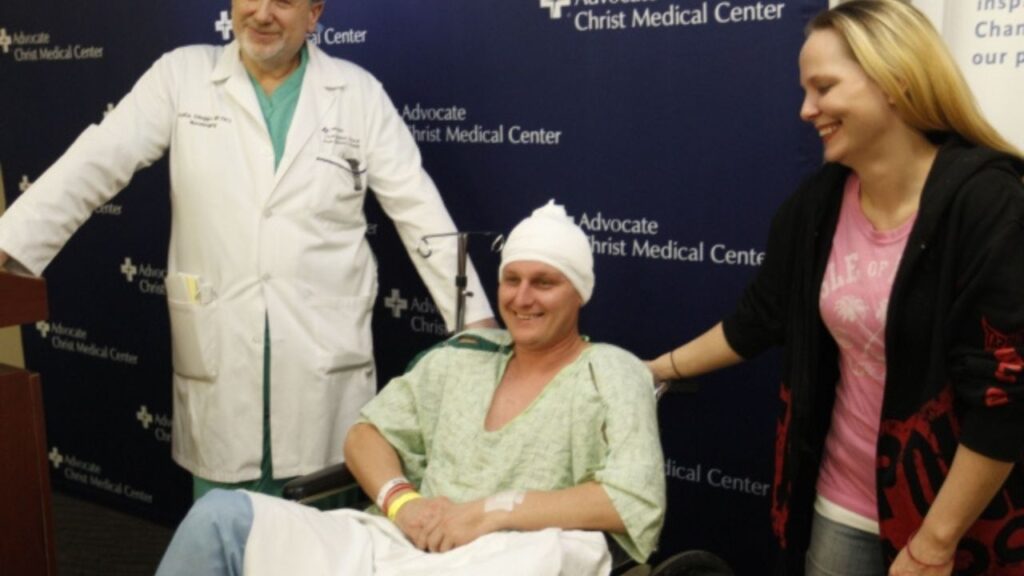
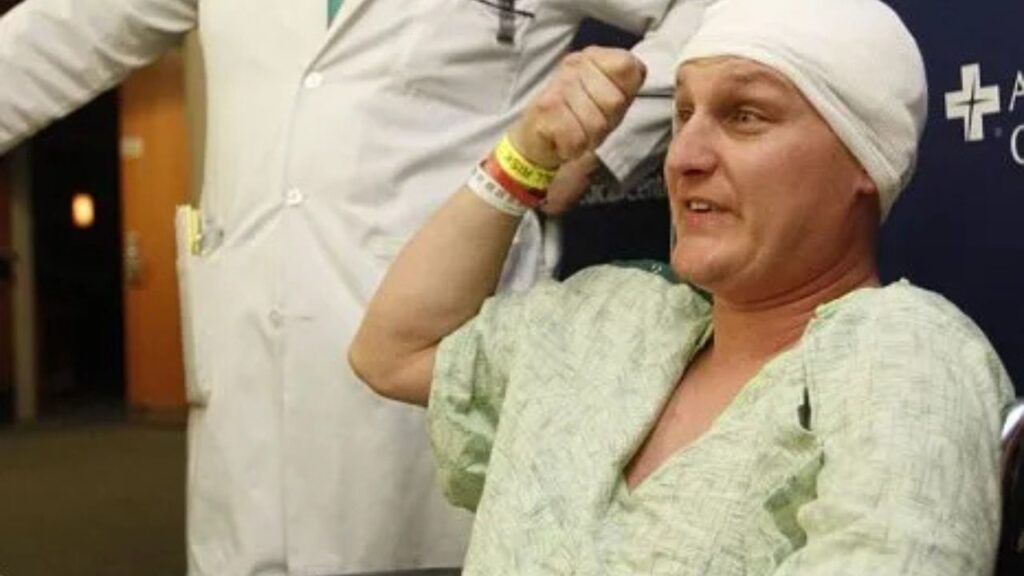
A man, Dante Autullo, lived for more than 24 hours with a 9 cm nail embedded in his skull without even realizing it.
This American Survived 24 Hours with a 9 cm Nail in His Skull
On January 17, 2012, 32-year-old Dante Autullo from Illinois was working quietly in his garage when he accidentally injured himself with a nail gun. He believed it was just a minor bump to his head, likely caused by a glancing blow. A small amount of blood and a dull pain were enough for him to brush off the incident. He cleaned himself up, took a painkiller, and went about his day. That evening, he even posted a photo on Facebook, looking cheerful and unaware that a 9 cm nail was lodged in his brain. Remarkably, he would continue to live with it for more than 24 hours.
The following morning, Dante started feeling nauseous. His girlfriend, noticing he looked unwell, insisted on taking him to the hospital. Initially, a basic scan was conducted at a small medical center, but he was quickly transferred to the emergency neurosurgery unit at Advocate Christ Medical Center in Oak Lawn.
There, a second scan revealed the shocking truth: a nail the length of a finger was embedded in his right frontal lobe, perilously close to critical regions of his brain.
SEE ALSO: His face “caught fire” after buying fast fashion
How Did He Survive Without Immediate Consequences?
The case immediately puzzled doctors. Dr. Leslie Schaffer, the neurosurgeon in charge of the operation, explained that the nail had taken a trajectory that was “almost perfect”; it avoided the most sensitive brain areas and major blood vessels, consequently not causing massive bleeding.
Such injuries are often fatal or at the very least highly debilitating. In Dante’s case, he was conscious, able to speak, and even joked with the medical team.
This phenomenon, while rare, isn’t entirely unheard of. In the medical community, these are referred to as “low-velocity penetrating head injuries.” Unlike bullets, nails or similar objects penetrate at a lower speed, which can, paradoxically, minimize internal damage.
Furthermore, the brain lacks pain receptors; it’s the surrounding tissues (meninges, bone, skin) that cause the sensation of pain. In this specific case, the angle of entry and the shape of the object allowed a temporary “cohabitation” between the man and the nail.
A High-Stakes Surgery and a Rapid Recovery
Dante underwent emergency surgery, which lasted two hours. The nail was removed without complications. As he regained consciousness, he quipped, “I always said I had nothing in my head…now it’s proven.” The media quickly picked up the story.
American media has turned this case into an emblematic tale of insane luck and human resilience. Outlets like the Chicago Tribune, CNN, and NBC all covered this story that seems straight out of a movie.
Just a few days later, Dante returned home. He retained all his mental faculties, without any motor issues or memory loss. He even shared a photo of the “radio” of his skull on social media.
SEE ALSO: He was robbed of 9 tons of cannabis, and he called the police…
Other Similar Cases: The Miraculous Survivors
Dante Autullo’s case joins a handful of extraordinary stories of individuals who survived with foreign objects lodged in their skulls. Probably the most famous is Phineas Gage, an American laborer who survived in 1848 after a more than meter-long steel bar pierced his skull. He lived for another twelve years but experienced radical personality changes that impacted the field of neurology.
Another recent case involves Ron Hunt, a Nevada worker who, in 2003, fell headfirst onto a drill equipped with a 45 cm bit. He too survived with minimal consequences. In 2014, a man in Brazil survived after having a 2-meter metal rod impale his skull during construction work.
What This Story Reveals
Dante Autullo not only survived an injury that could have been fatal but also illustrates two realities: on one side, the often-unrecognized resilience of the human brain; on the other, a certain normalization of household accidents. His case has become a dinner table anecdote, a meme shared for its absurdity. Yet, it serves as a reminder that even everyday objects, when used “correctly,” can lead to serious, even fatal injuries.
This story also exposes a common bias in self-assessment of injuries. Feeling “fine” or looking “normal” is not a guarantee of the absence of internal damage. Symptoms can take hours to manifest. According to a report from the National Institute of Neurological Disorders and Stroke, nearly 30% of moderate to severe traumatic brain injuries go undiagnosed immediately, particularly in young adults who often downplay warning signs.
General News – 2