
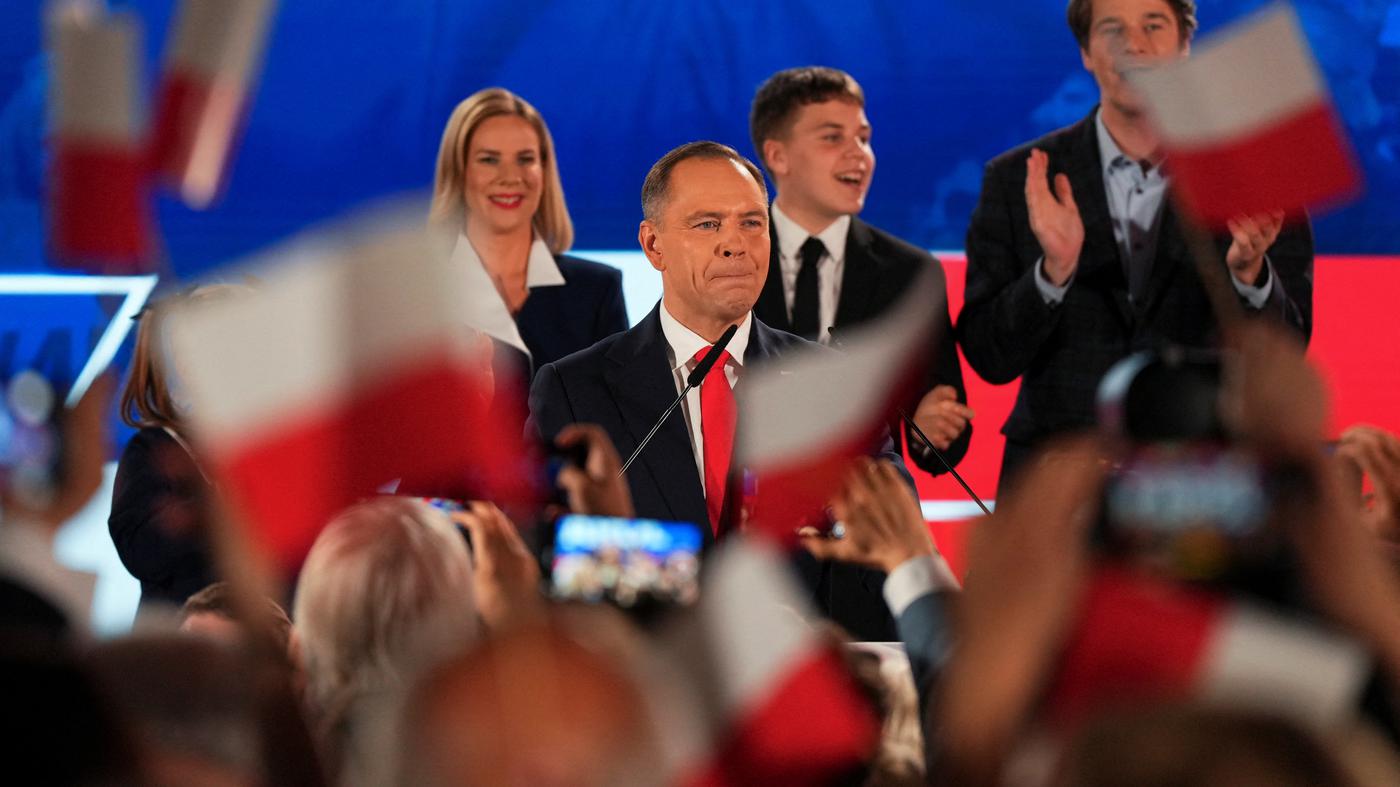
Karol Nawrocki Wins Polish Presidential Election: Implications and Insights
The recent presidential runoff election in Poland has concluded with a narrow victory for the right-wing nationalist candidate, Karol Nawrocki . According to official results released by the electoral commission, Nawrocki garnered 50.89 percent of the votes , while his pro-European rival, Rafal Trzaskowski , the liberal mayor of Warsaw, secured 49.11 percent . The electoral participation reached a historic high, with approximately 71.7 percent of eligible voters casting their ballots.
Polling and Results Breakdown
Shortly after the polls closed, early predictions indicated that Trzaskowski was leading with 50.3 percent . Both candidates projected confidence ahead of the election night, despite the evident close contest. Trzaskowski expressed hope, claiming, “We have won by a hair.” In contrast, Nawrocki, buoyed by his supporters, asserted, “We will win tonight.” Moderators reported jubilation from both camps, highlighting the intense competition between the candidates.
Approximately 29 million eligible voters participated to select a successor for President Andrzej Duda, who was ineligible to run for a third term after two consecutive terms in office. Nawrocki’s victory is seen as a reflection of the rising support for the right-wing party, Law and Justice (PiS) , which previously governed Poland from 2015 to 2023.
The Political Landscape: A Critical Turning Point
This election has been regarded as a significant turning point for Poland’s direction—navigating its relationship with the European Union and NATO. If Nawrocki, a known EU skeptic, officially takes office, changes in foreign and domestic policy are expected from this influential nation within the EU and NATO. His victory also marks a potential shift in Poland’s international posture , especially concerning relations with Germany and the broader EU.
The newly elected Nawrocki is a figure associated with the PiS and has previously served as the director of the Institute of National Remembrance (IPN). Despite controversies surrounding his past, including his experiences as a former amateur boxer and security guard, the party’s foundational ethos appears to resonate well among its base. His leadership could embolden those factions within Poland that favor a more confrontational stance toward EU policies.
Implications for Domestic and Foreign Policy
Under the previous administration led by the liberal Civic Platform , which re-assumed power after years in opposition, there were efforts for reform, including attempts to reverse PiS’s previous actions. However, President Duda’s veto powers have thwarted many of these initiatives, showcasing the impediments faced by the new majority in Parliament.
Nawrocki’s election may reinforce strong nationalism at the governmental level. His alignment with populist sentiments is pertinent, especially regarding Poland’s security partnerships and military upgrades in light of perceived threats from Russia. Despite the historical ties to European integration, Nawrocki’s vision seems geared towards asserting Poland’s autonomy within the EU framework, which might lead to friction with other member states.
Urban vs. Rural: Revelations from the Election Results
The electoral results highlighted Poland’s deep political divisions . While Trzaskowski found support in major urban centers like Warsaw, Kraków, and Łódź—areas that benefited from economic growth—Nawrocki performed strongly in smaller towns and rural regions. This urban-rural divide may signal an underlying sociopolitical trend that both parties will need to address moving forward.
Trzaskowski’s failure to mobilize a broader voter base among the left may have contributed to his loss. Although voter turnout was commendable— 71.7 percent —it fell short of the record 74.4 percent seen during the 2023 parliamentary elections when the opposition coalition triumphed over the PiS in a landscape fraught with voter enthusiasm.
Future Trends and Final Thoughts
Nawrocki’s commitment to revisiting past grievances, notably the demand for reparations from Germany for World War II atrocities, aligns with the broader nationalist rhetoric that may characterize his administration. His election signals a rekindled anguish in Polish historical discourse, potentially reshaping diplomatic relations. Concurrently, ongoing support for Ukraine against Russian aggression remains critical, reflecting a unified stance among Polish political factions. Nawrocki’s administration, however, may shift the strategies employed, especially regarding NATO policies concerning Ukraine.
In conclusion, the political landscape in Poland stands at a crossroads. As Nawrocki’s presidency unfolds, the implications of his governance will undoubtedly catalyze a critical examination of Poland’s national identity and international relations within a changing global context.