
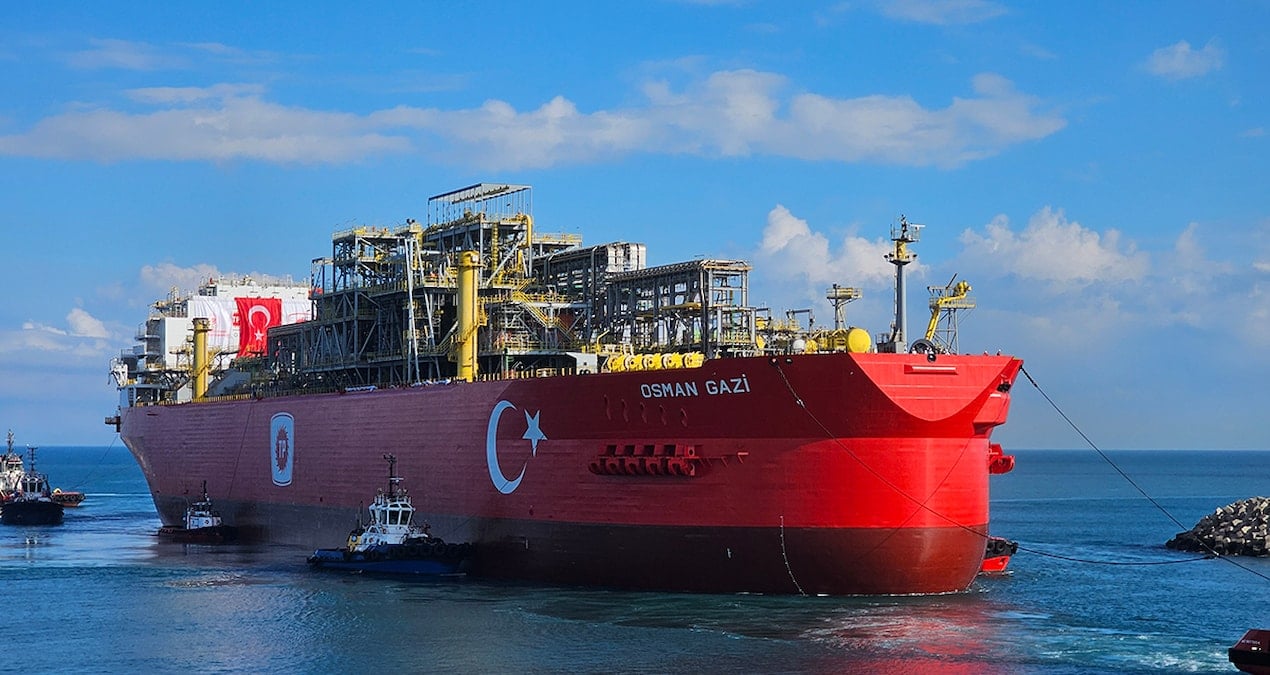
On May 29, President Recep Tayyip Erdoğan bid farewell to Turkey’s first floating natural gas production platform, Osman Gazi , from the historic Dolmabahçe Palace as it set sail for the Black Sea . This momentous occasion, marking the anniversary of the Conquest of Istanbul , was shadowed by questions surrounding the platform’s history and future. Originally built as a crude oil tanker in 1994 , the vessel underwent extensive modifications in 2008 to transform it into a floating production and storage unit.
It passed through the Bosphorus and set sail for the Black Sea. Erdoğan sent it off with a flourish.
CHÖMEZ RAISES CONCERNS IN PARLIAMENT
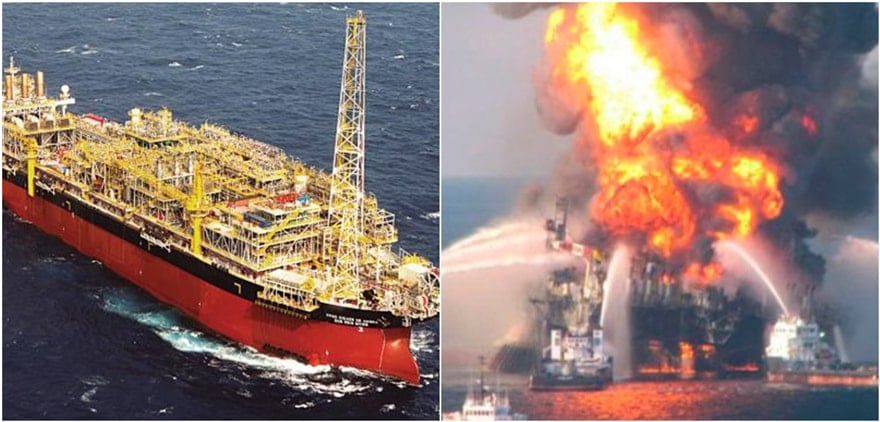
The platform has a controversial history; it experienced a significant explosion in 2015 , leading to repairs that reduced its length by 23.5 meters . Originally sold to an undisclosed buyer for $125 million , a staggering 4.9 trillion lira , Turkey later acquired it. Turhan Çömez , the Deputy Group Leader of the Good Party , brought this issue to the Turkish Grand National Assembly , questioning whether Turkey had “purchased a wreck.” He submitted a proposal requiring a response from Energy Minister Alparslan Bayraktar , prompting further scrutiny.
NATURAL GAS LEAK ACCIDENT
“The vessel’s inaugural destination was in the Camamu-Almada and Camarupim areas offshore Brazil . On February 11, 2015 , it suffered a catastrophic explosion, which resulted in the deaths of nine workers and injuries to 26 others . The explosion was caused by a natural gas leak in the aft pump room, prompting the vessel to be repaired in Singapore ,” he stated.
WHAT IS THE REAL COST?
Çömez pressed Minister Bayraktar for clarity: “It has been expressed that the platform will commence operations in 2026 . What are the reasons for the delays? What is the rationale behind acquiring a platform that has not been operational for ten years and sustained significant damage from an explosion? What is the financial cost to Turkey? The Norwegian and Singaporean firm BW Offshore announced on the Oslo Stock Exchange that the platform was sold for $125 million . How much did Turkey actually pay for it?”
A 30-Year Transformation Story
The Osman Gazi was constructed in 1994 by Samsung Heavy in South Korea under the name MV Almirante Câmara as a crude oil tanker. In 2008 , it underwent retrofitting by Saipem at the Sembawang Shipyard in Singapore , modifying it to a floating production, storage, and offloading unit. The tragic explosion on February 11, 2015 resulted in major casualties and loss of life.
Are Millions of Dollars Going Down the Drain for Rent-Seeking?
In an interview with Sözcü , Çömez expressed his concerns: “The vessel is over 30 years old . Originally built as a crude oil tanker, it was later modified for floating production storage. Have we really purchased an incapable wreck that suffered significant damages? This is a vessel that has been cut down by 23.5 meters . Inspections after the explosion revealed significant shortcomings. Why are we acquiring such a vessel?”
He continued, “The platform comes with a five-year maintenance guarantee for Turkey—what happens after that? Who is responsible? What was the actual cost to Turkey? Did a similar firm purchase this wreck for a pittance and sell it to the Ministry of Energy , or will it be managed by a private company and extract large sums from the state? Are we wasting millions of dollars in the name of rent-seeking and political public relations?”
General News – 1