
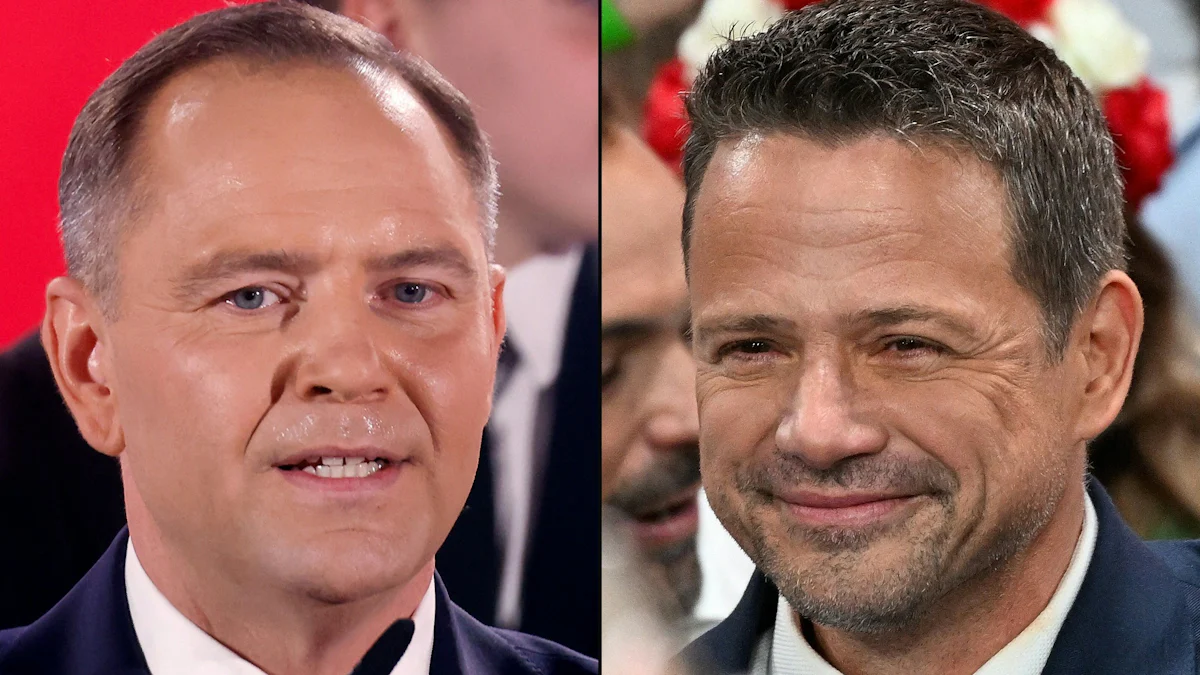
Karol Nawrocki Leads in Polish Presidential Runoff: A Tight Race Ahead
As Poland heads into a crucial second round of its presidential elections, the latest projections suggest that the right-wing conservative candidate Karol Nawrocki is slightly ahead of his liberal opponent, Rafal Trzaskowski. According to data from the polling agency Ipsos, released early Monday morning, Nawrocki garnered 51 percent of the votes, while Trzaskowski followed closely with 49 percent. Notably, the voter turnout represented a record high at 71.7 percent, signaling heightened civic engagement among Polish citizens during this pivotal moment.
The razor-thin margin between the two candidates raises important questions about the accuracy and reliability of the election results. Given the statistical margin of error reported by Ipsos at 0.5 percentage points, it remains quite possible for Trzaskowski to close the gap or even win, making the outcome appear volatile. Both candidates expressed confidence after the polls closed, presenting an air of optimism despite the anticipated neck-and-neck race for the presidency.
These projections are based on exit polls conducted in 500 voting locations and partial counts from an additional 450 locations. One interesting aspect of this election is the strong possibility that votes from Polish citizens living abroad could ultimately sway the results. The anticipation of how these overseas votes could influence the final tally adds a layer of complexity to an already tight contest.
While the official final results are expected to be announced on Monday morning, it is essential to note that Poland does not utilize the same pre-election forecasting methods often seen in countries like Germany. Instead, the focus remains on compiling accurate counts directly from polling stations and ensuring transparency as the results come in.
Approximately 29 million citizens were eligible to vote in this significant election. The incumbent president, Andrzej Duda, was unable to run for a third term after completing two consecutive terms in office. In the first round of voting, two weeks ago, Trzaskowski received 31.36 percent of the votes, while Nawrocki obtained 29.54 percent, leading to the runoff that has now captured the attention of the nation.
In Poland, the president serves a five-year term, holding more power than the ceremonial role of the federal president in Germany. The Polish president has considerable influence over foreign policy, has the authority to appoint the Prime Minister and Cabinet members, and acts as the commander-in-chief of the Polish Armed Forces during times of war. Furthermore, the president holds veto power, which can significantly impact the legislative process and governmental functioning, thereby underscoring the critical importance of this electoral contest.
Trzaskowski, a pro-European candidate, has positioned himself as a progressive alternative to Nawrocki’s more conservative platform. In the past, Trzaskowski has advocated for greater integration with the European Union, social reforms, and environmental consciousness. In contrast, Nawrocki’s campaign has focused on preserving traditional values and emphasizing national pride.
The debate surrounding these candidates further reveals the ideological divide within Polish society. The election serves not only as a political competition but also as a reflection of the broader societal tensions between conservative and liberal values. The significance of this race extends beyond Poland’s borders, as it may impact the nation’s relationship with the European Union and its stance on key issues like immigration, government spending, and human rights.
Both candidates have mobilized substantial support within various demographics, and their respective party bases reflect the diversity of political opinions in Poland. With one candidate emphasizing national sovereignty and historical cultural values, and the other advocating for modernity, openness, and increased EU ties, the voters face a pivotal choice.
As the nation awaits the final outcome, the current electoral climate emphasizes the importance of civic participation, transparency, and a robust democratic process. Regardless of who emerges victorious, this election serves as a vital moment for Poland as the country navigates its path forward amidst internal and external challenges.
The stakes could not be higher as both candidates prepare to confront the challenges of governance in a rapidly changing world where every vote counts. With the results just around the corner, Polish citizens are holding their breath, eager to see which candidate will shape the future of their nation.