
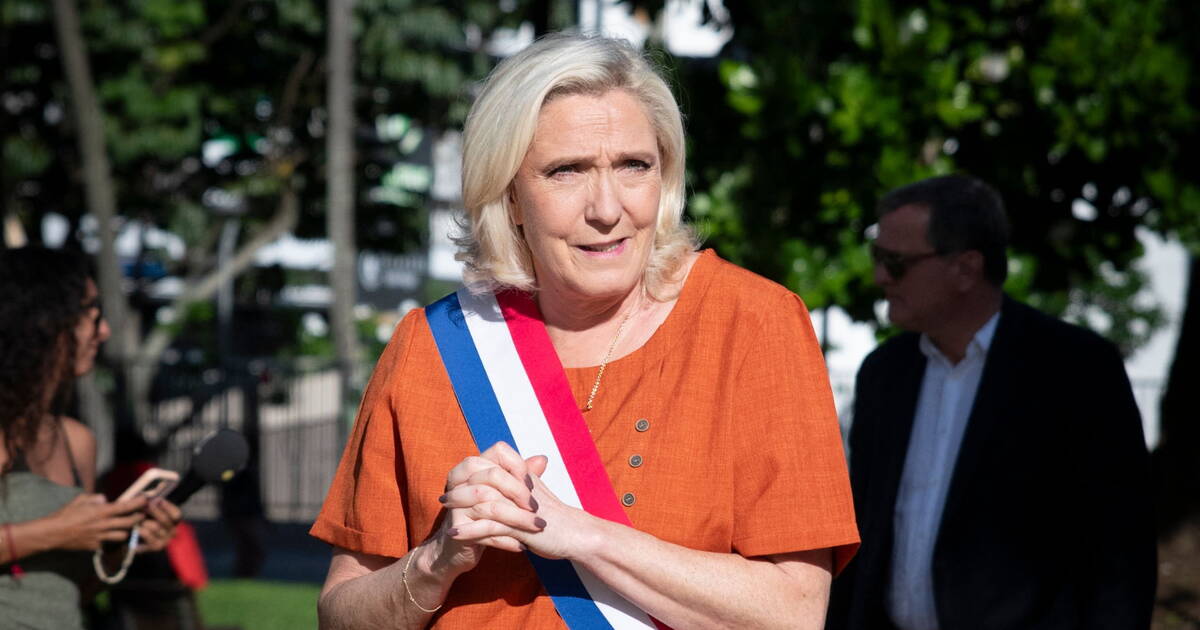
Marine Le Pen’s Visit to New Caledonia: A Divisive Encounter
On May 30, 2024, Marine Le Pen, the leader of France’s far-right National Rally party, faced intense scrutiny during her rally in Nouméa, the capital of New Caledonia. The meeting came after a turbulent period marked by the independence uprising in May, when tensions escalated between pro-independence factions and loyalist groups. Le Pen aimed to reinforce her commitment to the French presence in the island nation, but the atmosphere was anything but welcoming.
During her speech, she attempted to articulate her vision for the future of New Caledonia, an overseas territory of France located in the South Pacific. The crowd, largely composed of staunch loyalists, received her call for unity with skepticism. Whispers and disparaging remarks filled the air, reflecting the audience’s unease regarding her party’s positioning on the island’s contentious political landscape.
Challenges in Political Messaging
Le Pen’s remarks were not merely about political alliances; they encompassed broader themes of national identity and stability. She asserted, "I am, more than ever, a defender of a French New Caledonia." However, this declaration easily clashed with the sentiments expressed by numerous attendees, who were still reeling from recent events and questioned her understandings of their struggles.
The backdrop of recent violence, leading to a state of emergency declared by French President Emmanuel Macron, significantly colored her reception. Many saw her as an outsider, attempting to insert her party into a narrative that they felt she had little genuine connection with. This sentiment was palpable, leaving Le Pen grappling with the reality that her political clout might not translate into local goodwill.
The Roots of Division: Loyalists vs. Independence Movement
The island’s political landscape is deeply divided between the loyalists, who are fiercely committed to remaining a part of France, and the independence supporters, who envision a future free from colonial ties. The loyalists viewed Le Pen as a potential ally in their ongoing struggle against the independence movement, but her party’s historically controversial stances raised concerns about their reliability.
As Le Pen attempted to draw on the support of the loyalists, she faced an uphill battle. Many in the audience were critical of her past statements that could be construed as xenophobic or dismissive of the unique challenges faced by islanders. They were particularly sensitive to issues surrounding immigration and identity, which have been central themes of Le Pen’s political platform.
Political Strategy and Its Implications
Le Pen’s visit was strategically timed. With elections approaching, her party is eager to capitalize on any discontent surrounding the independence discussions. By positioning herself as a champion of loyalist values, she hopes to reinforce her party’s platform and expand their influence in overseas territories. However, this approach risks alienating those who view her involvement skeptically.
The tension within the crowd encapsulated the broader fears about the implications of her support. Some loyalist activists expressed frustration that their struggles were being used as mere political fodder for Le Pen’s ambitions, rather than receiving genuine acknowledgment and support.
The Aftermath: An Uncertain Future
As Le Pen left the stage, the air was thick with uncertainty. The loyalists’ tumultuous reception raised critical questions about her ability to broker support in a place defined by contestation. In the wake of her visit, many wondered if her composed approach to the New Caledonian issue would resonate beyond the immediate context of the rally.
The political landscape in New Caledonia is shifting rapidly, influenced both by local dynamics and broader national politics. Marine Le Pen’s visit illuminated the sometimes perilous intersections of identity, allegiance, and political strategy. While she may gain traction among some, the reception at Nouméa offers a sobering reminder that political narratives do not always align with the lived experiences of constituents.
The challenges that lie ahead for both Le Pen and the loyalist movement are substantial. While the hope for a French New Caledonia remains a focal point, the internal divisions highlight the need for nuanced understanding and dialogue. As the territory grapples with its identity, the question of allegiance to France becomes ever more complex, requiring empathy and a willingness to address the deep-rooted issues at play.
In conclusion, Marine Le Pen’s foray into the charged political atmosphere of New Caledonia serves as an illustration of the complex dynamics at work. Navigating these multifaceted relationships will be pivotal for both political parties and the residents of this Pacific territory as they forge paths forward amidst the challenges ahead.