
| IN BRIEF |
|
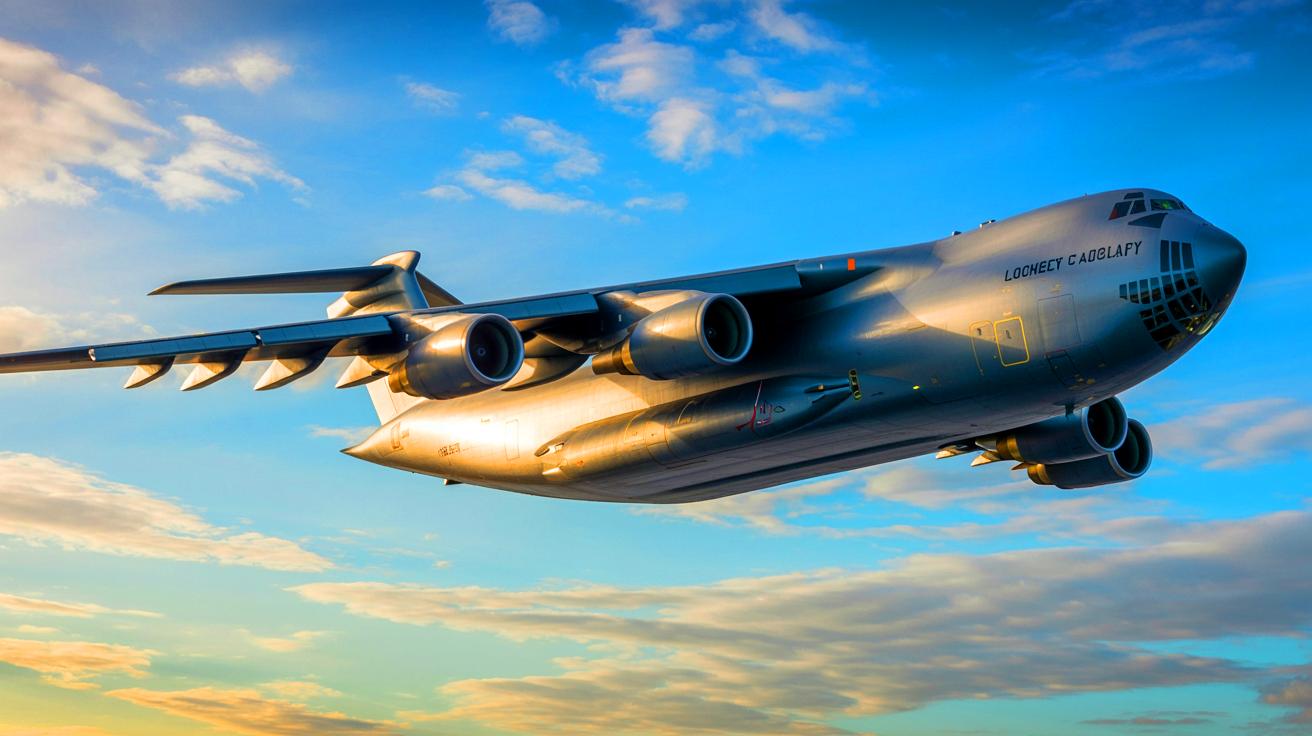
The Lockheed C-5M Super Galaxy is an iconic aircraft of the US Air Force, renowned for its phenomenal ability to transport military equipment across the globe. Since its introduction in 1968, this military aircraft has undergone numerous upgrades to remain a state-of-the-art logistics solution. Despite the discontinuation of its civilian variant, the C-5M remains an indispensable logistic asset for the American armed forces, showcasing its capacity to carry heavy equipment and its impressive range as essential components for global military operations. This article delves into the remarkable features and fascinating history of this unique aircraft.
A Timeless Performer
Military effectiveness doesn’t solely rely on modern equipment, and the Lockheed C-5 Galaxy stands as a living testament to this. Introduced in 1968, this aircraft quickly made its mark by becoming the world’s largest military aircraft. Since its first flight, the C-5 Galaxy has evolved into several variants, each introducing its own set of enhancements. The latest version, the C-5M Super Galaxy, has benefitted from significant updates in engines and avionics, further solidifying its crucial role in military operations. While over five decades have passed since its inception, the C-5M remains a linchpin of the US Air Force, proving that sometimes, the old is better than the new.
Exceptional Capabilities of the C-5M Super Galaxy
The C-5M Super Galaxy is an aviation giant whose technical capabilities continually impress. With a length of 75.53 meters and a wingspan of 67.91 meters, this aircraft can reach a maximum speed of 855 km/h. Its operational range of 13,742 km allows it to cover distances exceeding the circumference of the Earth, making it indispensable for missions across the globe. Its payload capacity is equally remarkable, allowing it to transport armored vehicles, attack helicopters, or substantial military equipment. The table below summarizes some key technical characteristics of the C-5M Super Galaxy:
| Characteristics | Details |
|---|---|
| Length | 75.53 m |
| Wingspan | 67.91 m |
| Maximum Speed | 855 km/h |
| Range | 13,742 km |
| Maximum Weight | 450 tonnes |
This table illustrates the power and versatility of the C-5M Super Galaxy, which remains a fundamental component of the US Air Force’s projection capabilities.
An Abandoned Civilian Version
The C-5 Galaxy almost saw the light of day in a civilian version, known as the L-500, with aspirations of transporting up to 1,000 passengers. However, competition from the Boeing 747, which was introduced the same year, shifted the landscape. The 747, being cheaper to produce and maintain, quickly dominated the market, leaving the L-500 project abandoned. Lockheed thus refocused its efforts on the military utilization of the C-5 Galaxy, solidifying its position as an essential logistical asset for the armed forces. This episode underscores the complexities of industrial and strategic choices that shape the future of aeronautical technologies.
The Lockheed C-5M Super Galaxy continues to play a pivotal role in international military operations, ensuring the United States’ ability to deploy forces and equipment anywhere in the world. Looking forward, what technological advancements might further enhance the effectiveness of this iconic aircraft?
This article has been enriched with disaggregated insights to present a comprehensive view of the Lockheed C-5M Super Galaxy.
Your Thoughts?
We hope you found this overview insightful! If you have any thoughts or questions, feel free to share them below.