
Changes in Germany’s Asylum Policy: A Closer Look
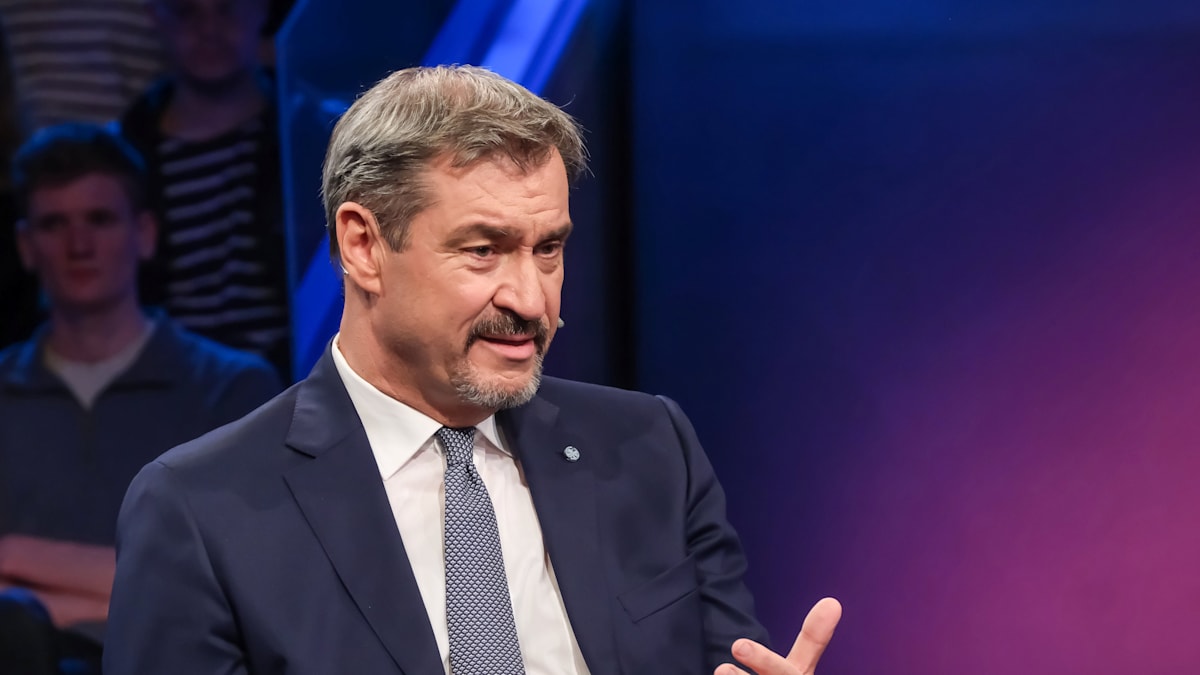
On Wednesday, the German cabinet initiated significant changes to its asylum policy . Later, the Union and SPD discussed further migration measures during a coalition committee meeting. In the talk show “Maischberger,” Bavarian Prime Minister Markus Söder openly criticized what he perceives as major flaws in the current laws affecting migrants.
Markus Söder accused the previous federal government of failing to manage migration policy effectively, stating, “We are overwhelmed by the integration efforts in our country. We have not succeeded; the costs are enormous.” Söder, who leads the Christian Social Union (CSU), made these remarks during the ARD program “Maischberger” on Wednesday evening.
Söder estimates that annual expenses for integration amount to nearly €50 billion . This is reflected in the citizen’s allowance (Bürgergeld), of which almost half of the recipients are of non-German origin. “This means we feel that this migration overwhelms us, and we are simply reorganizing it,” he stated. Furthermore, on Thursday, he tweeted, “We are ensuring the asylum change .”
He specifically criticized that Ukrainians in Germany automatically receive Bürgergeld . This, he argues, creates completely wrong incentives and complicates their integration into the job market. While around 80% of Ukrainian refugees in Poland are employed, Germany manages to integrate only about 20% into the workforce.
The new federal government plans to abolish the citizen’s allowance and introduce a new basic security system. “I believe that someone who has paid into social funds their entire life should be treated differently than someone who has never contributed,” said Söder.
Just hours earlier, the Union and SPD had reached an agreement on an immediate program during a coalition committee meeting in Berlin. This program comprises around 60 points detailing numerous measures that had mostly already been agreed upon in the coalition contract.
The section regarding a “ secure and capable state ” includes “further measures for regulated migration.” This entails legislative projects such as the suspension of family reunification for subsidiarily protected individuals and the abolition of so-called “ turbo naturalizations ,” which the cabinet had already initiated on Wednesday morning. New Ukrainian refugees will no longer receive Bürgergeld but rather lower asylum benefits .
Söder emphasized during “Maischberger” that Germany remains an open immigration country – but exclusively for individuals who are willing to work and contribute. He defended the newly established restrictions as essential for steering migration in Germany back onto organized pathways.
rct
In recent months, doubts have been raised about Germany’s capacity to accommodate an increasing number of migrants and refugees, particularly in light of the ongoing conflicts in various regions. The calling for a re-evaluation of the nation’s integration strategy has become more urgent than ever.
As the country moves forward, the political landscape may witness pivotal shifts as the government looks to balance humanitarian responsibilities with practical considerations regarding resources and public sentiment. The proposed changes are not merely administrative; they reflect a more profound transformation in Germany’s approach to migration and integration.
For many Germans, the challenging aspects of integration have become visible. As Söder pointed out, the integration of migrants is a massive undertaking that incurs significant costs, and without a robust strategy, the system risks becoming unsustainable. By restructuring how benefits are distributed and emphasizing essential skills and employment, the government aims to foster a more successful integration process.
However, these measures also raise questions about fairness and equity. Disparities in how individuals are treated based on their past contributions to the society can lead to dissatisfaction and feelings of division among citizens and newcomers alike. It remains to be seen how these proposed changes will impact public perception and whether they will lead to the desired improvements in both integration rates and social cohesion.
As the political discourse continues to evolve, citizens are urged to engage in discussions regarding migration policies and their implications for both the host society and migrants. Examining the balance between compassion and pragmatism will prove crucial in shaping Germany’s future as a diverse and inclusive nation.