
| IN BRIEF |
|
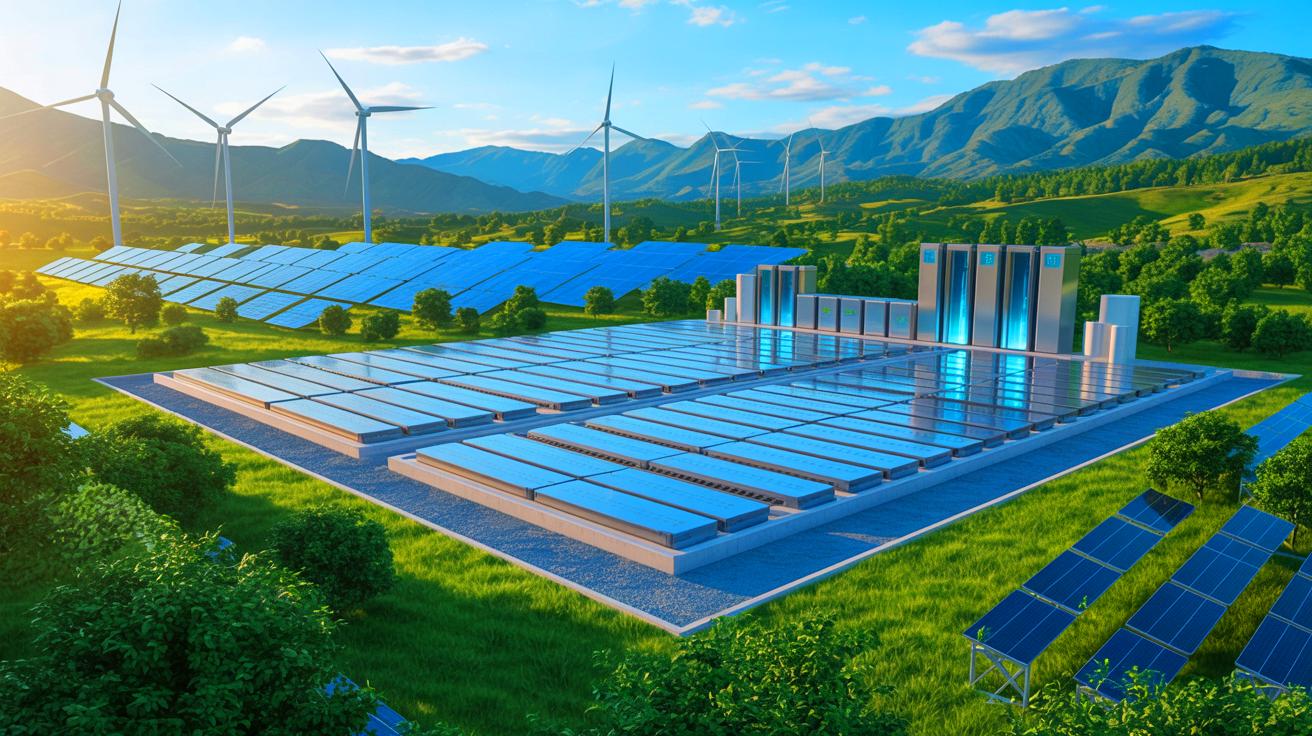
China continues to impress with its technological advancements in the energy sector. The launch of the first hybrid lithium-sodium energy storage station in Yunnan Province serves as a remarkable example. This station, known as the Baochi Energy Storage Station, represents a crucial step in the evolution of large-scale hybrid battery storage systems. By utilizing both lithium and sodium technologies, this station offers numerous benefits, including improved grid stability and enhanced integration of renewable energies.
Hybrid Technology for Enhanced Grid Stability
The Baochi hybrid energy storage facility, covering approximately 3.3 hectares, is an ambitious project aimed at meeting China’s increasing demand for clean energy. With an installed capacity of 400 megawatt-hours , it can perform two full charge-discharge cycles per day, providing up to 580 million kilowatt-hours of electricity annually. This amount of energy is sufficient to power nearly 270,000 households each year.
Nearly 98% of the energy produced comes from renewable sources , making it an eco-friendly solution. At the heart of this facility lies China’s first high-capacity sodium-ion battery system, which responds six times faster than conventional models . Coupling these advanced batteries with mature lithium technology improves grid regulation and ensures a more seamless integration of wind and solar power.
This technology is particularly beneficial in Yunnan Province, where over 70% of the electricity supply comes from renewable sources , necessitating innovative solutions like this to balance supply and demand.
Sodium: An Abundant and Efficient Resource
Amid growing global demand for lithium, the reliance on imports and resource constraints have become increasingly concerning. Currently, China imports about 70% of its lithium battery materials , making the country vulnerable to fluctuations in the international market.
In contrast, sodium—extracted from salt lakes, seawater, and mines—is abundant and accessible in the country. As explained by Chen Man, a member of the National Technical Committee for Electric Energy Storage, the sodium resources from the Qarhan salt lake are 500 times more significant than global lithium resources . Sodium also exhibits favorable properties, such as stable performance across a temperature range of up to 45°C .
Potential Applications in Other Regions
The lithium-sodium hybrid technology implemented at the Baochi station has the potential for application in other regions of China where high shares of renewable energy exist. Areas such as Tibet, Xinjiang, Gansu, and Ningxia could benefit from this technology to ensure stable electricity delivery from renewable energy bases located in deserts, the Gobi, and other arid zones.
This capability to consistently integrate large amounts of renewable energy into the electrical grid is essential for supporting China’s energy transition and reducing dependence on fossil fuels. Additionally, by participating in electricity market exchanges, the Baochi station contributes to improving practices for renewable energy commercialization.
A Promising Future for Hybrid Energy
The development of the hybrid lithium-sodium energy storage station in China is a striking example of innovation in the renewable energy sector. By integrating the strengths of both lithium and sodium batteries, this station provides a robust and effective energy storage solution essential for grid stability during the energy transition.
These technological advancements underscore China’s commitment to sustainably harnessing its natural resources while addressing the growing demand for green energy. What will the next step be for China in its quest for cleaner and more efficient energy?
The author relied on artificial intelligence to enrich this article.
Did you like it? 4.6/5 (20)