
Early Detection and Prevention: A Critical Approach to Fighting Cancer
The Importance of Early Detection
In the fight against cancer, timing can be everything. Early detection of cancer significantly increases the chances of successful treatment and survival. Various research studies affirm that identifying cancer at an early stage can lead to better patient outcomes. Early diagnosis provides patients with a wider array of treatment options and can often lead to less aggressive treatments that minimize adverse side effects. Understanding how to approach early identification of cancer is crucial in settings where healthcare resources may be limited.
Innovative Approaches in Brest
Brest, a coastal city in France, is emerging as a leader in cancer prevention and screening initiatives. The city boasts cutting-edge facilities that aim to address this critical health issue. The Centre Hospitalier Universitaire (CHU) in Brest has established a reputation for its comprehensive approach to healthcare, particularly regarding oncology. Just a year ago, the CHU inaugurated its Institut de Cancérologie et d’Imagerie (ICI), demonstrating a commitment to improving cancer care.
Brest has recognized that, while there are few specialized cancer prevention centers in France, the need for a multi-specialty facility is dire. According to local experts, Brest presents a unique opportunity to combine multiple specialties under one roof, thus enhancing the effectiveness of cancer screening and treatment. As Dr. Vincent Bourbonne points out, more than ten specialties are included in their ambitious project, which positions the CHU as a potential model for other cities.
The New Screening Center
Starting June 18, professionals at the CHU will begin utilizing a newly established screening and prevention center located at the Cavale-Blanche. This center aims to become operational for the general public by the end of 2025. The project’s advocates are keen on establishing a comprehensive service that provides a rapid diagnosis within three hours, along with consultations from specialized healthcare providers. This innovative approach not only aims to expedite the diagnostic process but also enhances patient convenience by primarily offering services in the late afternoon.
Moreover, the project emphasizes its commitment to accessibility, with a target of accommodating 250 patients annually in its operational phases. The emphasis is on offering not only speed but also a continuum of care that follows up with patients at the initial stage of their cancer journey.
Investment in Technology
The financial backing for this initiative reflects its potential impact. With an estimated budget of €200,000, the project is already securing cutting-edge technology. For instance, the CHU has invested in portable spirometers and advanced interpretation software using artificial intelligence to bolster diagnostic accuracy. These innovative tools are expected to enable practitioners to better evaluate and monitor patient health.
Dr. Bourbonne emphasizes that this addition to the healthcare landscape in Brest provides a continuity of care that is often lacking in cancer treatment pathways. Florence Favrel Feuillade, the general director of CHU, has also highlighted the importance of prevention in maintaining a sustainable healthcare system. She passionately argues that proactive initiatives in cancer detection can drastically reduce the need for intensive and costly treatments, benefiting both patients and the healthcare system.
Addressing Major Risk Factors
As doctors Margaux Geier and Vincent Bourbonne highlight, there are significant risk factors involved in cancer diagnosis. Statistics show that 400,000 new cases are reported in France annually, with around 40% of these cases being linked to four key risk factors: alcohol, tobacco, diet, and sedentary lifestyle. Public health campaigns that educate people about these risks are essential in reducing cancer prevalence.
The establishment of the screening and prevention center in Brest is not merely a local initiative; it has wider implications for public health in France. It reflects a growing understanding that involving several specialties and adopting new technologies can establish a more effective healthcare system that prioritizes health over treatment.
The Future of Cancer Care
The opening of this center symbolizes a paradigm shift in how cancer is approached in France. The integration of early detection, comprehensive specialty care, and advanced technology presents an opportunity to redefine patient experiences. Moving forward, the cross-disciplinary nature of this initiative could serve as a template for other regions facing similar challenges.
The collaborative efforts of healthcare professionals and the state serve as a poignant reminder of the substantial impact of investing in preventive healthcare.
In closing, as healthcare continues to evolve, early detection remains crucial in the fight against cancer. Says Dr. Margaux Geier, “Discovering cancer at an early stage allows for taking the lead on the disease… and considerably increases survival chances,” illustrating the transformative potential of timely and accessible cancer care.
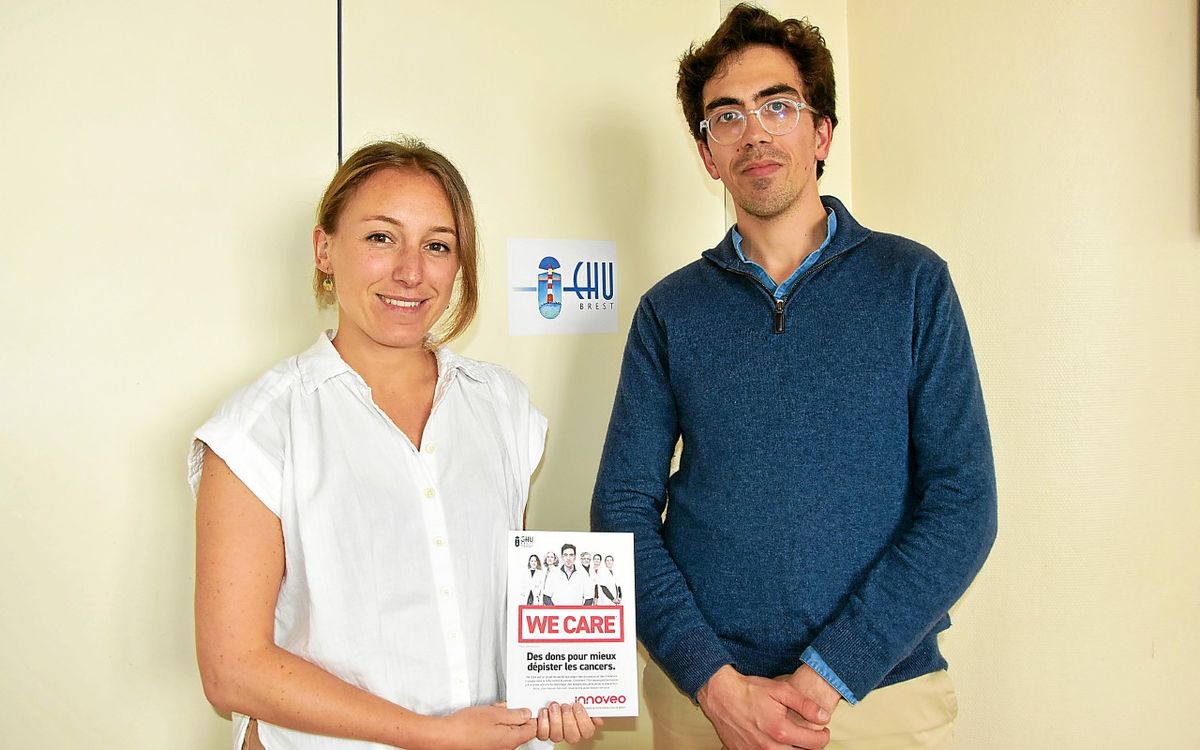
« Découvrir le cancer à un stade suffisamment précoce permet de prendre de l’avance sur la maladie… et d’augmenter considérablement les chances de survie », pointent les docteurs Margaux Geier et Vincent Bourbonne. Professionnels de santé au centre hospitalier universitaire (CHU) de Brest, ils portent le projet We Care qui va mener à la création d’un centre de dépistage et de prévention des cancers. « C’est un enjeu majeur de santé publique », soulignent les médecins, s’appuyant sur des chiffres éloquents : 400 000 nouveaux cas chaque année. Dont 40 % sont liés à quatre facteurs de risque majeurs : l’alcool, le tabac, l’alimentation et la sédentarité.