
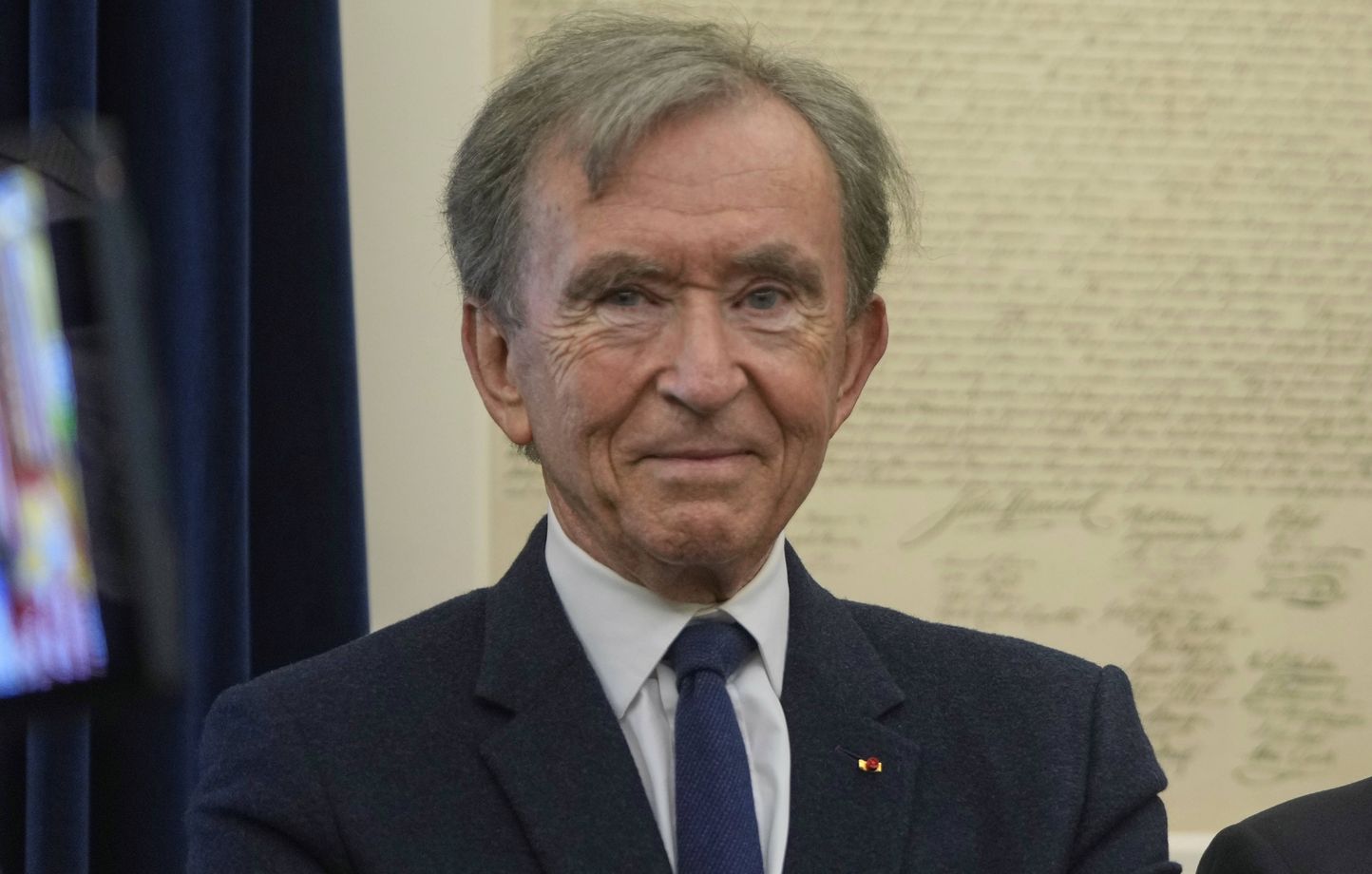
The Rise and Fall of Bernard Arnault: A Wealthy Leader’s Journey
In the world of luxury brands and global finance, few names resonate as strongly as Bernard Arnault. As the CEO of LVMH (Moët Hennessy Louis Vuitton), Arnault once stood as the wealthiest individual on the planet. However, recent developments have caused his fortune to drop significantly, moving him from the top spot to the ninth position on the Bloomberg Billionaires Index. With a staggering loss of €24 billion since the start of the year, Arnault’s experience serves as a case study in the impact of geopolitical tensions and shifting consumer behavior on global business.
The Decline in Wealth
Arnault’s net worth fell to $152 billion as of Monday, representing a 13.7% drop in his fortune. This decline makes it the second-largest loss among the elite ranks of billionaires, trailing behind Elon Musk, whose wealth plunged by $58.9 billion. Despite this setback, Musk retains the title of the richest man globally, sitting at $374 billion. In comparison, Jeff Bezos and Mark Zuckerberg each hold $222 billion, underscoring the competitive nature of wealth accumulation among the world’s elite.
Key Factors in Arnault’s Fortune Decline
One of the primary reasons behind Arnault’s wealth decline is the significant decrease in LVMH stock prices, which have plummeted by 36% over the past year. Compounding this issue are the increasing geopolitical tensions between the United States and China, two of LVMH’s largest markets. The luxury market in China, which once thrived, is now facing challenges, leading to a reduction in luxury product consumption.
Impact on Employment and Business Operations
In light of these market challenges, LVMH is contemplating layoffs of between 1,000 to 1,200 positions at its Moët Hennessy division, which focuses on wines, spirits, and champagnes. This drastic move is a precautionary step to realign operations with the dwindling demand for luxury goods. As competition intensifies, brands must innovate and adapt to survive.
Geopolitical Risks Affecting the Luxury Market
A closer examination of the geopolitical landscape shows that the interactions between the U.S. and China can significantly impact luxury brands. With the trade tensions and tariffs affecting various sectors, companies like LVMH find themselves caught in the crossfire. As consumer confidence ebbs amidst global uncertainty, luxury purchases are among the first areas to witness a decline.
The Broader Implications for the Luxury Sector
Arnault’s experiences also reflect a larger trend in the luxury goods sector. The ripple effects of any geopolitical conflict can reshape consumer habits and spending priorities. In recent years, Chinese consumers have become increasingly cautious, leading to a slowdown in luxury retail sales. Brands must now pivot their strategies to maintain relevance within this volatile environment.
Future Prospects for Bernard Arnault and LVMH
As LVMH aims to recover from this financial downturn, Arnault has indicated his intent to streamline operations and reduce what he refers to as bureaucratic inefficiencies. He has expressed interest in drawing inspiration from leaders like Donald Trump—this may involve making decisive and sometimes controversial moves within his business.
Strategies for Recovery
- Market Diversification: One way to mitigate risks is to expand into new markets or strengthen existing markets less affected by geopolitical tensions.
- Innovation in Products: Introducing new lines of products that cater to changing consumer tastes may help recapture the lost market share.
- Increased Digital Presence: Bolstering online sales and digital marketing strategies can attract the younger demographic, which is a key consumer group for luxury items.
Conclusion
Arnault’s journey from wealth creation to a significant decline serves as a reminder of the capricious nature of the global market. While challenges abound, he and LVMH have the expertise and resources necessary to navigate a recovery path. The ongoing dilemma also highlights the intricate relationship between politics and commerce, underscoring that in today’s economy, tensions can often translate into economic consequences.
Les fins de mois ne devraient pas devenir plus difficiles pour Bernard Arnault, le puissant PDG du groupe LVMH. Il passe pourtant du rang de première fortune mondiale à la neuvième place en un an, selon le classement Bloomberg, dont BFMTV se fait l’écho.
Le dirigeant, pénalisé par les difficultés du secteur du luxe, a vu sa fortune diminuer de 24 milliards d’euros depuis le début de l’année. Elle est évaluée à 152 milliards de dollars ce lundi.
Tensions géopolitiques qui pénalisent le groupe
Cette chute de 13,7 % de la fortune du Français représente la deuxième plus forte baisse, derrière celle d’Elon Musk, patron de SpaceX et Tesla (-58,9 milliards de dollars). Le milliardaire et ex-conseiller du président américain Donald Trump reste toutefois la première fortune mondiale, avec 374 milliards de dollars, devant Jeff Bezos et Mark Zuckerberg, qui disposent, chacun, de 222 milliards.
Le cours de l’action de LVMH a baissé de 36 % en un an, et sa capitalisation est désormais inférieure à celle de son concurrent Hermès, souligne le média. Le groupe envisage de supprimer 1.000 à 1.200 postes chez Moët Hennessy, le pôle des champagnes, vins et des spiritueux du groupe.
En cause : les tensions géopolitiques entre les deux grands marchés du groupe, à savoir les Etats-Unis et la Chine, et le ralentissement de la consommation des produits de luxe dans le pays du Milieu.