
The New Digital Ministry in Germany: Controversies and Implications
Germany’s first digital ministry is poised to reshape the country’s approach to digitalization, but its establishment has sparked significant controversies. This article delves into the reasons behind the outcry regarding the ministry’s dual headquarters and the implications for efficiency and public finances.
The Dual Headquarters Concept
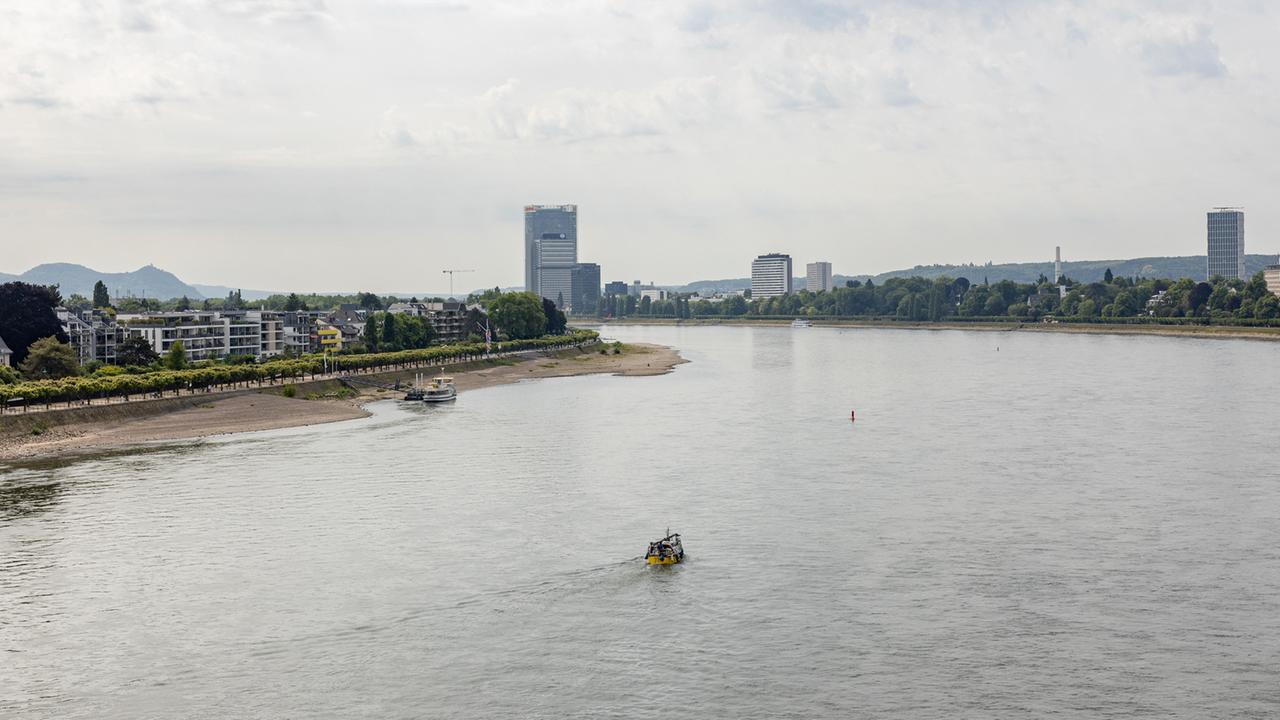
Recently, it has been confirmed that the digital ministry, headed by Karsten Wildberger, will have its primary residence in Berlin, while also maintaining a secondary office in Bonn. The rationale given for this dual approach is rooted in historical precedents; past governmental offices were also divided between these two cities.
However, this decision has drawn fierce criticism, particularly from the Bund der Steuerzahler (Taxpayer Association), which deems it absurd. The association’s president, Reiner Holznagel, expressed his disbelief via a prominent newspaper, highlighting the contradiction of establishing a digital ministry with two physical locations in an age where efficiency and cost-effectiveness are paramount.
A Call for Accountability
Holznagel did not hold back in his criticism of the government’s inefficiency. He pointed out that the coalition government comprised of the Union and the SPD had committed to reducing the bloated administrative apparatus in their coalition contract. He argued that if the government were genuinely serious about improving efficiency, it should consolidate all ministries in Berlin instead of maintaining outdated structures.
The idea of having government functions spread across multiple locations, especially in a digital era, seems counterintuitive. The digital ministry is meant to streamline government processes, making them more efficient. However, the complications arising from having offices in two different cities only seem to add to the complexity.
Historical Context: Berlin and Bonn
The decision to keep a Bonn branch for the new ministry relates back to the Berlin/Bonn law, established in 1994. This legislation was intended as a transitional arrangement following the reunification of Germany when the capital shifted from Bonn to Berlin. However, over 30 years later, voices like Holznagel’s argue that the law is now obsolete.
With the bulk of governmental functions predominantly located in Berlin, the rationale for retaining Bonn as a center of governmental operations is diminishing. Today, the majority of the federal ministries operate nearly exclusively from Berlin, making the historical justification for maintaining a presence in Bonn increasingly tenuous.
The Financial Burden of Dual Operations
The consequences of maintaining administrative presence in both cities extend beyond mere operational inefficiencies. The logistical and financial realities paint a daunting picture. The existence of offices in Bonn leads to significant travel expenditures among civil servants. The reports indicate that in 2022 alone, civil servants embarked on over 5,300 domestic flights for essential meetings between the two cities.
Financial authorities have stated that the cost of this division is not trivial; it incurs millions in annual expenses. According to the latest report from the Federal Ministry of Finance, around €9.2 million was spent in 2019 alone on maintaining services and logistics due to the partition between Berlin and Bonn.
Six Ministries Still Reside in Bonn
Despite the overarching presence of the federal agencies in Berlin, six ministries remain established in Bonn. This division results in thousands of inter-German business trips annually, further exacerbating the strain on public finances. As criticism mounts, the question looms: Is this fragmentation truly necessary in a modern and digitalizing world?
The rationale for retaining a split structure hinges on claims of representing both East and West Germany. What began as a bridge between the two has now devolved into a complex and costly division that many argue is unnecessary.
Conclusion
As the landscape of governance evolves, the establishment of Germany’s first digital ministry comes at a pivotal moment. However, the challenges surrounding its dual headquarters reveal broader issues of inefficiency and financial irresponsibility. Critics urge for a more consolidated approach, one that truly embodies the digital age the ministry is meant to pioneer.
As this debate unfolds, the effectiveness of the ministry may well depend on the government’s willingness to adapt to changing times, moving away from outdated financial and structural obligations. The call for efficiency, accountability, and contemporary governance is louder than ever.
Deutschlands erstes Digitalministerium soll nicht nur in Berlin residieren, sondern auch in Bonn. Der Bund der Steuerzahler hält von dieser Entscheidung gar nichts – und erinnert die Bundesregierung an das Sparversprechen im Koalitionsvertrag.