
Solar Power and Electric Vehicles: Japan’s Path to Energy Independence
Japan, known for its technological advancements, faces unique challenges in achieving energy independence. The nation is now exploring a groundbreaking approach combining solar panels with electric vehicle (EV) batteries to meet its growing energy demands. This innovative model, referred to as "PV + EV," could cover up to 85% of Japan’s energy needs while dramatically reducing CO₂ emissions. This article delves into the implications of this strategy, the potential benefits, and the roadblocks that lie ahead.
Understanding the PV + EV Model
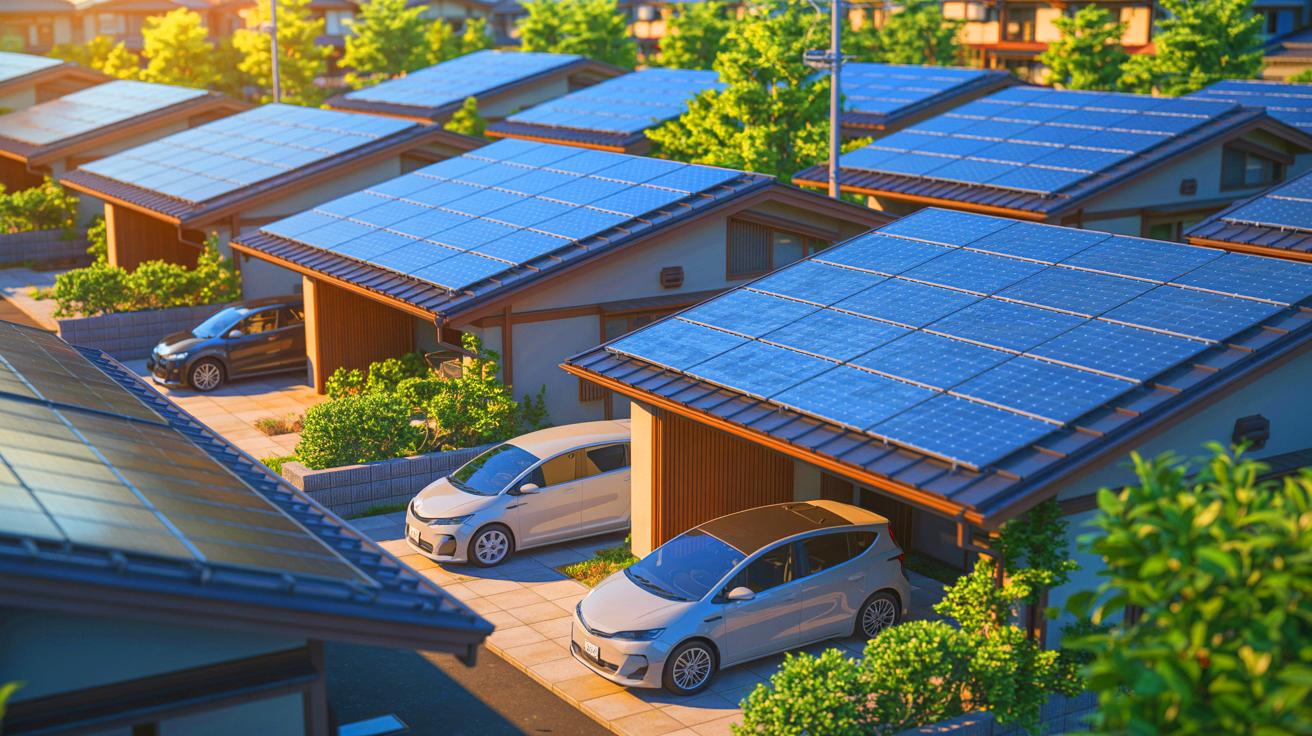
Research conducted by the Tohoku University, in collaboration with international institutions, has shed light on the feasibility of the "PV + EV" model. An exhaustive technical and economic analysis was performed across 1,741 municipalities in Japan, assuming that 70% of rooftops would be outfitted with solar panels with an efficiency rate of 20%. The study suggested that the installed EV batteries of 40 kWh each would act as home energy storage, using about half of their capacity to support the grid.
The researchers discovered that solar panels on rooftops could generate 1,017 TWh annually, surpassing Japan’s total electricity production in 2022. This production capacity offers a transformative opportunity for Japan’s energy future, allowing 85% self-sufficiency for local needs by harnessing both solar power and battery storage.
Environmental and Economic Impact
The impact of this model goes beyond energy generation. It holds the promise of significantly reducing Japan’s carbon footprint. The PV + EV model is projected to cut CO₂ emissions by 87%, marking a significant leap towards a greener future. Financially, this strategy could lower energy costs by 33% by 2030, making it an attractive financial option for both households and local governments.
By embracing this model, Japan is positioning itself as a leader in renewable energy, potentially becoming a global benchmark for similar initiatives worldwide.
Overcoming Urban Challenges
While the potential benefits are immense, challenges remain, particularly in urban environments. Major cities like Tokyo face limitations such as restricted rooftop space and a lower number of vehicles. However, even in these densely populated areas, the use of EV batteries can enhance energy flexibility and reduce peak demand. It’s a delicate balance, but the integration of solar energy and electric vehicle technology provides a viable solution even in urban landscapes.
Potentially, roofs in rural areas could produce excess electricity, while urban settings could see substantial advancements in energy management, mitigating the need for centralized renewable energy infrastructure.
Importance of Policy Support
For the successful implementation of the "PV + EV" strategy, political backing is essential. Takuro Kobayashi, a principal researcher at Tohoku University, emphasizes that policymakers should account for regional differences, especially in northern Japan, where solar potential is limited. In regions with varying degrees of solar efficiency, tailored policies can significantly enhance the overall effectiveness of the energy transition.
The existing government incentives for EVs and rooftop solar panels are a good start, but further investments in bidirectional charging infrastructure (V2H and V2G technologies) and public engagement are necessary to catalyze a broader shift toward renewable energy.
Technological Collaboration as a Game Changer
A collaborative effort between public and private sectors is crucial to developing the technologies required for this energy transformation. By boosting awareness regarding the advantages of renewable energy, Japan can accelerate the adoption of the PV + EV model. Extensive scientific data will inform policymakers, guiding them in the formulation of impactful energy strategies.
This approach offers not just a solution for Japan but serves as a template for other nations struggling with fossil fuel dependency. If Japan can adequately address its energy challenges, it may inspire similar endeavors globally.
A Sustainable Energy Future
As Japan looks towards the future, the findings of this research provide a compelling vision of how the country can achieve greater energy independence and significantly reduce its carbon emissions. With over 8,000 square kilometers of rooftop space available and a growing EV market, Japan stands at a pivotal juncture to leverage this opportunity.
The transition to a PV + EV system will not only address Japan’s escalating energy requirements but also play a crucial role in combating climate change. The ultimate question remains: Will Japan be able to rally the necessary resources to make this vision a reality?
Japan’s PV + EV model could set a global precedent, and its success would resonate far beyond its borders, inspiring other nations to follow suit in the race towards sustainable energy.
| EN BREF |
|
Japan, a country facing unique energy challenges due to its mountainous terrain and limited space for solar farms, may soon chart a new path towards energy self-sufficiency. Researchers at Tohoku University, aided by several international institutions, have highlighted considerable energy potential by combining rooftop-installed solar panels with electric vehicle (EV) batteries. This ‘PV + EV’ model could meet up to 85% of the country’s electricity needs while reducing CO₂ emissions by 87% . This discovery promises to offer Japan a practical and cost-effective solution for its transition to greener energy.