
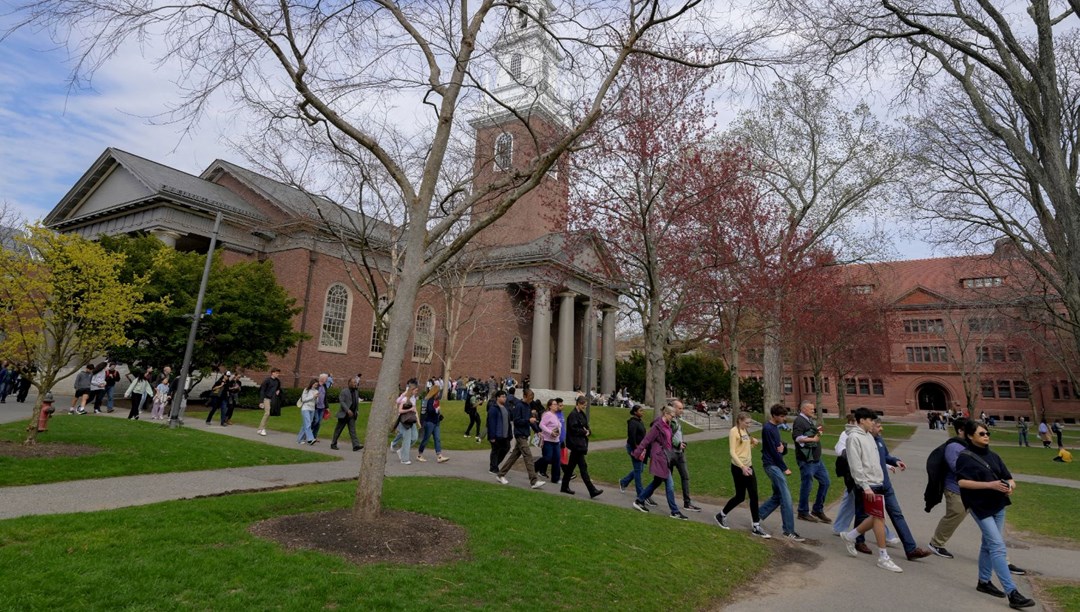
The Impact of Trump’s Administration on Harvard University
In a surprising turn of events, the Trump administration has suspended Harvard University’s international student admission program, citing that it does not comply with relevant laws. This decision has raised eyebrows and sparked discussions regarding the intersection of politics and education in the United States.
Details of the Suspension
On a recent occasion, the U.S. Secretary of Homeland Security, Kristi Noem, sent a letter to Harvard, notifying the institution of the administration’s decision. Noem stated clearly in her message, "I am announcing the immediate cancellation of Harvard University’s Student and Exchange Visitor Program (SEVP) certification." This announcement came amid a backdrop of increasing tensions between the federal government and educational institutions that showed support for Palestine.
Noem’s declaration on social media added another layer to the situation as she stated that Harvard was being held responsible for promoting violence and antisemitism on its campus, and for allegedly coordinating with the Chinese Communist Party. These serious allegations indicate the depth of the conflict between the Trump administration and elite universities like Harvard that often engage in political advocacy.
Harvard’s Response
In response to this unprecedented move, Harvard argued that it had numerous opportunities to comply with federal directives but chose to uphold its principles. The university believes that accepting international students is not just a privilege but an essential right that fosters diversity and innovation. Harvard has also pledged to challenge the federal government’s decision, asserting that the suspension of federal funds is unlawful and a gross violation of academic freedom.
The Broader Context of Federal Threats
The ongoing disagreement extends beyond Harvard. The federal government has threatened various universities—including those supportive of Palestine-related protests—with the freeze of federal funding. These threats are part of a broader strategy to stifle what the administration sees as emerging rhetoric of antisemitism in academic circles.
This multi-agency initiative, labeled the "Task Force to Combat Antisemitism," includes the collaboration of several federal entities such as the Department of Justice, the Department of Health and Human Services, the Department of Education, and the General Services Administration (GSA). This partnership has resulted in a more aggressive stance from the federal government regarding how universities handle diversity, equity, and inclusion initiatives, particularly those that touch upon sensitive political issues.
The Financial Implications for Harvard
The consequences of this suspension could have significant financial implications for Harvard University. The Trump administration’s decision to freeze $2.2 billion in federal funding and a $60 million contract was aimed at fostering compliance with the administration’s policies. Harvard’s legal team is poised to counter these measures; however, the resulting fallout could reshape how the university approaches its international and domestic programs moving forward.
The atmosphere surrounding this situation is complicated by Harvard’s prominent role in American higher education. The university is often seen as a beacon of academic excellence and a leader in various research fields. This conflict could not only impact its funding but also set a precedent for how future administrations may interact with educational institutions.
The Role of Political Influence on Education
This episode illustrates the growing influence of political agendas on education in America. Institutions that once enjoyed a high level of autonomy are increasingly at the mercy of federal policies that mandate compliance with specific political narratives. The Trump administration’s actions against Harvard reflect a broader trend where educational institutions must navigate between academic freedom and political pressures.
It also raises questions about the future of academic freedom in the U.S., particularly as universities are pressured to self-censor their political expressions to secure funding. The implications for student diversity are significant, affecting the social fabric of campuses nationwide.
Reactions from the Academic Community
Reactions from the academic community have been mixed. Some educators and administrators express outrage, viewing this action as an infringement on free speech and an attack on academic institutions’ autonomy. Others fear that this could set a dangerous precedent for funding and resources, leading to a chilling effect where universities may avoid controversial topics altogether.
However, there are also voices within academia that agree with the administration’s stance on certain issues, emphasizing the need for coherent policies regarding antisemitism and other forms of discrimination on campuses. This division within academia adds yet another layer to an already complex situation.
Conclusion
In summary, the Trump administration’s suspension of Harvard University’s international student admission program underscores the increasing entanglement of politics and education in America. As the situation unfolds, it will undoubtedly provoke discussions around academic freedom, the role of institutions in political discourse, and the implications for future federal funding. Harvard’s legal battle may become symbolic of the larger struggles faced by universities across the nation as they navigate the dual challenges of maintaining academic integrity while responding to external political pressures. Ultimately, the outcome of this situation could significantly influence how universities operate in the political landscape moving forward.