
Earthquake Shakes the Aegean Sea: Implications for Turkey and Greece
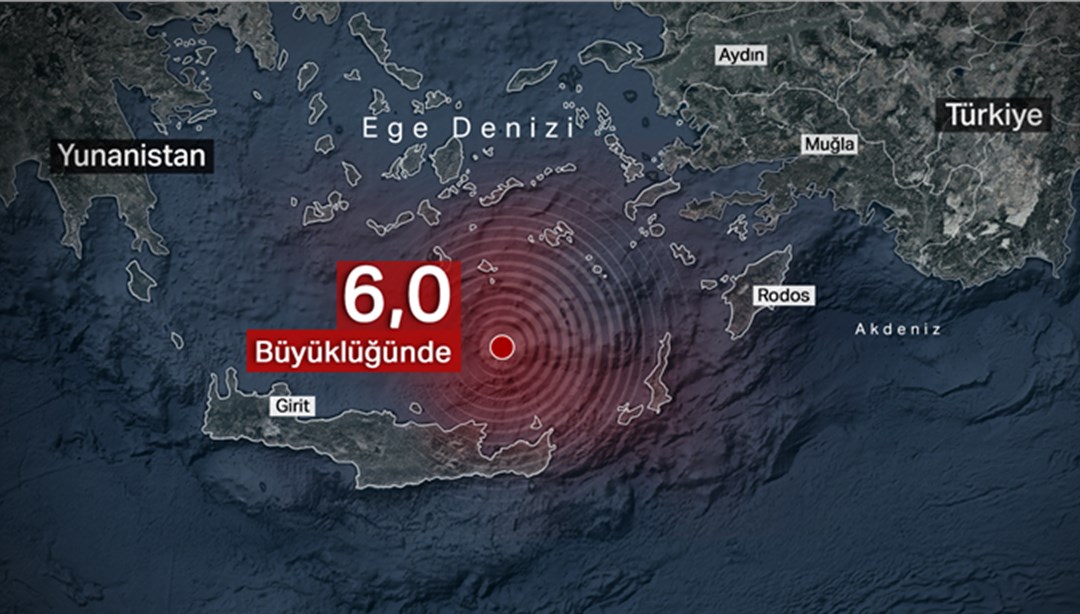
The Aegean Sea was rocked by a 6.0 magnitude earthquake at 06:19 am near the coast of Crete. This seismic event raised concerns not only on the Greek islands but also along the western coast of Turkey. Reports indicate that the tremors were felt in areas such as Muğla, Denizli, Izmir, Aydin, and Antalya.
Understanding the Epicenter
The earthquake struck at a depth of 17 kilometers beneath the sea, making it challenging to assess the extent of damage it caused. The epicenter was under water, prompting critical questions regarding future seismic activity in the region. Experts are now considering whether this earthquake might be a precursor to larger tremors, what the seismic vulnerability of Greece currently is, and if shared fault lines between the two countries could indicate a looming threat.
Experts Weigh In on Recent Seismic Activity
To shed light on these issues, experts and seismologists have been consulted. Professor Şerif Barış, a faculty member at Kocaeli University, offered his insights regarding this latest tremor. He emphasized that seismic activity can fluctuate, with periods of increased activity followed by calmer intervals.
“This increase in seismic events is temporary and quite normal,” he explained. “This region consistently generates tremors of this magnitude and has the potential to produce even larger earthquakes.”
Will the Aegean Earthquake Affect Turkey?
Reflecting on a similar earthquake that struck the Aegean on May 14, Barış mentioned that such seismic activities do not structurally impact Turkey. “These incidents occur approximately 190-200 kilometers away from the closest regions in Turkey, making them insufficiently powerful to cause significant damage. However, should a major earthquake—around 7.5 or 8 on the Richter scale—occur, it would potentially bring about a tsunami that could affect both the Aegean and Mediterranean coasts,” Barış stated.
Tsunami Preparedness
In the event of a tsunami, immediate measures and warnings for coastal communities are essential. “Preparedness is key when facing potential tsunami threats. Authorities must have response plans in place, including evacuation routes and educational programs for residents,” Barış advised.
Could Other Fault Lines Be Triggered in Turkey?
The geological configuration of the region is complex. The Greece-Crete region is situated on what is known as the Hellenic Arc, formed by a tectonic plate diving beneath the Anatolian Plate. Barış explained that while large, frequent earthquakes occur here, the likelihood of these events affecting Turkish fault lines is minimal.
“This is generally an area that does not concern us. Since the earthquake is located within Greece’s maritime borders, there is no need for us to worry about its impact on Turkish fault lines,” he noted.
Current Situation in the Aegean Region
Barış reiterated that the recent earthquake is unlikely to trigger distant fault lines. “What these earthquakes do is increase stress in their immediate areas, potentially leading to aftershocks of similar magnitude. There are numerous faults along the Turkish Aegean coast capable of generating comparable incidents, with many situated offshore. Measuring the recurrence intervals of underwater faults remains a challenge,” he elaborated.
When discussing the Aegean’s seismic activities, simplistic interpretations are inadequate. Barış stressed, “Turkey is positioned on one of the world’s most active tectonic belts, and every region possesses the potential to generate significant earthquakes.”
Conclusion
As the Aegean region continues to experience seismic activity, it remains crucial for authorities and residents to remain vigilant. Continuous monitoring from seismologists, along with coordinated disaster response plans, will be vital to mitigate risks associated with future earthquakes. Turkey and Greece’s shared geological landscape necessitates a collaborative approach in understanding and preparing for seismic threats, ensuring the safety and resilience of both nations as they navigate the complexities of living in a seismically active zone.