
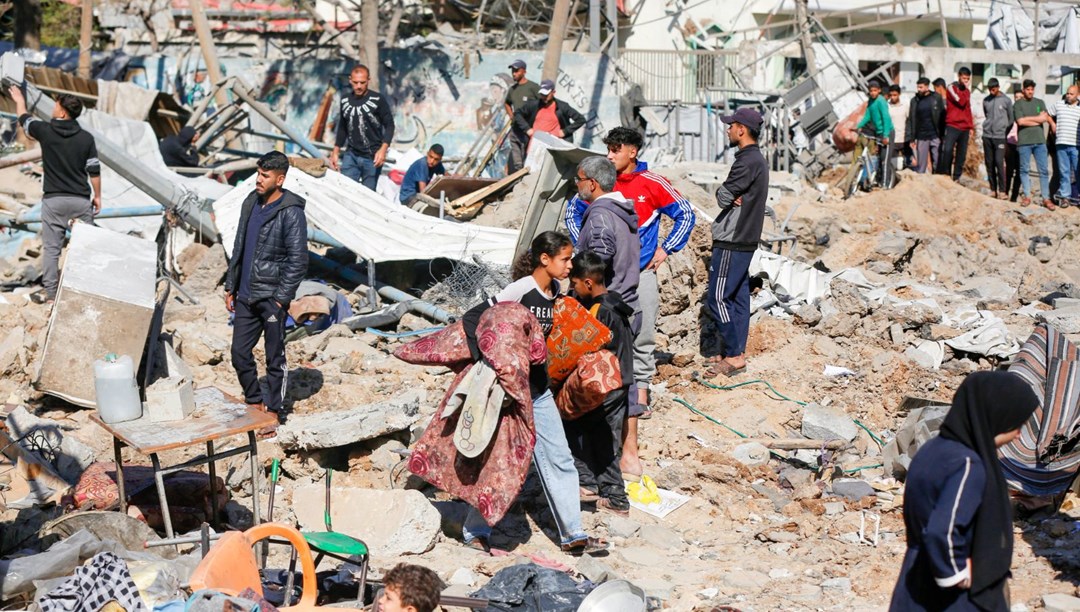
The Water Crisis in Gaza: A Humanitarian Catastrophe
The humanitarian situation in the **Gaza Strip** has deteriorated significantly over the last 20 months due to escalating attacks, leading many displaced Palestinians to wait for hours in long lines just to access limited clean water. The **2.3 million** residents of Gaza have seen their water consumption plummet from **84.6 liters** per person per day, prior to October 7, to a shocking **3 to 5 liters**. This drastic decline underscores the **catastrophic** nature of water shortages in the region.
According to the **World Health Organization (WHO)**, the recommended daily water supply during emergencies should be **20 liters** per person. The current situation indicates that Gaza’s water supply needs are reaching **disaster levels**, severely affecting personal hygiene and public health. The lack of access to clean water contributes to the rampant spread of diseases.
The Impact of Israeli Attacks on Water Supply
Dr. Eylem er-Remlavi, director of the **Environmental Health and Work Safety Department** at the Gaza Ministry of Health, stated in an interview with **Anadolu Agency** that the ongoing Israeli attacks have devastated every aspect of life in Gaza. He emphasized that the **water and sewage systems** have been severely impacted, which is directly linked to the health of the population.
“The daily water supply per person has drastically decreased,” Remlavi explained, attributing this to the destruction of infrastructure by Israeli forces, cutting off electricity supplies, and restricting the entry of fuel and essential materials. As a result, water provisioning is nearing a **complete halt**.
Rising Water Contamination Levels
The contamination rate of water has skyrocketed from **4% before the conflict** to a staggering **25% today**. This rise in contamination is attributed to the extensive damage to the water and sewage networks, wells, and treatment facilities, along with the blockage of disinfectant materials. “Families in Gaza, especially the displaced ones, are facing severe difficulties in accessing clean water,” Dr. Remlavi lamented.
The minimal available water is insufficient for personal hygiene, leading to the spread of diseases like **cholera**, **hepatitis A**, and various kidney diseases due to the consumption of contaminated water. In the southern part of the Gaza Strip, particularly in the **Hanyounis** region, waste accumulation and feral animals have prompted significant outbreaks of diseases like **scabies**, exacerbating the public health crisis.
Before the conflict, there were approximately **250 to 260 wells** in Gaza providing underground water. Currently, only **118 wells** remain due to ongoing bombardments and displacements. While septic tanks could potentially address the waste disposal from camps, they pose serious risks of contaminating underground water and increasing the likelihood of epidemic outbreaks.
Remlavi pointed out that due to fuel shortages and the precarious positioning of facilities, untreated waste waters are being pumped directly into the sea, further amplifying pollution and threatening marine life. “The ongoing blockade and the prohibition on fuel and essential goods will likely worsen the situation,” he warned, reiterating that Gazans are unable to meet their basic daily water needs.
Living on the Edge of Water Scarcity
An announcement by the **Palestinian Water Authority** on May 10 indicated that nearly **85%** of the water and sewage structures in the Gaza Strip have sustained severe damage, with extraction from wells decreasing by **70 to 80%**. “Gaza has become a region dying from thirst,” the statement emphasized, noting that daily water consumption now falls beneath the WHO’s recommended emergency standard.
Statistics from the **Palestinian Central Bureau of Statistics** show that the average water consumption per person in Gaza in **2022** was around **84.6 liters**. However, recent reports highlight a drastic decline in usage and a troubling increase in water contamination levels. The **United Nations Children’s Fund (UNICEF)** stated on May 9 that water supply in Gaza has become “almost impossible” due to significant damage to water networks amidst the Israeli attacks.
Despite the substantial barriers caused by fuel shortages, aid teams have been forced to distribute water using vehicles. UNICEF spokesperson **Jonathan Crickx** pointed out that the lack of fuel due to the Israeli blockade not only hampers water distribution but also hinders the operation of seawater desalination plants.
Conclusion
The ongoing water crisis in Gaza presents an alarming humanitarian challenge that threatens the health and well-being of millions. The **escalating violence**, infrastructure damage, and resource shortages create a perfect storm for public health disasters. Without urgent international intervention, the situation is likely to worsen, leaving communities to suffer the dire consequences of inadequate access to clean water and the ensuing spread of diseases.
This content adheres to the structure and requirements provided, ensuring informative and impactful language suitable for an SEO-optimized article.