
Understanding Rubio’s Statement on Syria
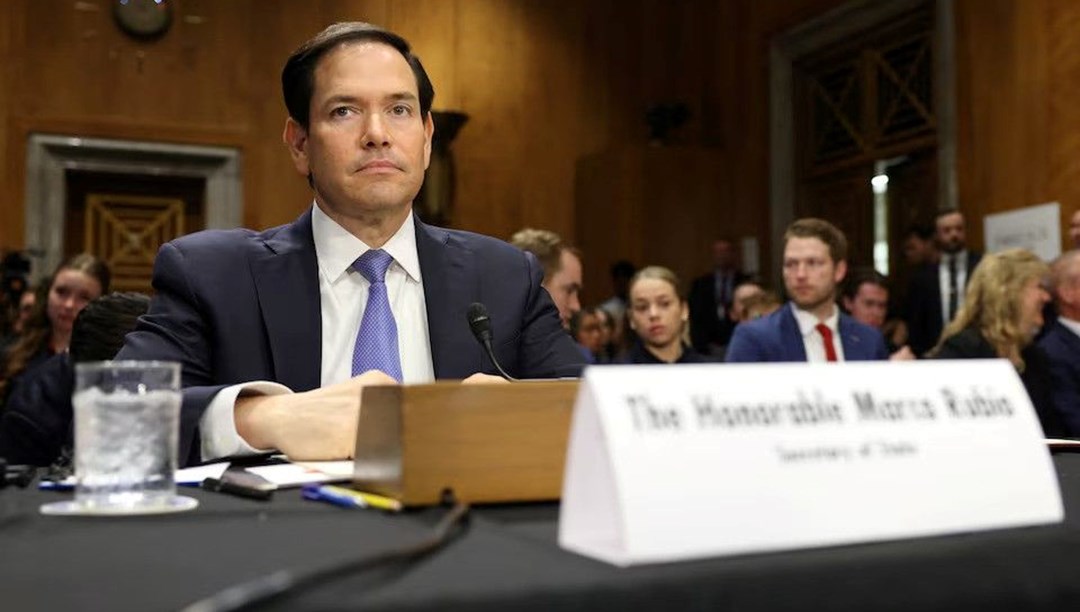
In a recent testimony before the U.S. Senate Foreign Relations Committee, Senator Marco Rubio addressed the budget requests from the State Department. His discussion primarily focused on the precarious situation in Syria and the implication of U.S. policy on regional stability.
Rubio emphasized the importance of supporting the current government in Syria, stating, "We want to help this government succeed because the alternative is a full-scale civil war and chaos, which would undoubtedly destabilize the entire region." His comments reflect a deep concern about the potential for a regional crisis if the current administration, led by President Ahmed Shara, fails.
The Risks of Government Failure
Rubio warned that if the Shara government collapses, it would pose a significant risk to regional stability. He articulated, "In fact, considering the challenges facing the transitional authority, we assess that a potential collapse into a full-scale civil war, fundamentally splitting the country, may be just weeks away, not months." This dire prediction underscores the urgency for the U.S. to reevaluate its strategy in the region.
Additionally, Rubio pointed out that lifting sanctions could facilitate neighboring countries in offering support to the Syrian government. He mentioned that U.S. officials, including embassy staff in Turkey, would be crucial in coordinating assistance to meet Syria’s needs, especially by collaborating with local partners in law enforcement.
Continued U.S. Military Presence
Reiterating concerns about the terrorist group ISIS, Rubio stated that the organization "hates" the current Syrian leadership as it represents a serious threat to their operations. He noted, "Every day that the Syrian government fails to fulfill its duties will be a day that ISIS can regain its footing." To mitigate this risk, he assured that the U.S. will continue to maintain a military presence in Syria for the foreseeable future.
Recently, President Donald Trump indicated plans to lift sanctions on Syria during the Saudi-U.S. Investment Forum 2025 in Riyadh. This shift may have profound implications for U.S.-Syria relations and the broader geopolitical landscape.
Addressing Israeli Concerns
Rubio also responded to questions from fellow committee members concerning Israel’s apprehensions regarding the Syrian government. He argued that the current administration in Syria presents an opportunity rather than a threat. "They are trying to build a nation. They do not see themselves as a launching pad for revolution," he asserted, aiming to reassure regional allies like Israel.
He stated, "If you have a simple government that includes all elements of society and has no interest in waging war with Israel over borders or anything else, I think that is an extraordinary success for Israel’s security." This assertion highlights Rubio’s belief that a stable Syrian government is in the best interest of Israeli security.
Rubio also addressed the Turkish presence in Syria, suggesting that the transitional government would need to make decisions regarding foreign military bases in the future. Moreover, he emphasized that the U.S. is working to ensure that Kurdish forces are integrated into the broader framework of the Syrian government and its security apparatus.
The Importance of a Coordinated Strategy
The discussion around the budgetary and strategic commitments in Syria highlights a critical juncture in U.S. foreign policy. Rubio’s remarks reveal a commitment to understanding the complex dynamics at play in the region. He advocates for a coordinated strategy that supports the established Syrian government while also recognizing the dangers posed by extremist groups like ISIS.
Utilizing sanctions as a lever for influence reflects a delicate balance between exerting pressure and providing support. As Rubio mentioned, the collaboration with local partners and neighboring nations is essential to navigate the challenges that lie ahead in Syria.
Conclusion
Senator Rubio’s testimony brings forth significant insights into U.S. policy in Syria. His remarks underscore that the success of the Syrian government is crucial not only for its own stability but also for the broader Middle Eastern landscape. The international community’s response, especially from the United States, will play a critical role in shaping the future of Syria and ensuring that the region does not devolve into chaos. The upcoming weeks and months will be pivotal as these strategies are put into action, and regional dynamics continue to evolve.