
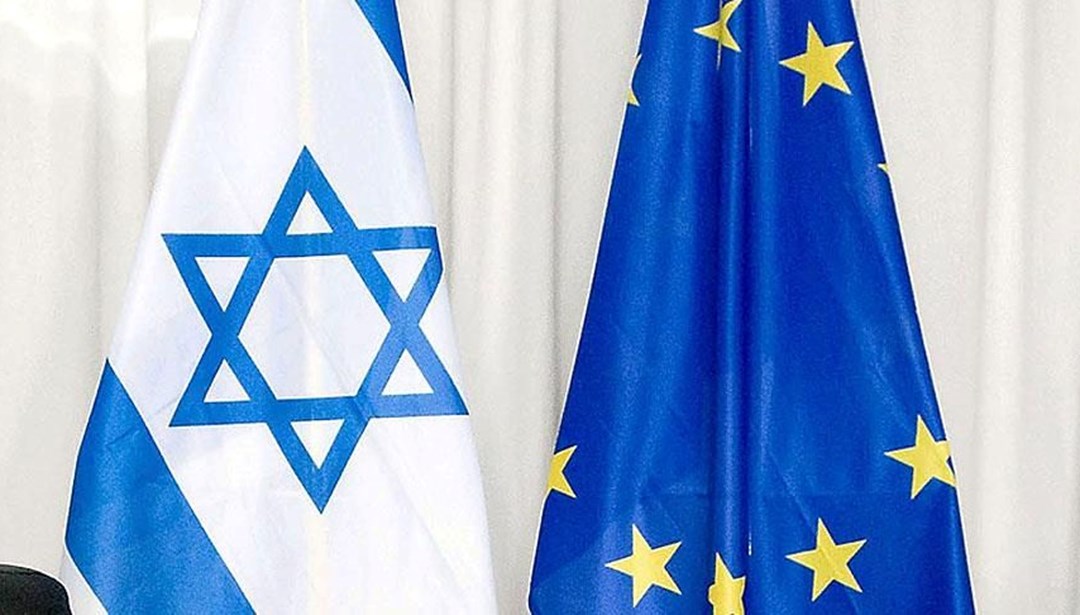
EU Foreign Affairs Council Meeting in Brussels
The European Union (EU) has always been at the forefront of diplomatic relations, and the recent Foreign Affairs Council Meeting in Brussels further highlighted its commitment to addressing the intricate dynamics between the EU and Israel. Key discussions revolved around the EU-Israel Association Agreement, with a significant proposal from the Netherlands regarding its review.
Support for Reviewing the EU-Israel Agreement
During a press conference following the meeting, Estonian Prime Minister Kaja Kallas articulated that a vast majority of member states are in favor of the Netherlands’ proposal to review the EU-Israel Association Agreement. She emphasized the importance of this step, asserting, "We will initiate this work. Meanwhile, the responsibility to lift humanitarian aid barriers lies with Israel."
This statement encapsulates the EU’s dual approach: preparing to reassess trade agreements while simultaneously stressing the urgent need for humanitarian assistance in regions such as Gaza.
Humanitarian Assistance and Its Challenges
Kallas was questioned about the timeline for the review process and the associated humanitarian concerns. In response, she underscored the EU’s efforts, stating, "We are starting this work and, in the meantime, we genuinely hope for the lifting of the humanitarian barrier and an improvement in the situation." Her statements convey a sense of urgency and commitment to the humanitarian crises that often overshadow political discussions.
The EU’s Role as Israel’s Largest Trading Partner
The European Union holds a unique position as Israel’s largest trading partner. Since the EU-Israel Association Agreement came into force in 2000, it has formed the legal framework for political dialogue and economic cooperation between the two entities. This agreement represents a pivotal aspect of the EU’s foreign policy, aimed primarily at fostering stability and growth in the region.
Interestingly, the second article of this agreement stipulates a conditional relationship that ties cooperation to adherence to human rights and international law. This clause has become increasingly relevant as discussions around the humanitarian situation in Gaza intensify.
Legal Implications of the Proposal
Notably, the proposal for reviewing the agreement was presented by Dutch Foreign Minister Caspar Veldkamp, who highlighted concerns regarding Israel’s blockade of Gaza. In a letter addressed to Kallas, he articulated that the blockade constitutes a violation of international humanitarian law. This breach potentially undermines the foundation on which the EU-Israel Association Agreement is built. A thorough examination of these legal ramifications could reshape the future of EU-Israel relations.
The Link Between Trade and Human Rights
The ongoing discourse underscores a critical intersection between trade relations and human rights commitments. The EU must carefully navigate this terrain, balancing its economic interests with ethical considerations. The conditionality imposed by the EU on its agreements is not merely a bureaucratic formality; it serves as a moral benchmark for the entire region’s stability.
The Future of EU-Israel Relations
As consultations continue, the future of EU-Israel relations hangs in a delicate balance. The EU aims to foster a cooperative relationship that benefits both parties while remaining steadfast in its commitment to human rights. The review of the EU-Israel Association Agreement could serve as a litmus test for the EU’s effectiveness in melding diplomacy with ethical accountability.
If the negotiation process is handled correctly, it could lead to a more sustainable and equitable partnership. However, it also poses the risk of increased tensions if the review process leads to significant changes in trade agreements or political alliances.
The Importance of Continued Dialogue
Kallas’s remarks highlight that the EU is not only reacting to external pressures but is also proactively seeking to engage with Israel on essential humanitarian issues. The process of dialogue is essential in this scenario, as both parties must remain open to discussing not only trade but also the broader implications of their partnership.
The complexities involved require a nuanced approach, one that avoids falling into rigid frameworks while being adaptable to the ever-changing geopolitical landscape. Continued engagement between the EU and Israel is crucial for fostering peace and stability in the region.
The Role of International Community
The EU’s actions and initiatives will be closely monitored by the international community, including organizations that advocate for human rights. If the EU can manage to intertwine its economic incentives with a robust commitment to promoting humanitarian laws, it could set a precedent for other international alliances facing similar challenges.
This situation radiates beyond the EU-Israel context as it reflects a growing recognition that economic partnerships must inherently align with upholding humanitarian standards. Addressing these multifaceted concerns will not only benefit the people affected but also reflect the ethical obligations that come with global cooperation.
In summary, the ongoing discussions between the EU and Israel provide a critical opportunity to reassess existing agreements against the backdrop of humanitarian needs and international law. The careful consideration of the Hollanda’s proposal, intertwined with ongoing dialogue, could redefine future relations and set a robust framework for cooperation based on shared values.