

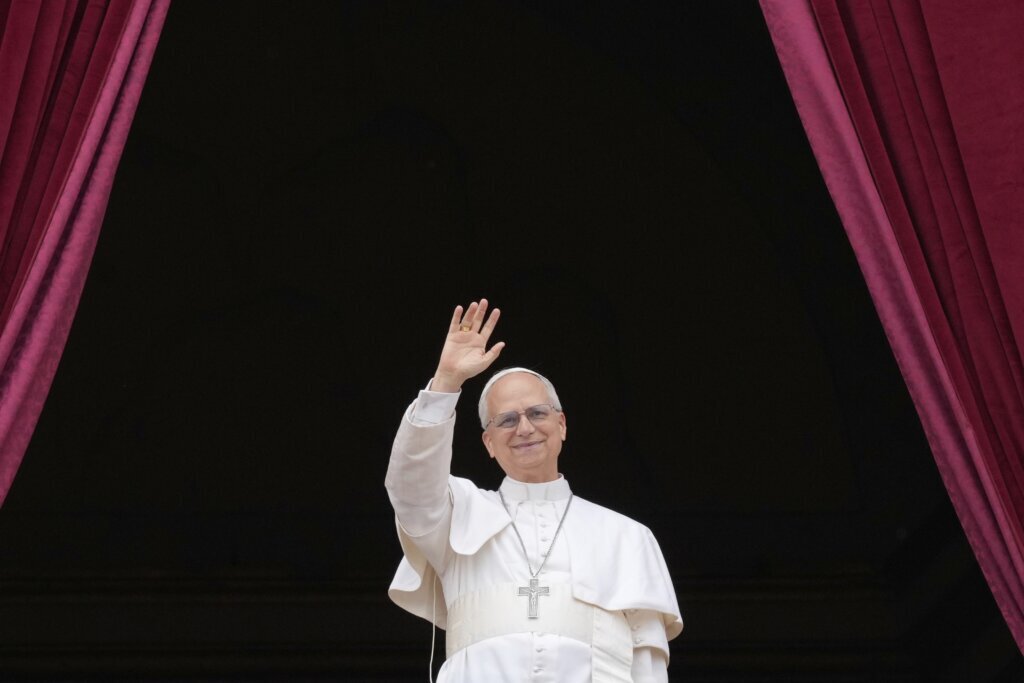
A Historic Day for the Catholic Church
Pope Leo XIV has made history by becoming the first American pope, marking a significant moment for both the United States and the Catholic Church globally. On a sunny Sunday, he delivered a poignant message of unity and peace during his inaugural Mass in St. Peter’s Square, attended by a global audience, including dignitaries, priests, and thousands of faithful. This unprecedented event has sparked excitement among Catholics, particularly in America, as they witness one of their own ascend to the position of spiritual leader for over 1.4 billion Catholics around the world.
The Inaugural Mass Experience
The inaugural Mass saw a sense of tradition and solemnity, characterized by the familiar rituals associated with the papacy. Pope Leo XIV, a 69-year-old Augustinian missionary, took his first popemobile tour, greeting the massive crowd with a smile. His first official act involved receiving the pallium—a woolen stole—and the fisherman’s ring, powerful symbols that underscore his responsibility as the shepherd of the Church. As he donned these items, he appeared emotional, a reflection of the weight of his new role.
The Mass was imbued with rich symbolism, calling for collective prayers for unity amidst the current discord prevalent in the Catholic Church and the world. By choosing to embark on this spiritual journey, Pope Leo XIV aims to position the Catholic Church as a beacon of hope, advocating for love and reconciliation in a time rife with division.
Addressing Modern Challenges
In his homily, Pope Leo XIV emphasized the urgent need for unity and compassion within the Church. He expressed his desire to heal wounds caused by violence, hatred, and economic disparity, reaffirming the Church’s role as a force for social justice and peace. “I would like that our first great desire be for a united Church, a sign of unity and communion, which becomes a leaven for a reconciled world,” he stated.
His focus on unity comes at a critical time, as the Catholic Church faces sharp divisions, particularly within the United States, where varying views on doctrine and social issues have created rifts among the faithful. The challenges Pope Leo XIV faces are significant, but his commitment to healing and reconciliation offers a hopeful path forward.
A Diverse Congregation
The diversity of attendees at the inaugural Mass reflected the global nature of the Catholic Church. Among the notable figures in attendance were the U.S. Vice President JD Vance and Peruvian President Dina Boluarte, illustrating the international recognition of Pope Leo XIV’s election. Various religious leaders also attended, representing different faiths, emphasizing the pope’s message of interfaith dialogue.
The dress code adhered to strict diplomatic protocols, with many attendees donning traditional black attire, while a select few Catholic royals appeared in white. This visual representation underscores the rich tapestry of Catholicism and the varying cultures within it.
American Catholics Celebrate
Across the United States, the election of Pope Leo XIV has sparked a wave of celebration and pride among American Catholics. Seminarians, families, and private citizens have expressed joy and hope, feeling a renewed sense of connection to the global Church. “Seeing one of our own on the throne of Peter almost makes Jesus himself more accessible,” exclaimed Ethan Menning, a 21-year-old seminarian.
This emotional response underscores how Pope Leo XIV’s ascension represents not just a personal achievement but a collective victory for American Catholics, who often feel distant from the global Church hierarchy. Kalen Hill, a pilgrim in the crowd, voiced a sentiment shared by many Americans: "It is really powerful for American Catholics who sometimes feel separated from the world church to be brought in and included in this community through Pope Leo.”
Symbolism of the Papacy
The pallium and fisherman’s ring given to Pope Leo XIV are not just ceremonial; they carry profound meanings. The pallium symbolizes the pope’s role as a shepherd, guiding his flock, while the fisherman’s ring links him to Saint Peter, the apostle who was called to be a “fisher of men.” These symbols reflect Pope Leo XIV’s commitment to his role, reminding him and the Church of its mission to serve the faithful.
Additionally, the rite of obedience during the Mass involves clergy from diverse backgrounds, reflecting a modern approach to governance within the Church—a departure from more traditional ceremonies where only cardinals participated. This inclusivity speaks to Pope Leo XIV’s vision of a united Church.
Conclusion
As the world witnesses the rise of Pope Leo XIV, his papacy holds the promise of renewed zeal for unity, social justice, and peace within the Church and beyond. His position as an American leader provides a unique lens through which to address the complexities facing Catholics today. With a call for healing and reconciliation, Pope Leo XIV aims to steer the Catholic Church toward a future characterized by love, community, and a strong commitment to addressing global issues. The excitement surrounding his papacy is palpable, and many eagerly await his leadership as he embarks on this historic journey.