
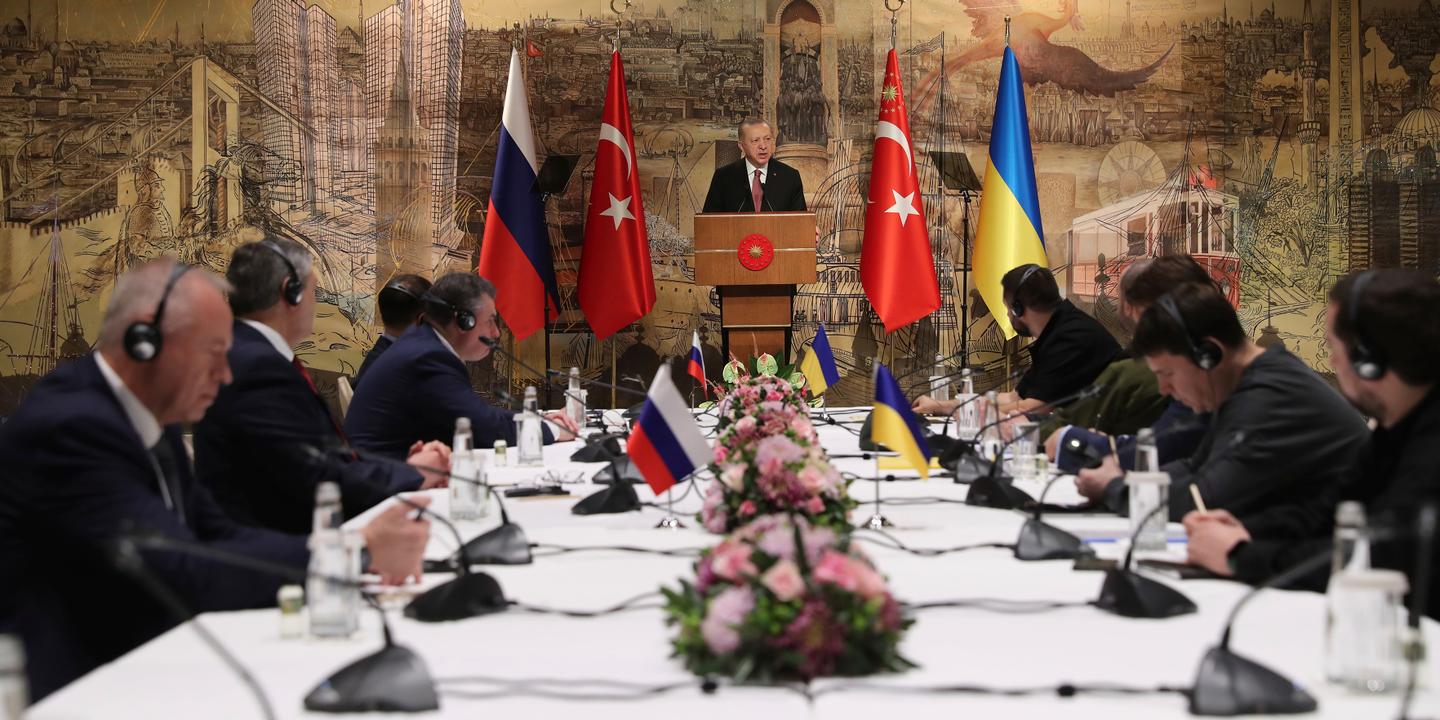
Direct Peace Talks Between Moscow and Kyiv: A Historical Shift
More than **three years** after the onset of the **Russian invasion** of Ukraine, Kyiv and Moscow are set to reinstate **direct peace talks** in Istanbul, Turkey. This event marks the first such dialogue since spring **2022**, symbolizing a potential turning point in the prolonged conflict.
While the **composition** of the Ukrainian delegation remains undisclosed, the absence of **Vladimir Putin** raises questions about the participation of the Ukrainian president in the discussions. Ukrainian Foreign Affairs Minister **Andrii Sybiha** confirmed on Tuesday that he would attend another meeting of **NATO foreign ministers** occurring simultaneously in **Antalya**, southwest Turkey.
Ukrainian President **Volodymyr Zelensky** urged former U.S. President **Donald Trump** to attend the talks, suggesting that Trump’s presence would give additional momentum to the discussions. Although Trump acknowledged the **possibility** of attending, it remains unclear if he will make the trip. Currently, **Marco Rubio**, the head of American diplomacy, is expected to arrive in Istanbul on Friday, as per a high-ranking state department official.
As for Putin, his expected absence suggests that the Russian delegation will not include top leadership. The Kremlin has announced that the delegation will be led by **Vladimir Medinski**, a presidential advisor, alongside **Mikhail Galouzine**, the vice-minister of foreign affairs, and **Alexandre Fomine**, the defense vice-minister. Notably, **Igor Kostioukov**, the chief executive officer of the General Staff, will also represent Russia in these timely discussions.
- What is the position of the parties?
Kyiv, along with its **European allies** and **Washington**, is advocating for a total and unconditional **ceasefire** lasting **30 days** before any further negotiations can begin. Vladimir Putin has not entirely ruled out the discussion of a ceasefire but emphasizes the need to delve into the **root causes** of this conflict. Moscow has expressed hesitance regarding a prolonged truce, arguing it could provide Kyiv with opportunities to **bolster its defenses** with **Western arms**.
Since the beginning of the invasion, the Kremlin has maintained **maximalist demands**, including Ukraine’s withdrawal from any NATO aspirations, the relinquishment of four partially Russian-occupied regions, and an end to Western arms deliveries. These conditions remain unacceptable to Kyiv, which has been seeking **robust security guarantees**, potentially through NATO membership or by deploying a **European military quota** in the region.
**Iouri Ouchakov**, a diplomatic advisor to Putin, has indicated that the upcoming talks will revolve around **political** and **technical** issues that need to be addressed. The expectations from both parties highlight the fragile state of negotiations.
European allies of Ukraine have warned Russia of **massive sanctions** if it fails to agree to an extended ceasefire in the coming days. Zelensky has called for the most stringent sanctions ever imposed against Moscow should Putin refuse to participate in the discussions. The **EU recently adopted** its **17th package** of sanctions against Russia, aiming to target the oil tankers belonging to its so-called “**ghost fleet**,” which facilitate the evasion of existing restrictions.
In parallel to these diplomatic efforts, Russia has reiterated its intent to pursue the underlying **goals** of its invasion despite the sanctions imposed against it. The Kremlin continues to assert the resilience of its economy under pressure, indicating an unwavering commitment to its objectives.