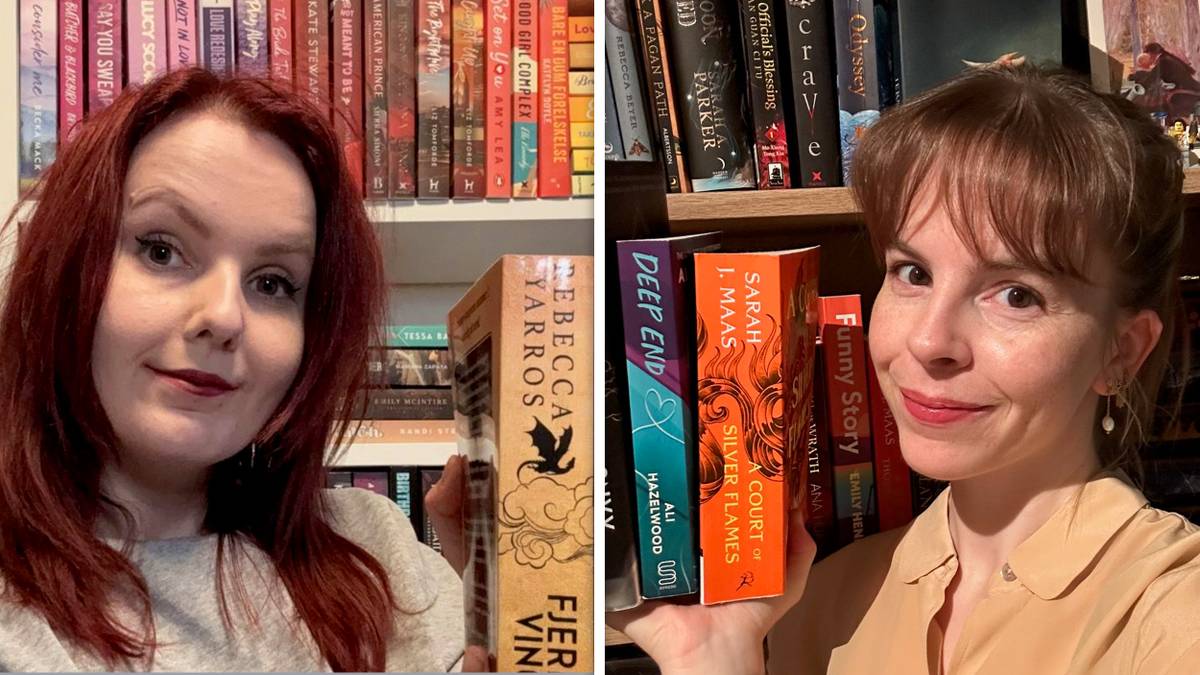
Reading is in the wind again like never before, and if you look up the topic tag #booktok on TIKTOK you get millions of hits. In particular, there is one target group that flocks to booktok – young women. But there are few cheers about reading pleasure. On the contrary, we hear that what we read is garbage. The Fantasy novel “Onyx Storm” sold 2.7 million copies in the first week after launch, and is thus among the fastest selling books in the last 20 years. Together with authors such as Sarah J. Maas (37 million books sold) and Jennifer L. Armentout, Yarros pulls millions away from the screen to save the world and fall in love. This is absolutely fantastic, or what? For a number of years, the book industry has shouted loudly that they lose young readers, and they scratch their heads over how to win back. Now these readers have finally picked up the book again, just to be told that they are reading the wrong books. We do not read what Literature-Norway wants us to read. Not enough award winners and not enough Norwegian contemporary literature. The Norwegian book industry gives the impression that it is the readers – with young women in the lead – who have to change, instead of stretching out a hand to a large and overlooked market. It is time to reconsider how we discuss, market and treat literature. Critics should think about why these books are so popular right now. Not everyone wants to read Kafka after work. Fantasy, romantasy and romance are the most popular and fastest growing genres. It is wrinkled on the nose and the books are referred to as housewife porn. It is “simple” literature, kiosk literature, flat, childish escapism and not intellectually enough. We should rather read something challenging, something educational, something poetic. Yes, or Crimea then. Crimea has for a long time been the living room entertainment literature in Norway. It is Crimea you meet first in the bookstore, in the ad in the newspaper, which is reported by the online newspapers, and there are crime writers you see as a guest on talk shows. One of the most common crime plots is a sexual murder of a young, pretty woman that a male investigator with emotional problems must clarify. Not only is violence against women a major societal problem, it is also completely standard entertainment. There is nothing wrong with Crimea, but is it really so surprising that not everyone thinks it is entertaining to read about cold -blooded killings? Books for women have always had to defend that they exist. Again and again we see that the book-books get all the criticism you can expect from books written by women for women: “Banal romance on Dragerggen. Is romantasy just another word for housewife porn? ” asks news’s critic in the review of Rebecca Yarros. Fantasy, romantasy and romance challenge the well -known women’s role as a victim or caregiver. Here, the focus is on women’s pleasure, consent before sex and adult conversations about boundary. Yes, why will anyone read something like that? There is obviously a lot to be annoyed. Here we get strong heroines who do not find themselves in anything. Maybe they have chronic illness, such as Violet in Onyx Storm, or they are imperfect in other ways; They fight, they speak loudly, they enjoy sex without shame, they lead and they make serious mistakes. Besides, they are not emotional support wheels for all the men they meet. They use birth control and enjoy themselves as they please. These women are so close to whole people that it gets a little in excess for some. Where has it become of the sweet and caring girl-Next-Door? She sits on Dragerggen, ready to save the world! This is not just literature – it is a form of quiet but powerful opposition to the expectations of women and men who are still deep in society. When eager readers now flock back to the books, we have two recommendations: – Give us the books we want! – Stop criticizing ourselves for what we read. Norwegian publishers can look to Sweden and Denmark to learn how to focus on genres and books as trends. When readers flock to new series, they should forge while the iron is hot. Throw yourself over the trends and publish the books right in the pocket, so you can compete on both the release date and the price. To get more Norwegian writers, you can look at the fantasy environments. Many talented author sprouts here in the country write in English because the publishers treat fantasy as children’s literature. It is time for Literature-Norway to stop criticizing readers to choose the wrong books. English -language books, fantasy or romance are not the enemy. It is the screen that is the real competitor of literature! Right now it is the Booktok environment that leads the fight for the books. The chronicle is also signed by the following booktockers/bookstagrammers: Camilla Østvik- @millasbookotherapystine Rindal- @superstinelesermay Christin Johansen- @bookshelfbymaycarina Gundersen- @carinasbookcorneroda Renate Lyngstad olTedal-Farna @ellasdatteranita Catherine Christensen-@filifjonka_lowser Karlsen- @Bookish.lenejulie Norgren-@juliesbubble Elisabeth Buklev-@ellafaereadsmarianne Sagen-@marianneseskerkrokrokril Sætre-Neste-Storist @Kristinesbookworldliv Judit Olsen – @Creative Everyday.nocamilla Holter – @Booknerd_Norwaymarlene Møller – @Nordic.Bookfairyvictoria Thorsby – @vicysboktipehege Solberg – @thesmallBokcornerlisa @Scrollwhispernona Monica Bargel – @nonasbooksmaren Olsen – @love.magic.Books Send us your utterance Want to write? Feel free to contact us in news Ytring with your post. The guidelines can be found here. Published 09.03.2025, at. 17.28
ttn-69