
Major Earthquake Strikes Northeast Malaysia
Overview of the Earthquake
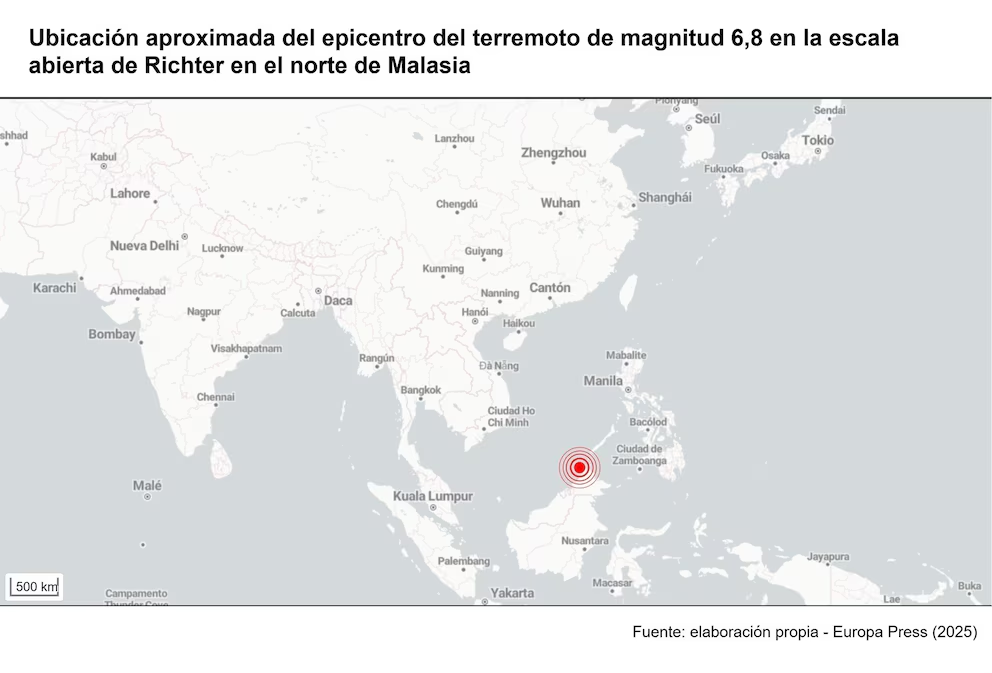
On a recent day, the Malaysian Meteorological Department reported a significant earthquake registering a magnitude of 6.8 on the Richter scale. This seismic event occurred approximately 49 kilometers from Kudat, situated in the state of Sabah on the island of Borneo. The earthquake’s hypocenter was recorded at an impressive depth of 678 kilometers, which has led to a lack of verified casualties or major damages thus far.
Extent of Tremors Felt
Reports from the Meteorological Department indicated that the tremors were not confined to Sabah alone. Residents in neighboring regions, including Sarawak and parts of peninsular Malaysia, also felt the seismic waves. Notably, the authorities emphasized that despite the earthquake’s magnitude, no fatalities or significant property damage have been reported.
No Tsunami Threat
An official statement from the Malaysian Meteorological Department reassured the public that there is no threat of a tsunami following this earthquake. The team’s analysis concluded that the unique characteristics of the earthquake’s depth and magnitude did not warrant any tsunami warnings for Malaysia’s coastlines. They reiterated, “There is no tsunami threat for Malaysia,” committing to continuous monitoring for further developments.
Updates from U.S. Geological Survey
Following the initial reports, the U.S. Geological Survey (USGS) reevaluated the earthquake’s magnitude, revising it upward to 7.1 on the Richter scale and marking the hypocenter at a depth of 620 kilometers. Both the USGS and Malaysian authorities confirmed that the epicenter remains close to Kudat, reaffirming the joint findings of these organizations.
Understanding Seismic Wave Dispersion
Malaysian media explained that the earthquake’s considerable depth allowed the seismic energy to dissipate over a larger area, making it detectable across a wide geographical scope from Sabah and Sarawak to parts of the peninsula. This characteristic significantly mitigated any potential surface destruction despite the earthquake’s formidable magnitude.
Continued Monitoring and Public Safety
The Malaysian Meteorological Department, in collaboration with the USGS, is actively assessing ongoing data to identify any aftershocks and ensure public safety. There remains a collective absence of imminent danger for the Malaysian population. The authorities encourage citizens to remain informed via official channels, adhering to safety protocols while monitoring the vicinity.
Conclusion
As Malaysia navigates through this challenging seismic event, the cooperation of meteorological agencies and the quick response to public safety concerns reflect the nation’s commitment to disaster management. The unusual depth and magnitude of the earthquake serve as a reminder of the dynamic geological processes at play beneath the surface, emphasizing the necessity of preparedness in seismically active regions.