
Norway is renowned for its awe-inspiring natural landscapes and the remarkable engineering feats it has achieved to navigate its unique geography. A prime example of this is the Rogfast Tunnel , a groundbreaking four-lane submarine corridor designed to connect the districts of Randaberg and Bokn . Spanning a staggering 27 kilometers beneath the sea , this megaproject aims to transform transportation along the country’s scenic west coast, effectively reducing travel times on one of Norway’s busiest routes.
The formidable fjords that populate Norway’s stunning shoreline have long posed challenges for transportation. The E39 coastal road , which stretches over 1,100 kilometers from Trondheim to Kristiansand , is impeded by seven fjords, necessitating inconvenient ferry crossings. These interruptions can prolong a direct journey into a 21-hour odyssey . The completion of Rogfast will eliminate one of these ferry crossings, cutting travel time by a remarkable 11 hours , greatly benefiting the millions who commute between major cities like Stavanger and Bergen .
The tunnel itself is set to reach a remarkable maximum depth of 400 meters below sea level, officially earning the title of the longest road submarine tunnel in the world . This impressive feat will surpass the current record held by the Lærdal Tunnel , which stretches 24.5 kilometers but does not traverse under the sea. When entering the Rogfast Tunnel, commuters can expect a driving time of approximately 35 minutes , a journey enhanced by an underground roundabout located 250 meters deep that will offer access to Kvitsøy Island .
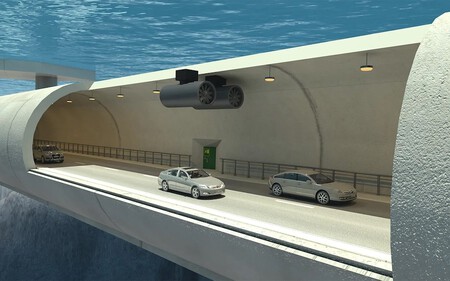
Image: Telegraph
However, the construction of Rogfast is not merely about shortening travel distances; it represents a technical and economic challenge . Initiated in 2018, Rogfast had an initial budget of approximately 1.838 billion euros . According to projections, the total expense for the comprehensive modernization of the E39 may surpass 40 billion euros . To help finance the project, the Norwegian government plans to cover 40% of costs , with the remainder being recouped via a toll of around 34 euros per journey . Construction has faced occasional delays, notably during the pandemic, but the projected completion date remains set for 2033 .
Beyond facilitating travel, the Rogfast Tunnel includes an innovative artistic project intended to alleviate the monotony and anxiety often associated with long tunnel journeys. Engineers are incorporating dynamic lighting elements and decorative features that will create a sense of orientation, aiming to make the driving experience feel shorter and more engaging.
Rogfast is part of a more extensive initiative aimed at fully eliminating ferry crossings along the E39 and establishing a continuous terrestrial coastal route throughout Norway’s west coast. Some areas will necessitate the construction of “floating” tunnels anchored to the seabed to deal with the extreme depths of certain fjords. If successful, this ambitious venture will serve as a testament to Norway’s engineering resilience, demonstrating that it is possible to create a coherent land corridor even in one of the world’s most geologically challenging regions.
In conclusion, the Rogfast Tunnel exemplifies modern civil engineering’s astonishing potential, paving the way for enhanced connectivity and efficiency in transportation for generations to come.