
The Irony of History: Greenland and America’s Expansionist Agenda
Donald Trump’s ambition to acquire Greenland reflects historical patterns of American territorial expansion. The interest in selling Greenland is less surprising to the citizens of 2026 than it would have been to those of a century ago. At that time, discussions of territorial acquisitions were mainly focused on islands in much warmer waters, highlighting the strategic value that those territories had over the Arctic island.
Historical Context: Danish Territories and Their Acquisition
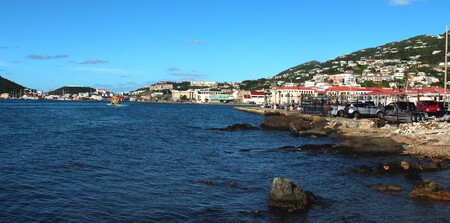
One notable example is the Danish West Indies, comprising islands such as Saint John, Saint Thomas, and Saint Croix. Denmark’s control over these islands, established in the late 17th century, was primarily motivated by lucrative sugar plantations and the slave trade. However, the 19th-century revolts and a plummeting sugar market rendered these territories less appealing to Denmark.
In 1867, U.S. Secretary of State William H. Seward sought to purchase these islands, envisioning a strategic control of the Caribbean as part of a broader expansionist strategy.
The Tug of War Over the West Indies
The proposed treaty to acquire the Danish Virgin Islands for $7.5 million in gold coins faced significant political hurdles. Controversies surrounding the recent purchase of Alaska created dissent, preventing the necessary political support from coalescing in the U.S. Senate. Follow-up treaties also failed to gain approval, so the tug-of-war continued for years.
The tides began to turn during World War I. The sinking of the RMS Lusitania heightened American concerns about German influence over Denmark and the West Indies. This resulted in renewed efforts to secure the islands, emphasizing their strategic importance for American national security.
The 1917 Acquisition Treasure: $25 Million for New Territory
Ultimately, the U.S. secured the acquisition of the Danish West Indies in 1917 for $25 million. Adjusted for inflation, this amounts to approximately $630 million today. Interestingly, a clause in this treaty assured Denmark that the U.S. would not interfere with its interests in Greenland, maintaining a balance of political and economic power in the region.
The Future of Greenland: Continuing Ambitions
Discussions regarding Greenland’s status and potential U.S. claims haven’t faded over time. As recent as 1951, a pact was signed that allowed the U.S. increased military access to Greenland, indicating ongoing American interest that some view as expansive—fitting Trump’s recent endeavors.
In 2026, the historical context reveals that territorial disputes are not new. They echo a time when the U.S. prioritized strategic positioning in geopolitics, including the Arctic region. Whether Trump’s aspirations for Greenland come to fruition remains to be seen, but they are a reminder of the complex interplay between historical motivations and contemporary political ambitions.
Conclusion
The acquisition of territories—like Greenland—has long been a part of American history. The irony lies in the fact that while the players and the context may evolve, the underlying motives resonate through time. Greenland’s fate serves as a lens for understanding how contemporary politics can draw parallels with historical precedents.