
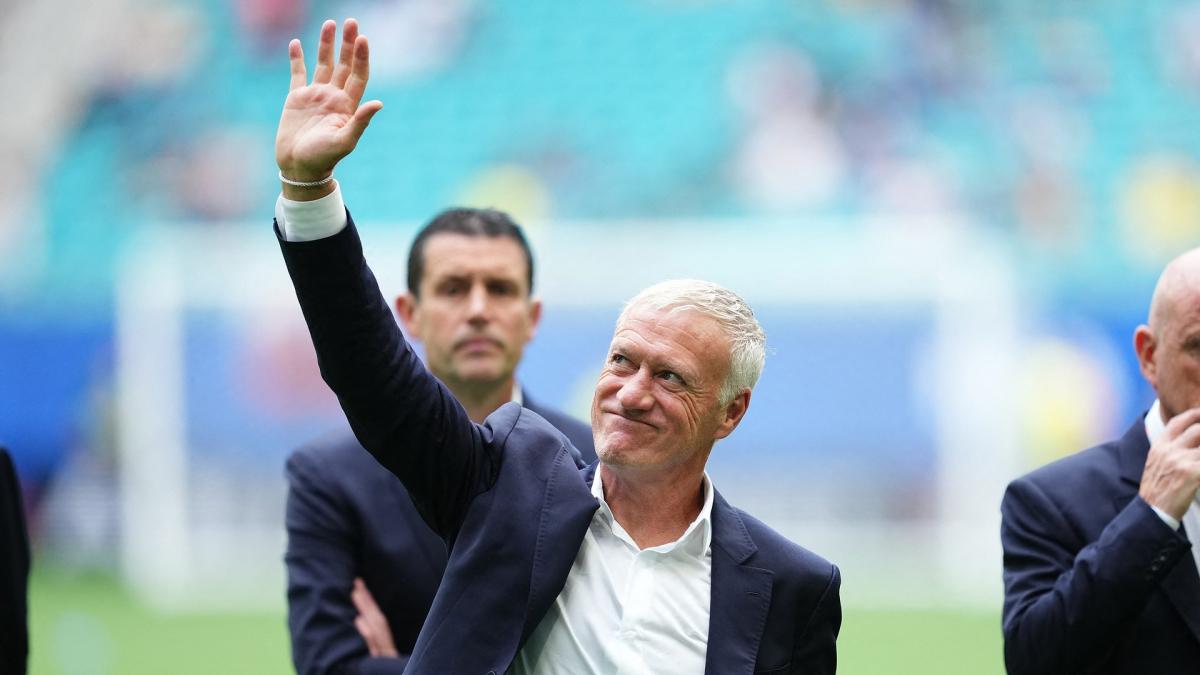
## Didier Deschamps’ Departure: A Tense Exit from the France National Team
Didier Deschamps’ recent exit as head coach of the French national football team has been met with mixed reactions, underscored by his alarming assertion of an “environment that has become unbreathable.” This statement reflects the growing rift between him and the French Football Federation (FFF), particularly magnified by the leadership of Philippe Diallo as president. The tensions reportedly began escalating during the American tour in March 2026, compounded further by the increasing scrutiny of the team’s performances.
### Contract Stability vs. Governance Changes
Deschamps had initially secured his position through a contract extension until 2026, endorsed by Noël Le Graët in January 2023, which seemed to provide stability. However, the influx of new governance under Diallo led to an environment where Deschamps felt more vulnerable. In an effort to alleviate rising tensions, he announced in January 2025 that he would step down after the 2026 World Cup, a move perceived as a necessary measure to restore calm.
The situation turned sour when Diallo publically discussed future coaching choices, which Deschamps perceived as undermining. This lack of unity contributed to a deteriorating relationship, leaving Deschamps feeling isolated within the federation.
### Tensions Between Key Players and FFF Leadership
Amidst the escalating tensions during the World Cup, several decisions taken by the federation ignited further discord, particularly involving star player Kylian Mbappé. One significant issue arose over the request for a cryotherapy device, essential for managing the extreme American heat. Initially denied for budgetary reasons, the request was only granted after Mbappé intervened, shedding light on the perceived priorities of management.
Additionally, the extravagant expenditure of approximately €120,000 on the executive committee’s travel raised eyebrows. While the federation’s leaders enjoyed luxury accommodations, it was reported that players’ families faced considerably less favorable treatment. This imbalance fostered resentment among players, prompting tense exchanges between Deschamps and Erwan Le Prévost, the deputy general director of the FFF.
### Bonus Discrepancies and Player Pushback
The frustrations peaked around bonus structures announced by Diallo during a lunch at the Élysée prior to their trip. The new policy dictated that bonuses would only be disbursed upon reaching the semi-finals, a stark deviation from previous tournaments. This decision sparked outrage from Mbappé, emphasizing the critical nature of each match in a World Cup setting. His reminder to the president underlined the gravity of the situation, especially in light of the expectations surrounding the team.
Even as the teams cohabitated at the same hotel during the competition, relations between Deschamps’ staff and the federational leadership remained frosty. This tension transformed into an ongoing pattern of disconnection, exemplified by Deschamps’ comments on the unbreathable atmosphere—a clear testament to the growing divide.
In conclusion, Didier Deschamps’ departure from the French national football team dramatizes the complexities and pressures inherent in high-stakes international football. As the 2026 World Cup approaches, the looming question remains: how will the FFF reconcile these internal divisions to foster a cohesive team environment capable of success on the global stage?