
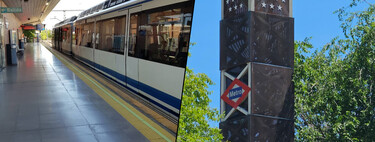
The Future of the C-5: A Promising Extension
The long-awaited extension of the C-5 Cercanías train line between Móstoles and Navalcarnero has seen significant developments after being stalled for over a decade. Recently, the Ministry of Transport has announced plans to study the feasibility of including Boadilla del Monte and Villaviciosa de Odón in an alternative branch—a groundbreaking move that would connect these towns by train for the very first time.
A History of Half-Finished Works
The Cercanías Madrid line C-5 stands out as the most heavily utilized line in the network, boasting over 72 million travelers annually. Yet, the continuation of this line from Móstoles-El Soto to Navalcarnero has been in limbo since 2019. The suspension of works, stemming from contractual issues, left behind half-constructed viaducts and unresolved debts with local municipalities. This situation has left commuters frustrated and seeking viable transportation options.
Recent Developments: What Has Changed?
The recent call for a new feasibility study by the Ministry of Transportation marks a pivotal shift in the project’s trajectory. Unlike previous assessments limited to Móstoles–Navalcarnero, the updated study will also explore potential routes extending toward Villaviciosa de Odón and Boadilla del Monte.
Villaviciosa de Odón’s inclusion is particularly strategic, as city officials have directly negotiated with the Ministry to stress its importance in enhancing interurban transportation options beyond the existing bus services. The feasibility study is currently in the award phase.
The Need for Connection
Presently, both Boadilla del Monte and Villaviciosa de Odón lack direct train connections, relying heavily on cars, intercity buses, and, in Boadilla’s case, the Light Metro. As these municipalities experience significant growth in both population and economic vitality, they remain hindered by congestion on major roadways like the A-5, M-50, and M-501. Establishing a Cercanías line would facilitate newfound connectivity to Móstoles and the broader transport network, thereby alleviating traffic woes.
Expectations vs. Reality
Local council members have expressed optimism regarding the project’s recent developments, characterizing them as a “first decisive step.” However, it is essential to remain grounded in reality—multiple phases are yet to be completed. The process entails conducting extensive studies, finalizing a solid project plan, securing financing, and eventually carrying out construction works. Thus, while excitement is warranted, awareness of the hurdles ahead is crucial.
What’s for Sure?
Beyond the hypothetical branch connecting the new towns, the C-5 line is undergoing major transformations with a clearly defined roadmap and budget. The modernization plan outlines 28 actions, investing a staggering €1.35 billion. This fund aims to expand platforms, build new lanes, renew signaling systems, and establish a new station at Móstoles-El Soto. The ultimate goal is to enhance the line’s capacity by 60% and significantly reduce the service disruptions that impact countless daily travelers.
Cover image | Falk2 (Wikipedia)