
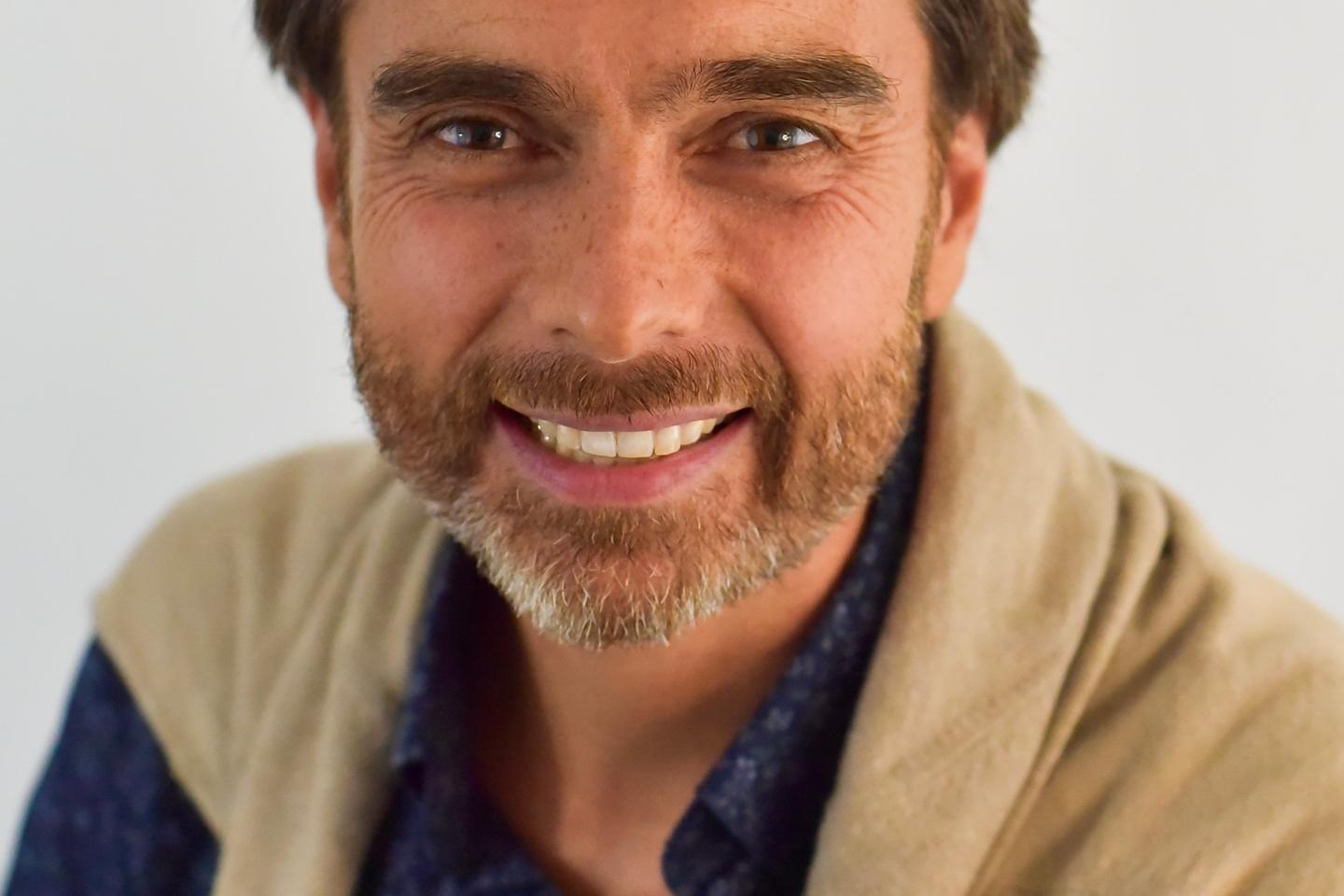
Psychologist and psychoanalyst at the Foundation Health of Students of France, vice-president of the Psychiatric and Psychological Care Network for students (Resppet), Christophe Ferveur participates, Saturday, March 22, in one of the “great assemblies” of World At the our Futures festival, around the theme “Disconnect … or not!” Is it selfish to cut yourself off from the world? », With Anne Cordier, Jean Massiet, Syrielle Mejias and Paloma Moritz.
How do young people express their discomfort when they consult you?
The expressions that return most often in the mouths of young people during the first consultation are: “I am stressed”, “I feel blocked”, “I feel empty”. Which, in our psychiatric language, often refers to the notion of anxiety. However, if the fight against anxiety goes as far as exhaustion, the risk is to switch to the side of depression.
What do they attribute this stress to?
As a first intention, they evoke their studies. But when we dig, what stands out is the fear of making choices. Many elements feed this fear. The societal climate that has reigned since the 1960s and which places the self-employed individual of himself at the center-the implicit or explicit message to young people is: “Do what you want, but be efficient. »The pressure concerning the orientation from the class of 3e And to the “good master”, obviously passing through Parcoursup. A certain friability of the family rear base, with parents themselves more weakened than before, in particular in terms of educational standards-among the indices: the increase in burn-outs, the increased consumption of psychotropic drugs which France remains unfortunately champion, the effects on the mental health of the uncertainties of the economic context and the professional world.
And the “eco-anxiety”?
It exists, of course, but it is not an expression that we hear that much. On the other hand, they are very sensitive to all the discourses on the risks of collapse: that of the economy, I said, and of course that of the planet, even of democracy. The real question they ask is: “Where is the world going?” Our helplessness to answer them weakens what is called their narcissistic base, on which self -confidence and belief are based in the future. To want to grow, you have to strengthen this base. Being able to rely on adults, including by the way by opposing them, which is a great classic but which today is made difficult because of ambient societal anxiety.
Are they more fragile than their elders?
I don’t believe it. More weakened, yes, obviously, and there is something, but they have a lot of resources.
Are they selfish?
On the contrary. Many work by my colleagues sociologists show it. With the weakening – there too – of the collective, more than ever young people seek to which group hang up their identity position, even if it is sometimes in the extreme. What is blurring is the border between individuation and individualism, which is not the same thing. When the egotic base is weakened, it can lead to withdrawal. In a way, you could say that a little more selfishness would do them good: to take care of yourself, of this narcissistic base. And there, the screens intervene. Thanks to social networks, they can create a reassuring environment, a cocoon – allow young people to be both folded and connected. But it’s all about degree: in its extreme form, this withdrawal can lead to what the Japanese designate under the term hikikomori. In France, we use the word “retiring” – young people who live the outside world as a threatening phobogenic space or desolation, and take refuge in a den where time is no longer flowing, without future projection, behind real life.
Is this what we observe in cases of school phobia?
This term is debated in psychology. It designates school or university as objects of a pseudo-phobia. However, what they are afraid of is adult people in general, not from school. The school is only the scene on which the elements of unconscious conflicts are manifested and played. What we observe, and which is relatively salient, is that their lack of self -esteem reaches what we call primary narcissistic areas, those of early childhood. Recalling in front of the obstacle, when taking off, some young people hesitate and are tempted to temporarily regress at this level, that of the beginning of development, that where questions of dependence and independence and separation-individualization are played. For some of them, taking their autonomy seems dizzying.
How to help them?
As a reassuring adult. Part of our work is basically to say to them: “Don’t worry, it’s going to be fine. This is less than the care strictly speaking than what we call a support process. Obviously, this is not enough in the face of the most severe pathologies, but, in many cases, this allows them to resume momentum. When they are less crushed by anxiety, they allow themselves to open up reverie spaces, to accept the suspended time of boredom, a soil essential for the reflection and the appropriation of knowledge – to know about oneself, to know about the world. It is in this psychic zone that one can allow ourselves to project ourselves into the future and draw the strength of being creative, a basis essential to the feeling of existence and the ability to act in a habitable and practicable world, which has meaning.
Is COVVI-19 generation as badly as it is said?
Yes and no. Consultation requests have exploded. But the factors are multiple: we speak much more than before mental health and the “Psy check” has created an air call. But the degradation of the mental health of young people is largely anterior. My colleagues and I have been alerting to this subject for twenty years by reporting that the means in existing free structures (Bapu [bureaux d’aide psychologique universitaires]Sse [services de santé étudiants]high school students, etc.) are largely insufficient.
On the other hand, the prevalence of psychiatric disorders evolves little. What has increased significantly are the anxio-depressive clinical tables that require rapid and multidisciplinary reception, in order to get a deterioration most often preventable if the first alert signals are identified, evaluated and taken care of as soon as possible.
The “great assembly” of World Dedicated to the theme “Disconnect … or not!” Is it selfish to cut yourself off from the world? »Takes place on Saturday March 22 from 3 p.m. to 4:30 p.m. in the Auditorium des Champs Libres (10, Cours des Allies, 35000 Rennes). FREE ENTRANCE.
The entire (rich) program of the our Futures festival is accessible by following this link.
This article is part of a file produced as part of a partnership with the Champs Libres et Rennes Métropole.