
The Artificial Island Ambition in Alicante: A Dream Gone Awry
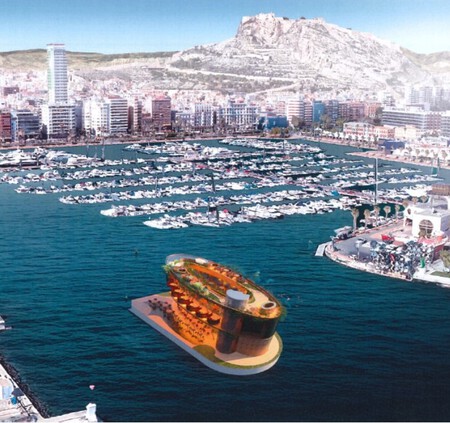
The concept of establishing an artificial island with a luxurious restaurant in the heart of Alicante’s port initially painted a picture of idyllic summer afternoons. Patrons would enjoy traditional Spanish paella while sipping mojitos under the sun, surrounded by beautiful sailboats and the Mediterranean. However, the ambitious project has devolved into what appears to be a significant misstep for the Port of Alicante.
The Vision Behind the Project
In early 2022, the Port of Alicante Authority partnered with Vías y Construcciones, a subsidiary of the ACS Group, to execute one of its most significant initiatives aimed at enhancing the docks’ relationship with the city. The plan called for the construction of a large platform—essentially an artificial island—totalling 669 square meters (approximately 7,200 square feet) at the mouth of its internal dock.
With a projected budget of 2.7 million euros, the project aimed to not only create a platform but to support a restaurant that would offer exquisite dining experiences over the sea. This included plans for a sustainable taxi boat to ferry guests to the island—a seemingly perfect plan that, unfortunately, has encountered considerable hurdles.
Complications Arise
While the intention was to have a stylish and functional restaurant, complications quickly emerged. By 2023, one of the support pillars of the artificial island partially sank, necessitating unanticipated reinforcement work on the seabed. The situation spiraled further when the Port Authority expressed that they “never received” the completed work.
After the initial construction was completed, the contractor declined to conduct essential load tests to evaluate the platform’s stability, an essential procedure for the project’s acceptance. Reports from the CEDEX agency, linked to the Ministry of Transportation, warned about the potential risk of collapse, raising further flags about the structure’s viability.
Ongoing Fallout and Future Steps
In light of the ongoing structural challenges and technical failures, the Port Authority has now signaled its intent to terminate the construction contract. This decision reflects years of technical and negative incidents surrounding the project. The organization plans to restore the original seabed to reclaim navigable conditions before the island’s construction imposed changes.
The company responsible for the construction has ten days to respond to the plan for contract termination. Following this period, the proposal will return to the Board of Directors, with deliberations expected before 2026.
The Consequences for Stakeholders
The impacts of this debacle are far-reaching. Beyond the financial implications—estimated impairment losses of 2.7 million euros—the project was also supposed to encompass a luxurious building to house the restaurant and facilitate taxi boat operations. This building was meant to be managed by a partnership between Alicante Gastronómica SL and Restaura Gestión Forty SL, who are now left grappling with the fallout of a project that did not materialize as intended.
In Conclusion
The artificial island project in Alicante serves as a cautionary tale about ambitious urban planning that doesn’t account for structural realities. What could have been a breathtaking dining experience directly on the Mediterranean has instead crumbled under technical challenges and mismanagement. As the Port Authority moves to dissolve its agreement with the contractor, the community and stakeholders alike are left hoping for a resolution that restores both the port’s integrity and its reputation.