
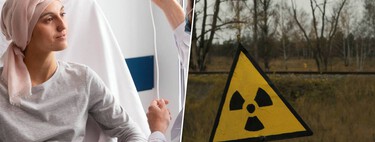
Cancer, a leading global health crisis, affects one in five people according to the World Health Organization. While various factors contribute to its risk, working in a nuclear power plant introduces its own set of dangers, primarily due to ionizing radiation exposure. This concern remains even in the absence of accidents, as maintenance and operational processes can still pose significant risks to health.
Nuclear Waste: From Hazard to Healing
Ironically, the nuclear power sector, which has been associated with increased cancer risks, is now stepping forward as a crucial player in cancer treatment. The United Kingdom is pioneering the transformation of radioactive waste into life-saving medicine, heralding a new era in cancer therapy.
The World’s First Lead-212 Radiopharmaceutical Ecosystem
In a groundbreaking initiative, the UK has partnered the Nuclear Decommissioning Authority with Bicycle Therapeutics to harvest valuable lead-212 from 400 tons of reprocessed uranium over the next 15 years. This project is backed by Sir Greg Winter, a co-founder of Bicycle and Nobel Prize winner in Chemistry in 2018. This collaboration aims to establish the world’s first comprehensive lead-212 radiopharmaceutical ecosystem, extending from discovery through to commercial supply.
Revolutionary Benefits of Lead-212
Lead-212 is a remarkable isotope due to its unique decay properties, emitting both alpha and beta particles. These particles have high-energy capabilities, allowing for targeted treatment of cancer cells. While alpha particles deliver potent, short-range cytotoxic effects, beta particles extend their reach to combat micro-metastasis, enhancing the efficacy of cancer therapies.
As a precision medicine, lead-212 shows promise for treating tumors that are rigidly resistant to other forms of therapy, thereby minimizing harm to surrounding healthy tissues. Clinical applications, particularly for prostate cancer and neuroendocrine tumors in organs such as the pancreas and intestines, have exhibited extremely beneficial outcomes.
The Complex Extraction Process
The journey from nuclear waste to cancer treatments isn’t straightforward. The extraction of lead-212 from nuclear power plant waste is a meticulous and arduous process managed by the United Kingdom National Nuclear Laboratory (UKNNL). The lab processes minuscule amounts of precursor materials derived from used nuclear fuel.
Initially, thorium-228 is extracted from the reprocessed uranium, later converting it to radium-224. This material is then fed into a specialized lead-212 generator, designed specifically for Bicycle Therapeutics, enabling continuous regeneration and production of lead-212 to meet therapeutic needs.
The endeavor is likened to “finding a single drop of water in an Olympic swimming pool,” illustrating the challenges involved in isolating the necessary quantities for effective treatment.
Innovative Discoveries in Cancer Research
In another exciting development, researchers at the University of York are exploring the potential of reusing radiation captured in particle accelerators. This radiation, originally used for fundamental research, could also contribute to producing materials instrumental in cancer therapies.
This initiative underscores a broader trend where advancements in nuclear science and technology are being repurposed for medical breakthroughs, opening doors to innovative cancer treatments.
As the field of radiopharmaceuticals expands, the duality of nuclear power plants as both a risk and a resource reflects a paradigm shift in medicine—a movement toward transforming hazardous waste into life-saving treatments.