
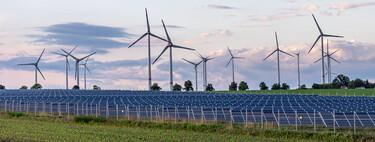
Revolutionizing Offshore Wind Turbine Maintenance: The Drone Advantage
The Traditional Challenges of Offshore Inspections
Until recently, checking the health of offshore wind turbines was a labor-intensive and costly affair. Standard procedure dictated that turbines be brought to a complete halt while specialized technicians traveled to them by boat. This cumbersome process not only disrupted the generation of clean energy but also resulted in significant financial losses for operators who depend on continuous energy output.
A Game-Changer: Quali Drone’s Autonomous Inspections
However, the landscape has significantly transformed thanks to Danish startup Quali Drone. They have achieved a groundbreaking milestone with the first-ever contactless drone inspection of an operational offshore wind turbine. This historic event took place at the Rødsand 2 offshore wind farm, managed by RWE since 2010 and located off the coast of Denmark.
Quali Drone’s AQUADA-GO project demonstrated that a large drone can effectively fly autonomously close to fast-moving turbine blades without halting their operation. According to Jesper Smit, CEO of Quali Drone, “We have shown that it is possible to inspect offshore wind turbines with a drone equipped with a visual camera while the turbine is operational.”
Cutting-Edge Technology at Work
To tackle the inherent challenges of marine conditions, Quali Drone has employed advanced hardware solutions tailored for high-precision missions. Key features include:
State-of-the-Art Sensors: The drone utilizes high-resolution cameras, infrared thermography, and artificial vision systems to gather detailed data.
Autonomy and Precision: Integrated mission planning software allows the drone to autonomously track the rotating blades while capturing required data.
Digital Twins: This technology creates accurate representations of turbine conditions, enabling thorough documentation and reporting that meets industry standards.
Subsurface Inspection Capability: Unlike traditional optical methods, the drone can scan internal layers, revealing damage that may not be immediately visible from the exterior.
Going Beyond Simple Inspections
This drone isn’t just a high-tech camera; it’s a powerful diagnostic platform. As noted by Xiao Chen, an associate professor at DTU (Technical University of Denmark), artificial intelligence models have been developed to identify anomalies through deep learning algorithms. This “digital brain” can detect everything from surface erosion to internal structural fractures using thermography. Moreover, the AI improves with every inspection, learning from each flight and making future diagnostics more precise.
Economic and Environmental Impacts
The introduction of these drone inspections has far-reaching economic and ecological implications. According to Energy Cluster Denmark, the AQUADA-GO project offers notable advantages:
Cost Reductions: Future inspections are expected to save up to 50% in costs.
Enhanced Energy Efficiency: Continuous operation of turbines keeps clean energy production at its peak, reducing the levelized cost of energy (LCOE) by 2% to 3%.
Improved Safety: By minimizing the need for workers to be deployed on ships or at high altitudes, safety risks decrease significantly, lowering CO₂ emissions associated with maintenance by 30% to 50%.
Job Creation: This innovative technology is projected to create between 33 and 55 new full-time jobs and boost company revenues by up to 230 million Danish crowns post-commercialization.
Towards a Smarter Future in Wind Energy
What began as scientific research in Denmark has now evolved into a “market-ready commercial solution,” as highlighted by Jesper Smit. The capability for continuous, uninterrupted monitoring of wind turbine blade health could very well be the key to making offshore wind energy more competitive and safer.
As the industry continues to adapt to these advancements, the role of drone technology will undoubtedly become more prominent in maintaining the integrity and efficiency of offshore wind farms, heralding a new era for renewable energy generation.