
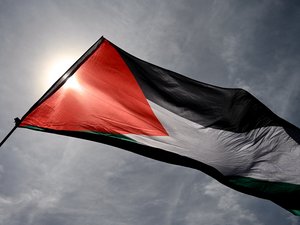
The Ministry of the Interior in France has taken a significant stand against the display of Palestinian flags on town halls and public buildings, particularly on September 22, the date when France is set to formally recognize a state of Palestine. This directive, outlined in a telegram reviewed by AFP , emphasizes the importance of maintaining the principle of neutrality in public service and warns of potential risks to public order .
The recent directive clearly states that prefects are instructed to prevent any attempts to display Palestinian colors on official buildings. According to the telegram, this neutrality principle prohibits such displays, which could be perceived as siding with one side in an international conflict . The ministry has urged prefects to take legal action against mayoral decisions that defy this order.
“The principle of neutrality of the public service prohibits such displays,” the telegram reads. It goes further by warning that mayors who choose to adorn their town halls with flags representing foreign entities may face significant legal repercussions.
Olivier Faure, the first secretary of the Socialist Party , has publicly encouraged the display of the Palestinian flag on September 22, which is also marked by President Emmanuel Macron’s announcement of recognition at the United Nations General Assembly in New York. This political move has ignited strong responses from various political factions and has sparked a debate across the nation.
The Symbolism of September 22
This particular date is significant not only for its political implications but also for its cultural resonance, as it coincides with Rosh Hashanah , the Jewish New Year . The clash of symbolism between the two observances adds an additional layer of complexity to the ongoing political discourse in France.
Several mayors, including those from the cities of Nantes and Saint-Denis , have already expressed their intentions to display the Palestinian flag on their town halls. This decision has been met with stern opposition from the Ministry, which asserts that such displays undermine the sovereign laws governing public service conduct. The telegram referenced asserts that these actions denote an alignment with a side in an international conflict , marking them as illegal and contrary to French law.
Moreover, the ministry expresses concern over the proliferation of international tensions within France’s borders. The note emphasizes the risk of existing international conflicts spilling over into domestic affairs, especially in light of “serious public disorders” predicted in various localities. It is imperative that the government maintains a firm grip on neutrality to avoid further escalation of existing tensions.
The telegram also encourages prefects to proactively engage with mayors who opt to proceed with displaying the flag. “It is your responsibility,” the communication outlines, “to ensure that mayors do not engage in such activities; should they resist, you are to refer these matters to administrative authorities.” This directive reflects both a protective stance for public order and a legal framework for governance that is designed to mitigate unnecessary conflicts.
This topic has sparked heated debates among various political leaders and citizens. Some argue that the display of the Palestinian flag symbolizes solidarity and support for a marginalized people, while others maintain that it threatens the principle of neutrality that France upholds in governmental affairs. The contrast in opinions highlights the underlying tensions that exist not only in France but across Europe regarding the Israeli-Palestinian conflict .
The delicate balance between supporting humanitarian causes and adhering to national regulations has posed a challenge for many public officials. As the date approaches, it remains to be seen how many mayors will stand firm in their convictions against the backdrop of governmental intervention and social discord. The intersection of politics, public sentiment, and international relations makes this a pivotal moment in French political discourse.
The ongoing conversations surrounding the display of the Palestinian colors reflect a broader dialogue about the role of public services in political issues and the assertion of national identity. As France grapples with these complex questions, the implications for democratic governance and public sentiment are vast. Balancing national policies with the evolving international landscape will be crucial in determining the direction of France’s domestic and foreign policies for years to come.