
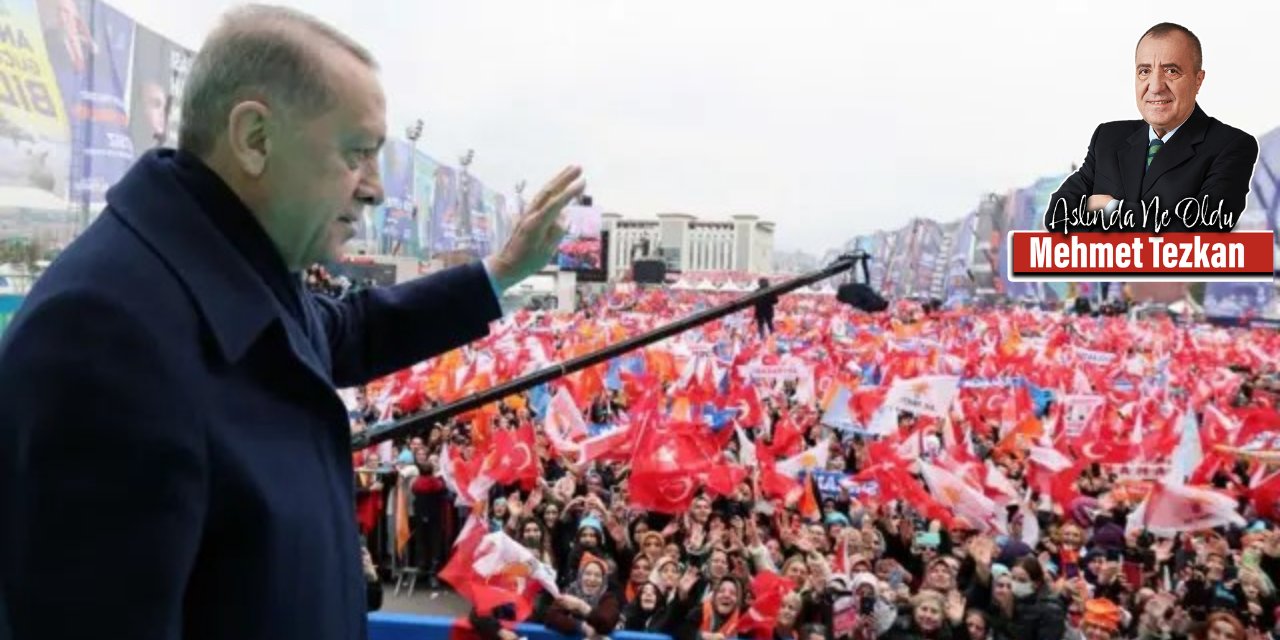
Understanding Erdoğan’s Statement: What Does It Mean?
In a recent statement, President Erdoğan mentioned, “I do not have a concern about being re-elected or being a candidate again.” This announcement has sparked a wave of speculation and questions across the political landscape in Turkey. In my previous article, I delved into the possibilities underlying this proclamation, focusing on three key scenarios.
Scenario One: Genuine Lack of Interest in Re-election
The first scenario to consider is the possibility that Erdoğan truly lacks motivation to run for office again. This interpretation might strike some as genuine, particularly given his extensive tenure as Turkey’s leader. However, many doubt the authenticity of this assertion, suspecting it might be a tactical maneuver rather than a genuine claim.
Scenario Two: Political Maneuvering
The second possibility proposes that this statement serves as a political strategy. Such statements can be viewed as a way to assess public sentiment, gauging reactions while creating an aura of modesty. By suggesting a disinterest in future elections, Erdoğan may be attempting to create a strong public and political narrative, thus shifting the focus away from potential internal dissent within his party.
Scenario Three: Constitutional Changes
The third scenario worth exploring is a far more concerning interpretation: the idea that this could be a prelude to constitutional changes extending Erdoğan’s tenure indefinitely. This interpretation is catalyzed by recent comments and actions from both Erdoğan and his ally, Bahçeli, of the Nationalist Movement Party, further solidifying fears regarding the concentration of power in Erdoğan’s hands.
Bahçeli’s Influence
Bahçeli’s emphatic statements reveal a commitment to the preservation of what he describes as an essential government structure. His claim, stating that Erdoğan is indispensable to Turkey, hints at a more coordinated effort to maintain Erdoğan’s position. Bahçeli’s declaration is nuanced: “Turkey needs Erdoğan to pave the way for the new century.” This rhetoric does not simply suggest admiration; it signifies a deeper alliance aimed at ensuring the continuity of Erdoğan’s regime.
The Language of Control
While discussing these dynamics, it’s essential to unpack key terminologies that underscore this relationship. Bahçeli’s reference to “the centralization of the Presidential Government System” does not merely reflect an ideological stance but echoes the undercurrents of a political oligarchy aiming to curtail democratic processes. His assertion serves as a rallying cry for constructing a more autocratic regime under the guise of national necessity.
Reiterating Control: A Lesson in History
Bahçeli’s reminders of historical allegiances, the feigned nostalgia of the Kemalist era, and references to the Ottoman past round out a narrative that seeks to justify the potential crackdown on dissent, positioning Erdoğan as an almost mythic protector of the nation. His insistence on institutionalizing the current government system is a sign that the future will likely mirror historical instances of autocracy.
Moving Forward: How Will Erdoğan Stay?
In light of Bahçeli’s declarations, we are left to ponder the mechanics behind Erdoğan’s potential continuance in power. Does it come down to throwing opponents behind bars, preventing meaningful opposition? Or possibly facilitating Erdoğan’s solo venture in elections—a means to evade a competitive landscape entirely?
Manipulating the Election Process
With the Turkish electoral system already perceived as compromised, will we see repeat tactics like the underhanded maneuvering witnessed in previous elections? For example, the questionable practices surrounding the 2019 Istanbul elections raised eyebrows as the electoral board made controversial decisions surrounding valid versus invalid votes. This precedent poses essential questions about electoral integrity in forthcoming elections.
The Bigger Picture
Could the overarching plan be a transformation of Turkey into a regime similar to those seen in Azerbaijan or Uzbekistan? The dynamics presented indicate a concerning trajectory where Erdoğan is rendered not just a presidential figure but rather a chieftain-like ruler shrouded in the semblance of democratic legitimacy while effectively dismantling any viable opposition.
The Key Questions
As we continue to witness Erdoğan’s maneuvers, pivotal questions emerge: Will he pursue a path toward legitimacy through fair elections? Or will he unload yet another scheme to block potential challengers completely? Perhaps only time will reveal the strategic calculations behind these public declarations.
In conclusion, while Erdoğan suggests he has no intention of running again, the implications of his statement—along with Bahçeli’s unwavering support—hint at a far more complex web of political intrigue. Understanding these nuances is essential for analyzing Turkey’s future political landscape. As observers, we must remain vigilant to decipher the underlying motivations at play.
Mehmet Tezkan