
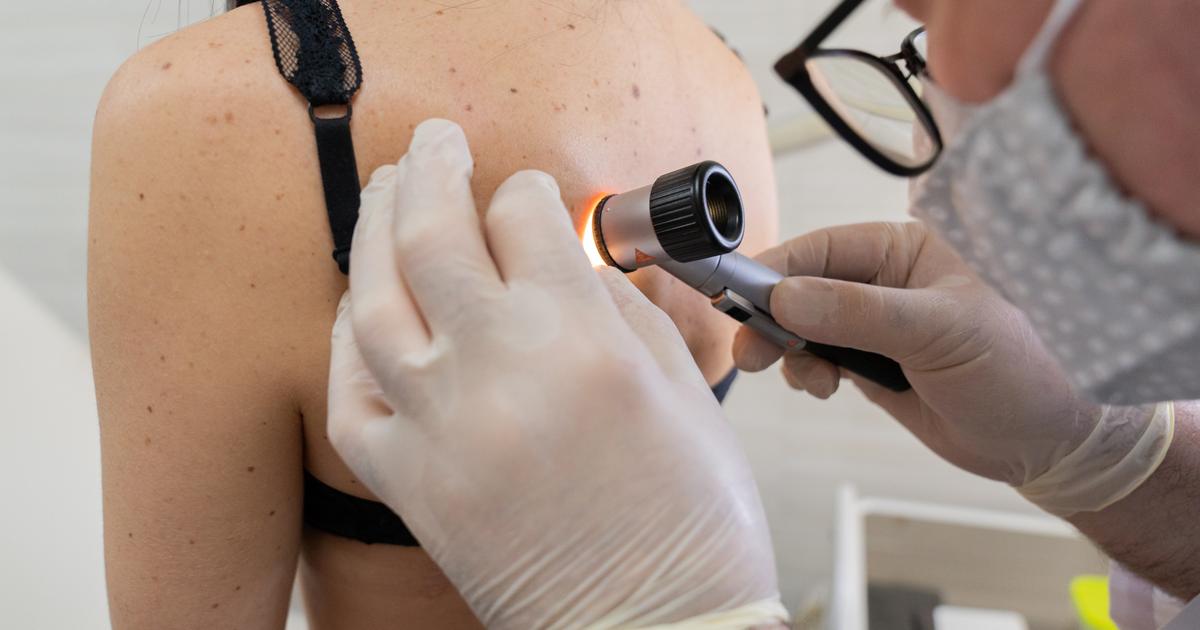
The Growing Concern of Skin Cancer in France
DÉCRYPTAGE – Skin cancers are the most frequent tumors in France, especially among those under 50. This alarming trend is well understood by specialists, highlighting a pressing public health issue.
The statistics are startling: between 1990 and 2023, the number of new skin cancer cases has tripled in France. According to estimates from Santé publique France, between 141,000 and 243,500 new cases are diagnosed each year, marking it as the most common but also the fastest-growing cancer type. Notably, melanoma—a less frequent but particularly aggressive form of skin cancer—has quintupled among men in the last three decades. What explains this troubling trend? As part of the Skin Cancer Awareness Week, organized by the National Union of Dermatologists-Venereologists, we take a closer look.
Understanding Skin Cancers
It is crucial to differentiate between the two main types of skin cancers: melanomas and cutaneous carcinomas (basal cell or squamous cell carcinomas). These tumors primarily vary based on the cell type from which they develop. Melanomas originate from melanocytes, the pigment-producing cells of the skin, while carcinomas stem from keratinocytes, which make up the skin’s outer layer. With 90% of skin cancer cases, carcinomas are the most common. Melanomas, although rarer (around 18,000 cases per year in France), are significantly more dangerous due to their capacity for metastasis.
Identified Causes
The causes of some cancers remain somewhat enigmatic, but skin cancer causes are well documented. “These cancers are mostly attributed to ultraviolet (UV) exposure from the sun,” says Pr Stéphane Dalle, a dermatologic oncologist at the Hospices Civils de Lyon. Up to 95% of skin melanomas may be caused by sun exposure. “UV rays penetrate the skin, particularly in young children, whose skin is thinner, reaching the melanocytes located just a few micrometers beneath the surface. Here, they damage the DNA of these cells,” elaborates the doctor.
Fortunately, the body has mechanisms for repair. However, these abilities are not infinite, and with repeated exposure, the skin can no longer defend itself against ongoing damage. “Moreover, we know that UV rays weaken the immune system, potentially promoting tumor growth,” adds Pr Dalle.
Yet, the sun isn’t the only culprit. “The risk of melanoma, for instance, results from a combination of several factors: having fair skin, suffering intense and repeated sunburns before the age of 25, or having numerous moles,” he continues. Both melanomas and basal cell carcinomas accumulate risk; the more sunburns experienced since childhood, the higher the likelihood of developing a tumor later in life. Exposure to artificial UV rays from tanning beds also contributes. Additionally, a family history of cancer is a confirmed risk factor.
Understanding the Dramatic Increase in Cases
With this knowledge, it becomes easier to understand the explosion of skin cancer cases. “This is a widespread phenomenon in Western Europe, North America, and even more so in New Zealand and Australia,” specifies Pr Dalle. In other words, in Western countries where lighter skin predominates, a significant segment of the population can frequently enjoy vacations in the sun. “It should also be noted that the baby boomer generation is now aging, during which time cancers, especially carcinomas, become more prevalent. This generation experienced the early days of mass tourism, significantly increasing sun exposure,” says Pr Dalle.
Advancements in diagnostic tools have also contributed to the rise in cases, as “this mechanically increases the number of identified cases,” according to the expert. In Australia and New Zealand, the highest affected countries, their proximity to the ozone layer’s thinning exacerbates the issue. Thankfully, the ozone layer is gradually healing.
Poor Knowledge of Preventative Measures
Despite the well-known causes of skin cancer being preventable, medical professionals remain pessimistic. “Despite dermatologists’ and health professionals’ recommendations, a majority of French people do not consistently protect themselves from the sun,” notes the National Union of Dermatologists-Venereologists in a press release. Three-quarters of surveyed French individuals admit they do not protect themselves systematically from the sun. Among at-risk groups, fewer than half adopt appropriate measures. “Worse yet, nearly four out of five French citizens still expose themselves during the most dangerous hours (between noon and 4 PM), when the sun’s rays are at their most intense,” laments the dermatological syndicate.
According to Pr Dalle, preventive messages have yet to reach their target audience. “Some believe applying sunscreen once allows for all-day sun exposure, which is incorrect. The first step is to stay in the shade during peak sun hours and, when outside, to wear protective clothing, hats, and sunglasses,” he emphasizes, adding that children under three should not be exposed at all. To combat skin cancer, misconceptions about the sun, like the myth that tanned skin is naturally protected, must be eradicated. “Moreover, UV rays are harmful not only at the beach but also in a garden or during a run in the city,” warns the physician.
For more information on sun protection, different types of skin cancers, and self-examination methods, visit the dedicated site of the National Union of Dermatologists – Venereologists.