
Understanding ‘The Curse’ Surrounding Alianza Lima
Background of the Copa Libertadores Final
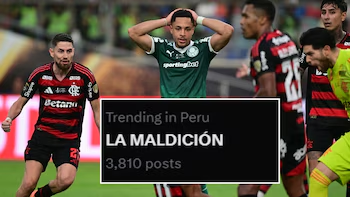
The 2025 Copa Libertadores final witnessed Flamengo’s triumph, marking a significant moment in South American football. Held at the Monumental stadium in Lima, the match not only celebrated a championship but also revived an old folklore entwined with Alianza Lima. The phrase ‘The Curse’ began trending on social media, especially on platforms like X (formerly Twitter), as foreign journalists highlighted an intriguing narrative surrounding the event.
The Origin of ‘The Curse’
Two Brazilian journalists brought attention to this so-called curse during a broadcast before the Flamengo vs. Palmeiras match. They referenced a long-standing superstition connected to any team that faced Alianza Lima, particularly at their home ground, the Alejandro Villanueva Stadium, popularly known as Matute.
“Have you heard about the curse of Matute?” asked one journalist, steering the conversation into an exploration of this local legend. His co-host elaborated on the peculiar belief: teams that played against Alianza Lima, especially in recent history, seemed to struggle for the Copa Libertadores title. It was recalled that since the 2000s, few teams emerged victorious in the tournament after facing Alianza Lima—except for Cruzeiro, who broke the spell.
The Local Football Narrative
The curse is not just a sports superstition; it also contains a humorous element popular among fans. Universitario de Deportes supporters regularly tease Alianza Lima about the supposed curse. Historically, notable moments, such as Flamengo and River Plate’s 2019 final, have fueled these narratives. River Plate faced unfavorable outcomes, seemingly confirming the legends that surround Matute.
Insights from Brazilian Journalists
In an interview before the final, Brazilian journalists Cassiano Carvalho and Bruno Rodrigues elaborated on their experiences regarding superstitions in Brazilian football. Carvalho suggested that Flamengo’s team should avoid training at Matute due to its ominous reputation, indicating a diplomatic approach to fame and folklore.
Interestingly, Flamengo initially planned to train at Matute but chose to relocate to Videna instead. Conversely, Palmeiras, which trained at the stadium, expressed gratitude to Alianza Lima for its hospitality, demonstrating a juxtaposition of belief and practicality in sports.
Reactions and Social Media Buzz
Following the final, social media erupted with memes and commentary, continuously referencing ‘The Curse.’ Flamengo celebrated their victory with a message of gratitude toward Universitario de Deportes, which light-heartedly reunited fans across borders. This exchange had a ripple effect, with Peruvian fans embracing the light-hearted rivalry while playing along with the superstitions.
Conclusion
The trending topic of ‘The Curse’ highlights the fascinating blend of folklore, sports culture, and social media of South America. Alianza Lima’s legacy, woven through matches and superstitions, continues to captivate audiences, sustaining an ongoing discussion among fans and analysts alike. As the narratives evolve, ‘The Curse’ will likely remain a point of interest for future encounters in the Copa Libertadores.